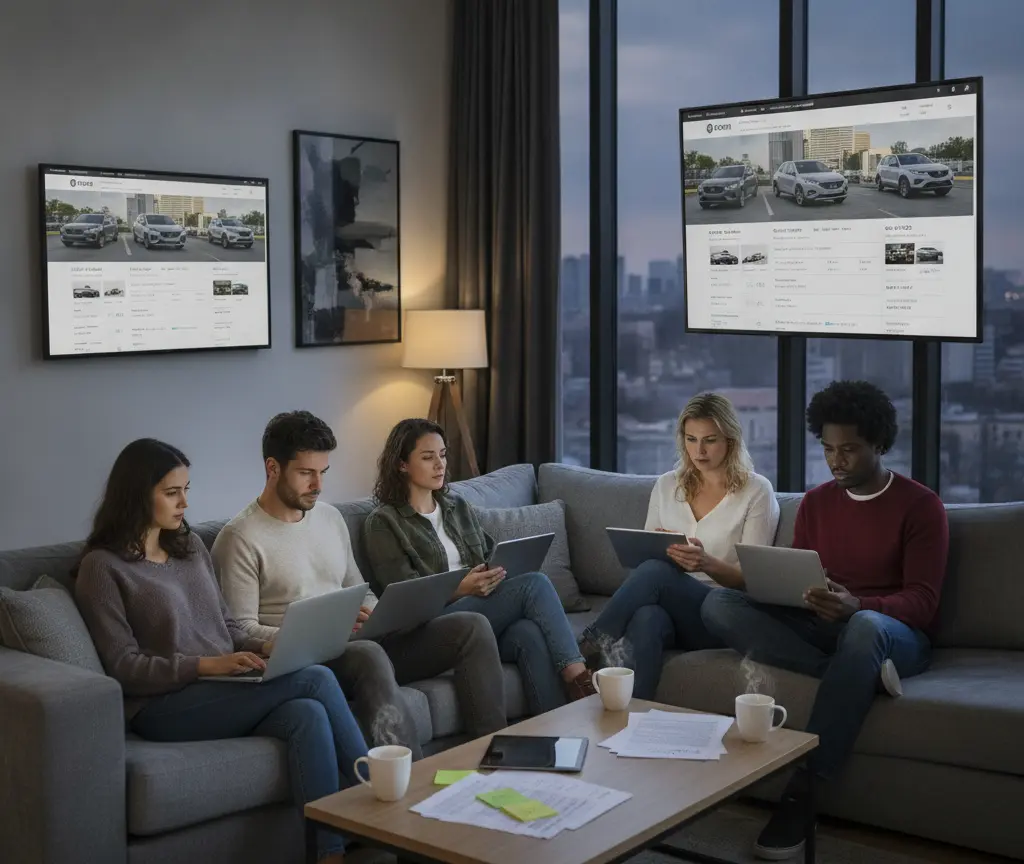
Before a buyer walks into your dealership, they have long searched online. Most people who search for cars online compare, read and check, often over days. Whoever understands how this search really works wins enquiries before the first conversation begins.
This guide shows how buyers go about it online. It is about the paths, the devices, the expectations and what builds trust. So you aim your presence exactly at this search.
The search begins online
Almost every car buying journey now starts on the internet. According to Think with Google and the Cox Automotive Car Buyer Journey, research has moved online for years. The first impression forms online, not in the showroom.
That changes the order. Once the visit came first, then the information. Today it is the other way round. Whoever wants to search for cars online and finds nothing does not come by at all.
Where buyers search for cars online
The search runs across several places. Buyers start at search engines, look at listing portals and land on dealer sites. Maps, review sites and social networks play a part too.
What matters is being findable everywhere. Whoever sits on only one portal is not seen by many. A findable site of your own connects these paths and leads the search to you.
What buyers really want
While searching, a few things count most. Buyers want good photos, a clear price and the certainty that the car is available. If one is missing, they move on.
These expectations are high but reachable. It is not about costly technology, but about clarity and honesty. Whoever offers that stands out from many.
Clear prices
The price is the most common filter. Without a price many leave at once. An open price builds trust and pre sorts the enquiries.
Real photos
Photos decide the first impression. Several honest images inside and out work stronger than any description. Whoever shows few or poor photos loses attention.
Mobile and across several devices
The search often happens on the phone, in between and everywhere. Many start on the smartphone and switch to the computer later. Your presence must work well on every device.
A slow or cluttered site loses mobile visitors at once. Whoever wants to search for cars online expects fast load times and easy use with the thumb.
Comparing before they call
Hardly anyone buys the first car they see. Buyers compare models, prices and dealers, often over several days. Only then do they get in touch.
That means you must hold up in the comparison. Clear details, fair prices and good images put you on the shortlist. Whoever convinces here gets the enquiry.

Trust decides
In the end people buy from someone they trust. Real reviews, clear contact details and a serious presence tip the scale. Trust grows while people search for cars online, long before the conversation.
What to check first
Look at your own site through a searcher’s eyes. Do you find the price, good photos and the way to enquire in a few seconds? What slows you down slows your buyers down too.
The first second decides
Whoever searches decides in seconds. An image, a price, a clear title, and the buyer stays or clicks on. This first second is your most important moment on the web.
So make sure of a strong first impression. The best photo up front, the price visible, the next step clear. That wins the attention everyone fights for.
Which search terms buyers use
People search with very different words. Some know make and model exactly, others search only for a family car or a cheap diesel. Whoever picks up this language is found more often.
So describe your cars in clear, simple words. Say what a car suits, not just its data. That reaches those who are still unsure too.
From search to enquiry
At some point searching turns into acting. Right then the way to enquire must lie open. A clear button, a short form, a visible number, no more is needed.
Every extra hurdle costs contacts here. Whoever has searched long wants to act fast in the end. Make this last step as easy as possible.
Patience and recognition
Buyers meet you several times during the search. A consistent, clear presence makes them recognise you. Recognition builds trust, with no ads at all.
So stay calm and steady. Whoever makes the same good impression reliably over weeks wins the race for the enquiry in the end.
Honesty beats gloss
In the search, exaggeration shows fast. Whoever shows the car nicer than it is loses trust at the appointment. An honest presentation works stronger over time.
So show signs of use openly too. The buyer thanks you with a relaxed conversation and a higher readiness to buy.
Many sources, one impression
Buyers mix their sources. They read a review, watch a video, compare prices and check ratings. From many small impressions a picture of you forms in the end.
Make sure this picture is right everywhere. The same details, the same quality, the same tone. So you seem reliable, wherever the buyer meets you.
The path is rarely straight
The search does not run in a line. Buyers jump between devices, sites and days. Sometimes they are close to buying, sometimes back at the start.
Accompany this path with patience. Whoever leaves a good impression again and again is there when the decision ripens.
The long, quiet research
The search often lasts longer than you think. Between the first look and the enquiry lie days or weeks. In that time the buyer comes back again and again.
So stay present and findable. Whoever shows up again and again in the long research stays in mind. That is exactly where the decision falls in the end.
Local search
Many search very deliberately nearby. Terms like used car with a place name are common. Whoever is visible locally appears exactly when someone in the region wants to search for cars online.
So keep your local details clean. Place, opening hours and a well kept map profile put you up front in exactly these searches.
The role of video
Moving images grow more important in car buying. A short video shows more than photos and creates closeness. Buyers like to look at a car more closely before they drive over.
A video need not be perfect. An honest walkaround with the phone is often enough. What matters is that the buyer gets a real feel for the car.

AI search in 2026
In 2026 a new path arrives. More and more people search with AI assistants. These often prefer clear, owned content with real data. Whoever has well kept vehicle pages can have an edge here, even if nobody knows the exact path.
The base stays key. Clear data, good photos and honest text help in every search, classic or with AI. Whoever works cleanly here is ready for anything.
What this means for your dealership
From all this follows a simple line. Be findable, fast and honest. Show prices, good photos and a clear way to enquire. So you meet the buyer exactly where they search.
How a site must deliver that is shown in what a modern dealership website needs.
Common mistakes
The most common mistake is to be visible on only one portal. Missing prices, poor photos and a slow site hurt too. Whoever ignores the long research gives away many quiet visitors.
A second example shows the way. A dealer improved photos, prices and the speed of his site. Suddenly enquiries came from people who had never found him before. Visibility alone was not enough, only the substance convinced.
When the rethink pays off
Tuning to the real search pays off for every dealer. The more buyers compare online, the more your presence matters. Even a small business gains when it shows exactly what buyers seek.
The timing speaks for it too. The search keeps moving online and grows more thorough. Whoever understands now how people search for cars online is a step ahead of the rest.
Think of it as meeting buyers where they already are. The search for cars online is the new showroom window, open day and night. Stand in it well, and the visit follows.
How to start cleanly
Look at your own site through a buyer’s eyes. Do you quickly find price, photos and the way to enquire? What slows you down slows your customers too.
Then improve step by step. How to win more enquiries with no big budget is shown in how to get more car enquiries without a bigger ad budget. Why an own site is worth it at all is in why your dealership needs its own website.
For 2026 it is simple. Buyers search online first and decide long before the call. Whoever understands how they search for cars online is there exactly when it counts.
Sources
- Cox Automotive Car Buyer Journey, research on online and mobile car shopping behaviour.
- Think with Google, analyses on online search and the car buying journey.
Frequently Asked Questions
Where do buyers look first for a car today?
Almost always online. The journey starts at search engines, listing portals and dealer sites, often on the phone. The first impression forms online, long before anyone enters the showroom.
What do searchers care about most?
Good photos, a clear price and the certainty that the car is available. If one is missing, most move on. Trust through real reviews comes on top.
How long does the search usually take?
Often days or weeks. Buyers compare models, prices and dealers and come back several times before they get in touch. Whoever stays present in that time stays in mind.
How important is the smartphone?
Very important. Many start the search on mobile and switch to the computer later. A site that is slow or cluttered on the phone loses exactly these visitors.
What does this mean for my dealership?
Be findable, fast and honest. Show prices, good photos and a clear way to enquire. So you meet the buyer where they search and land on the shortlist.
Is being on a listing portal enough?
Usually not. Whoever is visible only there is not found by many searchers. A findable site of your own connects the paths and makes you more independent.
What role does video play?
A growing one. A short video shows more than photos and creates closeness. Many buyers like to see a car in motion before they drive to you.
Does AI search change behaviour?
Increasingly. More people use AI assistants that prefer clear, owned content with real data. Well kept vehicle pages can be an edge here, even if nobody knows the exact path.