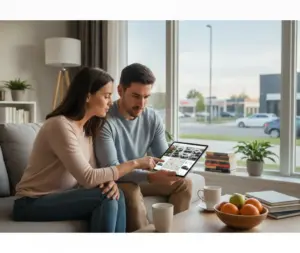
A buyer is sitting on the couch in the evening with one question in mind. Is the car still available, and how much deposit would it need. Your dealership closed hours ago. The question goes unanswered, and the shopper clicks away. A website chat catches that exact moment and gives an instant reply.
This guide shows how a website chat turns quiet visitors into real enquiries. We cover the problem it solves and what it realistically delivers. We look at the cost and at what you need technically. And we name the mistakes that make a good chat fall flat. By the end you can decide whether it belongs on your 2026 list.
Why car buyers expect an instant answer
The car purchase now starts on a screen. Buyers compare several listings in minutes. When a question comes up, they do not want to wait. They want an answer now, not tomorrow morning.
This expectation comes from daily life. People message friends and get a reply in seconds. A website chat brings that same speed to your showroom. Most shoppers already live on their phones, so the bar is set high.
A short example makes it real. A shopper sees a wagon in the evening and wonders whether it has a tow bar. A long form feels like too much effort. A website chat would have settled the question in a minute.
Arriving late often means losing the lead entirely. A well known Harvard Business Review study shows that fast response strongly drives success. Firms that reply within an hour qualify far more enquiries. This power of fast replies applies to chat too.
What a website chat gives your dealership
More enquiries from the same traffic
The biggest gain is the low barrier. A chat window is more open than a long form. The visitor types a short question and is in a conversation. Quiet readers become real contacts.
A website chat draws more from the visitors you already have. You do not pay for extra reach. You make better use of what is already there. That creates more car enquiries without a bigger ad budget.
Better conversations and more trust
A chat also lowers the hesitation. Some questions feel too small for a phone call. In a chat the buyer asks more freely. You learn early what really matters to them.
That builds closeness before the first visit. The customer feels seen and taken seriously. It creates trust online before they ever reach the showroom. The later appointment then starts on a very different footing.
[IMAGE]
What a website chat costs
Three tiers, three price ranges
There is no fixed price, because a website chat is not a single product. It helps to think in three tiers. Match the tier to your size and your team. We deliberately avoid exact numbers, since they vary widely by provider.
- The simple chat window that your team staffs itself. The cheapest and quickest to start. Fine as long as someone is truly reachable.
- The chat with an app that sends every question to your salesperson phone. More comfort and a little more effort. You can reply on the move.
- The chat with an assistant where a simple bot handles first questions. The highest setup, but a first reply around the clock. Worth it with many enquiries.
Whichever tier you choose, plan for ongoing care. A chat with nobody behind it hurts more than none at all. The most expensive mistake is a window that stays silent.
Where to begin
Start with fixed chat hours that you can truly cover. Two reliable hours in the evening beat a window that stays silent all day. Once that works, widen the hours step by step.
What you need technically
The barrier is lower than many expect. To start, a lean chat window on the site is enough. More important than costly tools is a clear owner. Someone has to see the questions and answer them.
Three things matter beyond that. First a good view on a phone, so the team can react on the move. Second a short note about the hours when a person is there. Third a way to capture an enquiry when nobody is available right now.
That last point often decides the outcome. A chat outside the hours must not run into a void. It then asks for an email or a number. No enquiry is lost, even after closing time.
A word on privacy. A chat handles personal details. Make sure you have clean consent and clear information. That protects you and builds trust with the buyer at the same time.
Which questions buyers ask in chat
It helps to know what people really ask in chat. Most questions are short and practical. Knowing them prepares your team well. Then every answer feels quick and sure.
- Is the car still available, and when can I come to see it.
- What equipment is included, such as a tow bar or winter tyres.
- Is financing available, and roughly how high would the monthly rate be.
- Can I reserve the car or arrange a test drive right away.
- Will you take my old car in part exchange, and what is it worth.
- What are your opening hours, and can I come on a Saturday.
There is a lot to learn from these patterns. When the same questions keep coming up, the answer belongs visibly on the vehicle page. Over time the chat even relieves the page itself. A good conversation shows you what your buyers still miss.
What matters is taking every question seriously. Even a small question can be the start of a sale. Answer in a friendly, concrete way, never from above. A short message then grows into real interest you can guide further.
One last point is the tone in chat. Short, clear sentences work best. A friendly greeting is fine but must not feel forced. Stay human, and the buyer stays in the conversation.
Common website chat mistakes
Most disappointing setups fail for the same reasons. The patterns repeat, and almost all are easy to avoid.
- A chat window that sits unstaffed for hours.
- Replies that arrive as slowly as an old email.
- A bot that answers every question with the same line.
- No sign of when a real person is reachable.
- A window that covers half the page on a phone.
- No way to follow up on an enquiry later.
Two quieter mistakes belong here. First a missing owner, so nobody feels responsible. Second the wrong tone. A stiff template sells worse than a friendly, short sentence.
When a website chat is worth it
A website chat pays off for almost any dealership with enquiries through the site. The more visitors you have, the stronger it works. With light traffic the benefit is smaller. With heavy traffic it is large, because many questions would otherwise go unanswered.
The honest trade off is staffing. A chat needs people who answer. In return, the number of silent drop offs falls. It pays off most clearly when your team covers fixed hours reliably.
A look at 2026 belongs here. Buyers expect ever more speed online. Building a reliable chat early lets you gather experience and stand out while not everyone does it yet. That head start is hard to make up later.
Fairness means naming when it fails. A chat fails when nobody tends it. It fails when replies arrive too late. And it fails when the tone stays cold. These are not technical problems but questions of care.
[IMAGE]
Live chat, chatbot or messenger compared
Not every chat is the same. A pure live chat connects the visitor straight to a person. That feels personal but needs staffing. For many dealerships it is the best start.
A chatbot answers automatically around the clock. It handles simple questions, such as opening hours or availability. For harder questions it should hand off cleanly to a person. Otherwise frustration grows fast.
A messenger like WhatsApp is familiar and close. Many buyers use it daily. Here you should pay special attention to privacy. A tool on your own site keeps you more firmly in control.
How to start cleanly
You do not need a perfect bot right away. A clean start means going small and staying reliable. Expand the chat only once it runs smoothly.
- Set fixed hours when a person truly answers.
- Show clearly when the chat is staffed and when it is not.
- Route enquiries to a phone, so nobody misses them.
- Ask for a contact outside the hours.
- Connect the chat with the option to book an appointment online.
- Read the conversations regularly and learn from the questions.
A second example shows the effect. A dealer runs the chat every evening from six to eight. Most questions come in then, and the salesperson replies at once. The trial soon becomes a fixed routine.
For 2026 it sums up simply. Photos and data stay the basis, yet the buyer wants to talk the moment a question appears. A good website chat gives an instant answer. Those who are reliably there and stay friendly win more and better enquiries.
Sources
- Harvard Business Review, The Short Life of Online Sales Leads, on the impact of fast response to online enquiries.
- Pew Research Center, Mobile Fact Sheet, on how common smartphone use is in the United States.
Frequently Asked Questions
What is a website chat on a dealership site?
It is a small window where visitors ask a question directly. A staff member or a simple assistant replies at once. A question about the car is settled without the buyer having to call or fill in a form first.
Do I need extra staff for it?
Not necessarily. Many dealerships start with fixed evening hours covered by the existing team. What matters is that someone is reachable. A chat with nobody behind it disappoints more than having none.
What does a website chat cost?
It depends on the tier. A simple window is cheap, while a chat with an app or assistant costs more. Fixed prices vary widely by provider, so it pays to start with a small, reliable setup.
Does a website chat really bring more enquiries?
Usually yes, because the barrier is lower than a form. The visitor types a short question and is in a conversation. Quiet readers turn into measurably more real contacts.
What happens to enquiries after hours?
A good chat asks for an email or number outside the hours. No enquiry is lost. The next morning your team gets in touch and carries the conversation forward.
Is a chatbot better than a real person?
A bot is there around the clock and handles simple questions. For important questions a person feels more credible. It is best to combine both and let the bot hand off cleanly to a staff member.
How fast must I reply in chat?
As fast as possible. The appeal of chat is the instant answer. If it takes too long, it feels like a slow email and loses its edge. A few minutes is the goal.
Is a website chat worth it for a small dealership?
Yes, especially then. Even two fixed evening hours bring more closeness than no chat. You stand out from rivals who only offer a silent form.