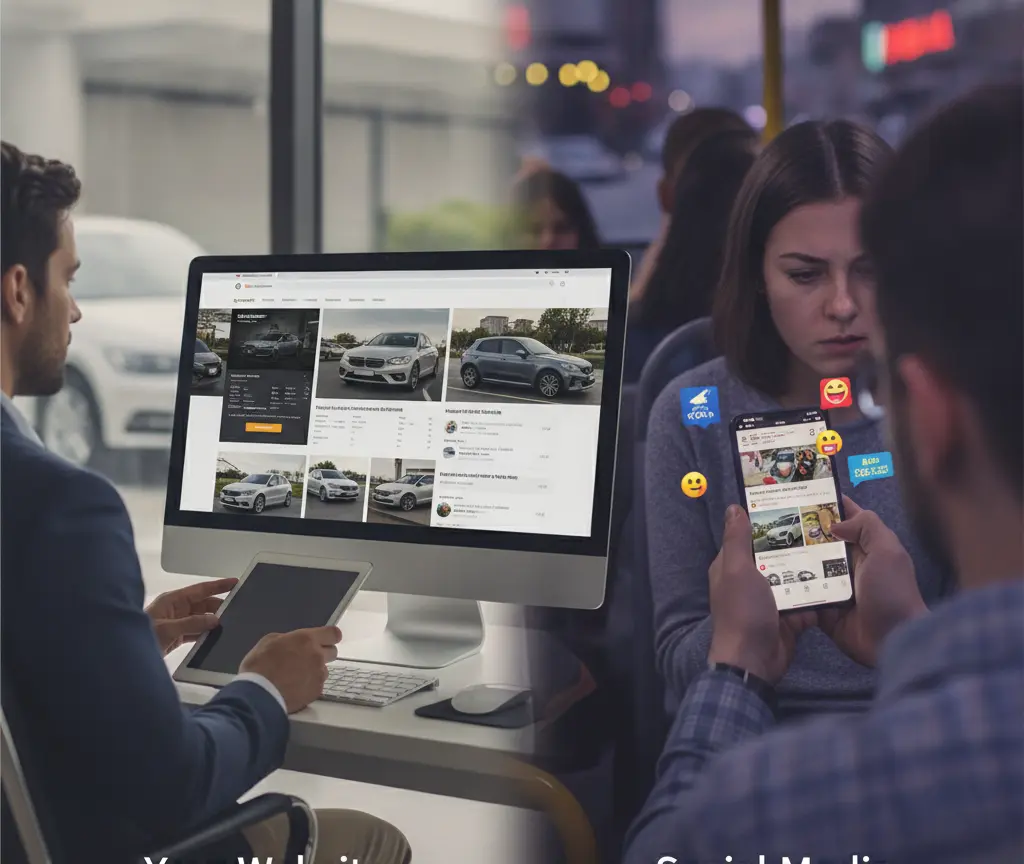
Choosing your website over social media as the heart of your marketing sells more cars. The reason is simple. The serious buyer finds you on your own site directly. On Instagram, Facebook or TikTok your dealership only rents reach. A single post slips down the feed within a few days. The real enquiry happens elsewhere. It happens where a findable vehicle page meets the buyer at the right moment. That page is what the ADP Car Market Hub WordPress plugin from AD Promotion builds for you.
Social networks are not the problem. As a shop window for your brand they do good work. It gets hard only with full dependence. That happens when a business shows its used cars almost only there. A searchable site of its own is then missing. This article explains why the sale is decided on your own domain. It also shows how social channels still play a useful part.
Why reach on social media is only rented
A post on Instagram or Facebook reaches only a fraction of your followers. The network’s algorithm decides which fraction. Your dealership pays with staff time. Often it pays with ad budget too. Yet it owns nothing lasting at the end.
A website over social media does not rest on rented reach. The page stays up, day and night. It does not vanish just because the feed moves on.
An everyday example makes this clear. A dealer posts a well kept VW Passat on Monday. A short video gathers a few likes. Three days later the post has dropped down the feed. New searchers barely see it. The car still sits in the lot. Its online presence has already faded. Whoever rents reach starts from zero with every vehicle.
Where a car buyer actually searches
The road to a used car almost always begins with a deliberate search. It rarely begins with scrolling a feed. Someone who wants a particular car types the make, model and year into Google. A target price and a wish for something nearby come on top.
Social networks serve a different moment. There a user is entertained. Now and then an offer turns up in passing. Active buying intent is rare.
Say a buyer hunts a specific BMW 3 Series with a certain trim. No reel helps. Only a real vehicle page does, one that Google can show as the answer. A website over social media reaches that buyer better. If the page is missing from your domain, the enquiry lands somewhere else.
How this works in practice
This is where the ADP Car Market Hub WordPress plugin comes in. It is what makes a website over social media work in practice. It turns your inventory automatically into your own findable pages. Each carries price, images, equipment, location and a direct way to make contact. The result is a shop window that stays visible to Google around the clock, instead of fading down the feed after three days.
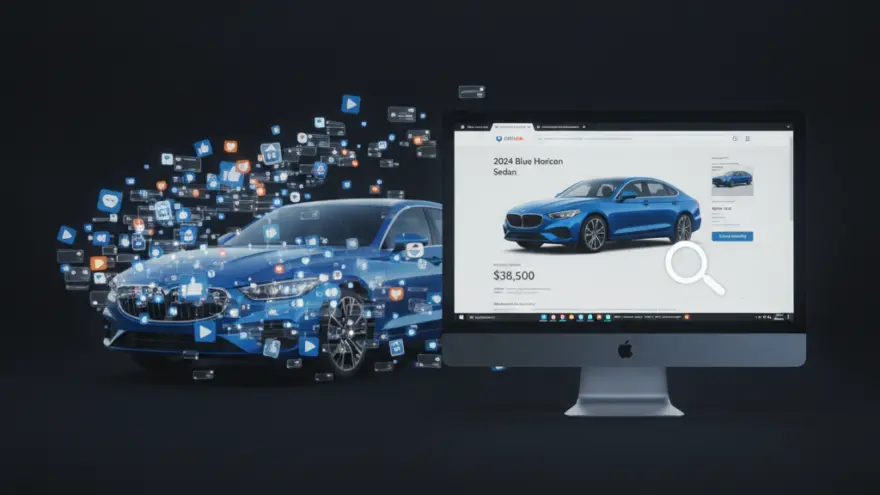
Why a post in the feed is not a findable page
Many dealers believe their cars are well visible online. After all, they post regularly. Visually that holds. Something does appear in the followers’ feed.
For Google search, though, such a post barely counts. It sits on someone else’s network. It is not a page on your own domain. An address with title and price is missing.
That has real consequences. A post is hard to find again on purpose later. It builds no lasting search value. Once the car sells, the old post stays up. That tends to cause confusion. A real vehicle page is different. It appears in the sitemap. It can be measured on its own. And it drops out cleanly once the car is gone.
From real use
One dealership ran its Instagram channel with great care, yet drew few measurable enquiries from it. Only after it published its inventory as its own vehicle pages with the ADP Car Market Hub WordPress plugin did the pages indexed by Google bring noticeably more direct enquiries. The plugin made the difference, since only the own findable pages made the cars visible to search. Social media kept running, but the selling now happened on the dealership’s own website. That is not a fixed promise, yet the lever is clearly visible.
What your website over social media really delivers
A website over social media does in selling what a social channel cannot. It keeps every car as a lasting findable page. It ties that car to your business. And it leads the prospect to contact without a detour.
This does not mean you should avoid the social networks. As a shop window for the brand they serve well. Their strength is attention, not the targeted sale.
The mix becomes useful with a clear flow. Every post leads to the matching vehicle page. A short clip of the freshly arrived BMW sparks interest. The link below carries the prospect to the page with all the data. The contact form waits there too. The network’s reach then works for your own channel. You can read how such a page becomes the seller here, how your website works as a salesperson.
Link every post to your own page
Check your last ten posts on the social networks. Does each one lead, with a clear link, to the matching vehicle page on your site? Wherever the link is missing, you give away the very step that turns passing attention into a measurable enquiry.
Trust and measurement live on your own page
Anyone spending tens of thousands wants to know who stands behind the offer. On a social profile the buyer mostly sees images. Short captions come with them. Financing, warranty and a clear contact stay in the background.
On trust, too, a website over social media wins. On your own page the car, your business and the contact meet in one place. The buyer sees a face and an address.
Measurement comes on top. A network gives only rough figures. Google Analytics on your own page shows which channel led to the enquiry. The budget can then be steered with care. If you also want to keep the customer data in your own hands, you can read why here, why you should own your customer data instead of renting it.
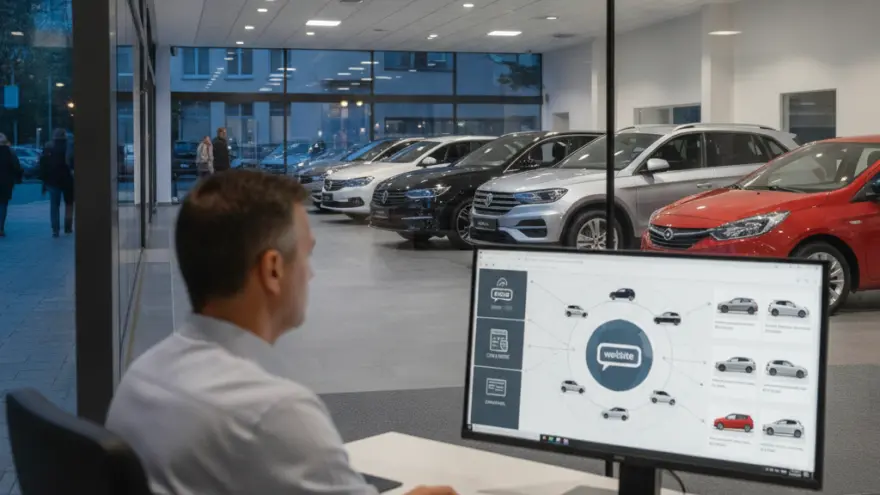
How your inventory becomes findable vehicle pages
A complete vehicle website sounds like heavy upkeep. Most of it runs automatically, though. If you already work with AutoScout24, the inventory comes from there. You do not enter it twice.
AutoScout24 is not required, though. A CSV or Excel sheet works as well. An XML or JSON file fits too. So does an automatic feed by URL.
From that data come full pages. They carry price, images, equipment, location and contact. Each appears in the sitemap. Each links internally. Google records them as your own content. New cars go online within minutes. Sold ones drop out automatically. The shop window stays current without any work by hand.
Conclusion
Social networks are a good shop window for the brand. A reliable sales channel for individual cars they are not. A business that puts its website over social media at the center turns the relationship around. It wins back the buyers who search Google on purpose. A website of your own makes every car a findable answer. It ties the offer to your business. And it makes every enquiry measurable. The ADP Car Market Hub WordPress plugin from AD Promotion reads your vehicle data. From it the plugin builds standalone WordPress pages. Social media then brings the attention. Your own website brings the enquiry home.
Sources
- Cars.com, large used and new car marketplace in the United States.
- AutoScout24, pan European vehicle marketplace with products and pricing for dealers.
- Google Search Central, how Google Search works, including crawling and indexing.
- Meta for Business, how reach works on Facebook and Instagram for businesses.
Frequently Asked Questions
Should I drop social media if I have my own website?
No. The social networks stay a good shop window for your brand. The point is not to rely on them as your only sales channel, and to lead every post to the matching vehicle page on your own website.
Why does an Instagram post sell worse than a vehicle page?
A post reaches only part of your followers and fades down the feed within days. A vehicle page, by contrast, stays findable through Google and catches the buyer exactly when they search for the model on purpose.
Does Google find my social media posts?
Not reliably. A post sits on a third party network and not as a page on your own domain, so it builds almost no search value for your dealership. A real vehicle page is indexed and shown as a hit instead.
How do I combine social media with my website sensibly?
Put a clear link under every post to the matching vehicle page. The clip sparks interest in the feed, and the link carries the prospect to the page with all the data and the contact form. The reach then works for your own channel.
Do I need AutoScout24 for the vehicle pages?
No. AutoScout24 is a convenient data source, not a condition. The inventory can just as well come from a CSV or Excel sheet, from XML or JSON, or through an automatic feed by URL.
Is this worth it for a small dealership?
Yes, especially locally. When someone searches a specific model near you, your own vehicle page with location and price can be a direct hit, even next to large marketplaces and without a big ad budget.
How do I measure whether the website or social media brought the enquiry?
On your own page Google Analytics shows which channel a visitor came from and where the enquiry began. A social network gives only rough figures, while your own channel makes the path from click to enquiry traceable.
How much upkeep do the vehicle pages need?
Little, when the inventory flows in automatically. New cars appear within minutes and sold ones drop out on their own, so nobody maintains each page by hand.