
The sticker price answers the wrong question, because most buyers think in monthly payments rather than the full amount. Clear financing options translate that price into a number a household can actually plan around. When those options sit right on the vehicle page, a shopper sees at a glance whether the car is within reach.
The ADP Car Market Hub WordPress plugin from AD Promotion places that monthly figure where the decision happens. It sits on each individual vehicle page of your dealership website. This article explains why a visible payment earns more inquiries and what details keep it honest.
Why a bare price stalls the inquiry
A price tag of 24,900 tells a buyer little about daily life. The real question is not whether the number is fair, but whether it fits the monthly budget. Without that answer, the shopper either does the math alone or simply moves on to the next listing.
Picture a family shopping for a wagon with a ceiling of around 350 a month in mind. The page shows only the total, so they close the tab and look elsewhere. With the right term, that same car would have landed inside their budget. The information was missing at the one spot where it mattered.
There is also a comparison running in the buyer’s head. He weighs the car against his rent, his insurance and his other bills. A single large total is hard to slot into that picture. Clear financing options give him the one number he needs for that comparison. The price then stops feeling like a wall.
What a visible monthly payment changes
Once the monthly figure sits next to the price, the buyer stops picturing one large sum. He starts weighing a manageable amount instead. This lowers the mental hurdle and keeps the visitor on the page longer. An abstract price becomes a concrete offer they can compare against their paycheck.
Placement matters as much as the number. The payment should belong to the car, not hide on a distant page the shopper has to hunt for. When honest financing options sit directly under the price, a quiet browser turns into someone ready to reach out.
Speed matters too. A payment hidden one click away tests the visitor’s patience. When the financing options sit in plain view, the momentum holds. This short path from price to payment often decides whether a visit becomes an inquiry.
How the payment appears on the vehicle page
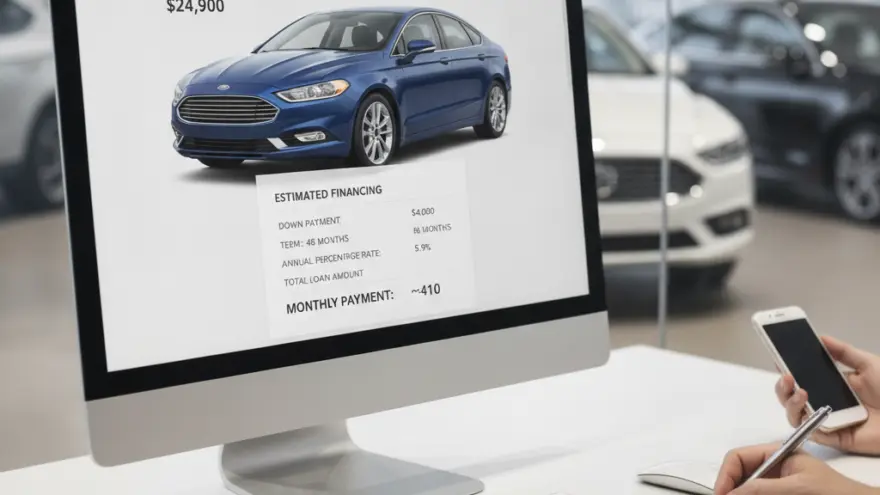
The ADP Car Market Hub WordPress plugin adds a payment calculator to every vehicle page. The buyer picks a down payment and a term, then sees an estimated monthly figure without leaving the page. If the number works, the same block leads straight to an inquiry, so the calculation turns into a real contact.
Which details keep the payment honest
A rate with no conditions invites distrust, because everyone knows financing depends on term, down payment and interest. Show a transparent example with the annual percentage rate, the term and the total amount, not just a low teaser figure. The buyer then sees not only the small payment but also what it rests on.
A concrete example helps. Take a car at 24,900 with 4,000 down over 48 months. The estimate might come to around 410 a month at the stated annual percentage rate. Such clarity removes surprises from the later conversation and reads as far more trustworthy than a headline number with no explanation.
A second example shows the range. A larger down payment of 8,000 brings the same payment down noticeably. A shorter term pushes it back up. When the calculator makes these levers visible, the buyer feels in control of the financing options. That sense of control keeps him on the offer longer.
From real use
One dealership added a visible monthly payment and calculator to its vehicle pages with the ADP Car Market Hub WordPress plugin. Where visitors had seen only the total price before, they now stayed longer and sent more inquiries with a specific financing request attached. The plugin made the difference, because only the payment beside the car made the purchase feel reachable. It is not a guarantee, yet the connection was clear over time.
Turning the calculator into a real inquiry
A calculator on its own sells nothing. Its value appears only when the buyer can reach out in the same step, while the figure is still fresh in mind. This is why a clear path to an inquiry belongs right below the calculator, carrying the chosen values along.
If a shopper sets a payment of 350 over 48 months and clicks to inquire, exactly those details should reach the dealership. Your sales team then knows what the customer wants before the first call and can answer with intent. For turning that first contact into a firm appointment, see how a simple online booking flow fills your calendar.
A short note about the next step helps as well. A line such as a non-binding reply within one business day eases the worry. The buyer sees that a click is not a contract. It is the start of a conversation, so more people dare to send the inquiry.
Show the payment in the listing too
Many dealers reveal the monthly payment only on the detail page. Add a small payment figure to the inventory overview as well. The buyer then sees affordability while browsing. He clicks sooner on the cars that fit the budget.
Why honesty about cost builds trust
The moment you advertise a financing figure, disclosure rules apply. In the United States, the Truth in Lending Act expects clear terms whenever a rate or payment is named, including the annual percentage rate. Showing this cleanly from the start avoids trouble and reads as more credible at the same time.
For the buyer, that precision is not fine print but a signal. A dealer who states the rate and the total openly clearly has nothing to hide. Online, where the first impression decides, that trust feeds straight into the inquiry. For building confidence before anyone visits, see how to build online trust before the first test drive.
In practice, post a clear standard example. State a fixed sample figure for a typical term. Mark it plainly as an example. The financing options then stay compliant, and the buyer understands the number is only a first guide.

Why financing options belong on your own page
On the large listing portals your car sits beside dozens of similar offers. A financing path of your own is hard to show there. On your own website the calculator is yours, with your lender’s terms and a direct line to your sales team.
The vehicle page then becomes a complete offer rather than a plain listing. The buyer finds price, payment and contact in one place, with no jumping between providers. For selling your cars effectively from your own site, see how to sell cars online from your own website.
There is also a data point for your marketing. Every inquiry through your own calculator shows which cars and which payments people want. This insight is missing while the figures run only in a third-party system. On your own page the knowledge is yours, and it feeds your next purchase.
Conclusion
The full price answers a question the buyer is not asking, because the real measure is the monthly payment. Visible financing options on the vehicle page close that gap, keep the shopper engaged and turn a browser into an inquiry. The ADP Car Market Hub WordPress plugin from AD Promotion places the calculator on every car. It shows an honest example with the annual percentage rate. And it leads to the inquiry in the same step. The decision stays on your page, and your team knows what the customer wants before the first conversation.
Sources
- Consumer Financial Protection Bureau, guidance on auto loans and financing for consumers.
- Federal Reserve, the Truth in Lending Act and disclosure of the annual percentage rate.
- Experian Automotive, data on the automotive finance market.
Frequently Asked Questions
Why should the payment sit on the vehicle page itself?
Because buyers think in monthly amounts. With the payment beside the car, a shopper sees right away whether it fits the budget and tends to stay rather than do the math alone or click away.
Do I need my own lender for this?
No. The calculator first shows a non-binding example. You agree the actual terms with your lender or financing partner as usual, once the customer reaches out.
What does the example need to include?
In the United States, an advertised rate calls for clear terms, including the annual percentage rate, the term, the down payment and the total. That keeps the display compliant and easy to follow.
Doesn't a visible payment scare some buyers off?
Usually the opposite. An honest payment lowers the hurdle, because the large total feels less daunting. The figure just has to be realistic and not a bare teaser.
Can the buyer carry the chosen values into the inquiry?
Yes. When the shopper sets a term and a down payment, the plugin passes those values into the inquiry, so your team knows what the customer wants before the first contact.
Does this work without AutoScout24?
Yes. The ADP Car Market Hub WordPress plugin builds the vehicle pages regardless of the data source. Whether you import from a feed, a spreadsheet, or enter cars by hand, the calculator appears on every page.
Should I show the payment in the listing as well?
It pays off. When buyers see the monthly figure already in the overview, they click more deliberately on the cars that fit their budget and arrive better prepared on the detail page.