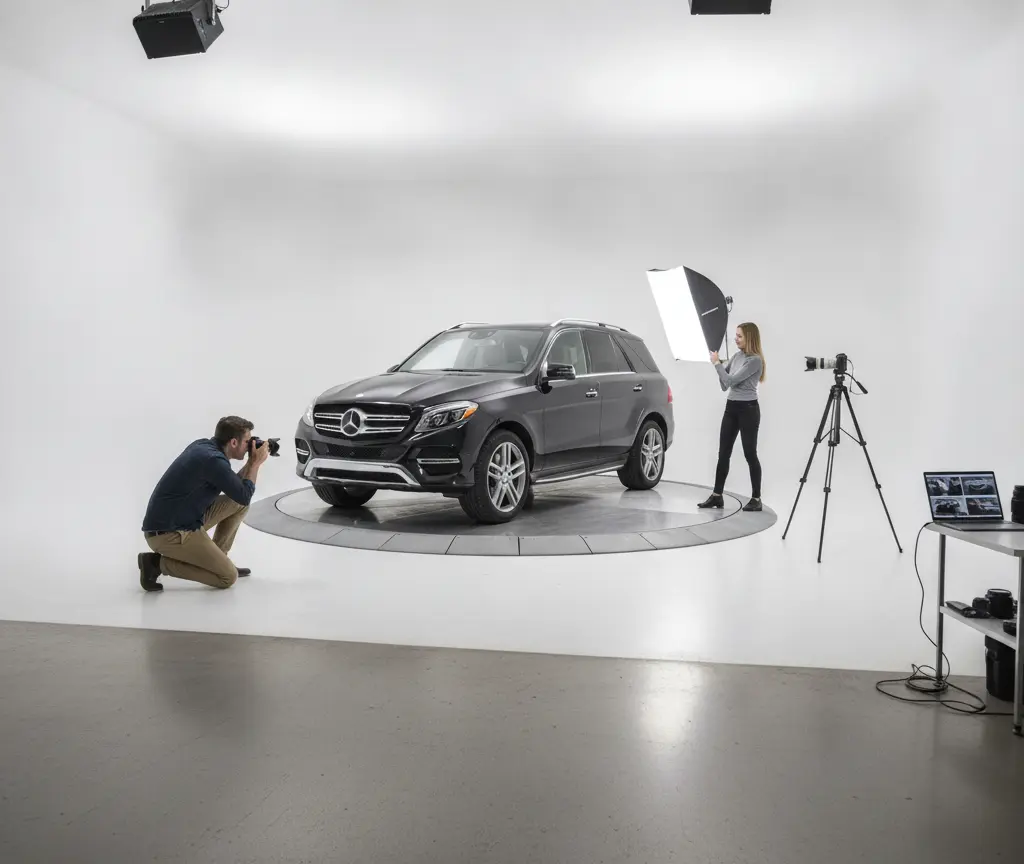
Online, the first image makes the call. It decides whether a shopper clicks your car at all. Vehicle photos are not a nice extra. They are the most important salesperson on a used car page. They show condition, care and trust before anyone reads a word about price.
This article shows how a dealership shoots images that bring real enquiries. The gear stays modest. It also explains why the same photos work harder on your own site than on a third party marketplace. The ADP Car Market Hub WordPress plugin from AD Promotion turns those photos into pages that Google can find.
Why the first image decides the enquiry
A car shopper scrolls through dozens of results. Only a few make them stop. The first thumbnail gets a fraction of a second. A dark, crooked phone snapshot is dropped at once. It does not matter that the car beneath it is spotless.
This matters because the image speaks for the listing, not the text. Good vehicle photos deliver that first impression. Take an everyday case. A dealer posts a tidy Volkswagen Passat. The shot is flat and taken against the light. The clicks stay away. The next day he swaps only the lead image for a clear one in soft side light. The views climb sharply. The car never changed, just the photo. Pick the lead shot with care and you win in the list. It happens before the shopper even opens your page.
Where good vehicle photos really begin
Preparation decides the result. It comes before the camera. An unwashed car looks neglected in every frame. Water marks and dust on the dashboard stand out. So the cheapest lever for good vehicle photos is detailing the car first.
It matters because the camera records every smudge you miss. The shopper reads it as a lack of care. Clean inside and out with care. Remove floor mat dirt, stickers and personal items. Shoot in soft daylight, not harsh midday sun. Picture this. A dealer shot inventory on the lot at noon for years. Hard shadows and reflections marked the paint. Then he moved to early morning with even light. The same cars suddenly looked premium. None of this needs costly kit. A clean car and good light are enough.
Which angles show a vehicle in full
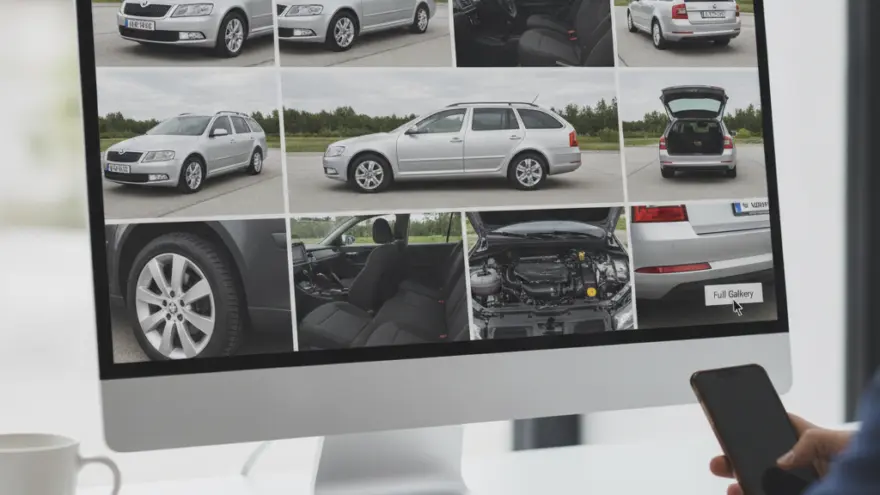
A single front shot sells no car. The buyer wants to judge condition from a distance. He expects a full walk around the car and inside it. Without that, an uneasy feeling stays. He clicks on instead. Good vehicle photos cover every side and corner. Online, they then replace the inspection that the lot would offer.
That counts because every missing view raises doubt. It also creates needless calls. Work to a fixed sequence. Start three quarter front, then side, rear and three quarter back. Next comes the interior with seats, dashboard and trunk. Tire tread and engine bay close the set. Around twenty to thirty shots give an honest picture. Consider a case. A buyer from the next town did not ask twice about a Skoda Octavia. The photos showed scuffs on the bumper openly. He arrived at the test drive already decided. Deliver every angle and the key questions answer themselves.
What a page of your own looks like
On a vehicle page of your own, your shots sit in a clean gallery. A large lead image stands beside the thumbnails. Next to them are price, equipment, location and a direct contact path. The ADP Car Market Hub WordPress plugin builds this page automatically from your vehicle data. Every shot lives on your own domain and stays visible to Google. Each photo then works on a page that belongs to you.
A calm background that lets the car shine
Even the finest car loses impact against a busy background. Bins, other cars or a crowded lot pull the eye away. The shot then looks accidental, not professional. A calm, always identical background gives the inventory a recognizable look instead.
It counts because a consistent background across every car builds trust. It makes the business look more valuable. Find a quiet wall, an open surface or a spot in front of the building. Use it for every car. Here is one. A dealer placed all used cars in front of the same plain facade. The images read as his at a glance. Without a studio, a common thread runs through the inventory. The effort is small. Across many listings the effect is large, because each car joins one coherent whole.
A fixed photo sequence saves time every day
Write down a fixed order for the shots. Pin it where the detailing happens. Photograph every car in the same sequence and no view gets forgotten. The look stays consistent. After a little practice, the work is also done much faster.
Why the same photos do more on your own page
On a large marketplace your shots sit beside hundreds of similar cars. There they mainly help you stand out at all. The value of the images stays in the foreign system. On your own website the same photos become content that belongs to your domain. That content builds its own search value with Google.
This matters here because a real vehicle page with good images can show up as a direct result. A foreign marketplace only promotes itself. To turn that into a presence open around the clock, read here how to build an online showroom. Your page also shows the business, your contacts and a clear way to reach you. So the image turns into an enquiry with you. To see how good vehicle photos build trust before the test drive, read here how to build trust online.
From real use
A dealership reshot its whole inventory. Clean light, every angle and the same wall behind each car shaped the images. Through the ADP Car Market Hub WordPress plugin they went live as its own vehicle pages. Before that the cars ran only on the marketplace. Now Google indexed the fresh pages. Depending on the period, more direct enquiries arrived through the website. Good photos plus findable pages made the difference. It is not a promise, but the lever is plain to see.
Technology that serves images fast and sharp
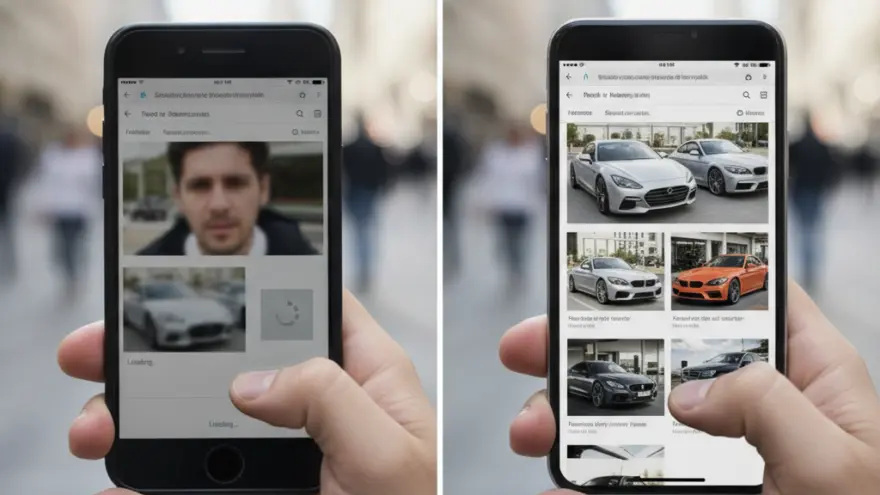
Fine shots fall flat if they load slowly or look blurry. On a phone that weighs double. Most buyers search on the move. A page that takes seconds to build its images is lost early. Technical polish therefore belongs to the photo as much as the subject.
It all hinges here because load time and sharpness decide whether anyone scrolls the gallery. Shoot at a resolution high enough for detail zoom to work. After that, have the files shrunk for the web, for example into the modern WebP format. One more case. A dealer embedded very large originals directly. The page turned sluggish on a phone. After the switch to web ready images the same gallery loaded smoothly. The ADP Car Market Hub WordPress plugin handles this step on its own. It shrinks the shots and serves them well. Quality stays, and so does speed.
Conclusion
On a used car page the image does the selling. It carries condition and trust before the buyer reads a word. Prepare with care, show every angle and pick a calm background. Then good vehicle photos come within reach without costly gear. Web ready files keep the page fast. Yet the shots reach full value only on your own domain. There they become findable pages, not an extra on a foreign market. The ADP Car Market Hub WordPress plugin from AD Promotion pulls in your vehicle data and images. It builds standalone WordPress pages with a clean gallery. And it makes every shot visible to Google. So a strong photo becomes a direct enquiry with you.
Sources
- Google Search Central, guidance on images and Google Images.
- web.dev by Google, serving images in WebP for faster web pages.
- Auto Trader, large used car marketplace with seller guidance on listing photos.
- web.dev by Google, why fast loading and image performance matter on mobile.
Frequently Asked Questions
Do I need an expensive camera for good vehicle photos?
No. A current smartphone is enough for convincing shots. More important than the camera are a clean car, soft daylight, a calm background and complete angles. These basics raise image quality more than costly gear.
How many photos should a listing have?
Around twenty to thirty shots give an honest overall picture without overloading. Cover every side and the three quarter views outside. Show seats, dashboard, trunk, tire tread and engine bay inside. That answers the key questions before they are asked.
What time of day is best for shooting?
Soft light in the early morning or late afternoon is most flattering. Harsh midday sun creates hard shadows and reflections in the paint. An overcast sky is surprisingly good, because it spreads the light evenly.
Should I really show scratches and wear?
Yes. Openly shown flaws build trust and save follow up questions. Picturing small scratches honestly means fewer disappointments at the appointment. It also wins buyers who arrive with realistic expectations.
Why do my vehicle images load so slowly on a phone?
Usually it comes down to very large original files embedded without resizing. Web optimized images, for example in WebP format, keep the visible quality at a much smaller file size. The ADP Car Market Hub WordPress plugin shrinks the shots automatically.
Is a consistent background worth it for every car?
Yes. An always identical, calm background gives the whole inventory a recognizable look and makes the business look more valuable. A plain wall or the facade in front of the building is already enough.
Why are the same photos worth more on my own website?
On a foreign marketplace your images sit in direct comparison and the search value stays in the foreign system. On your own domain the same shots become content that builds its own value with Google. It can show your dealership as a direct result.
Does the plugin take the images from AutoScout24?
Yes. If you maintain your inventory on AutoScout24, the ADP Car Market Hub WordPress plugin imports the vehicle data including images and builds them into your own pages. AutoScout24 is not a requirement though. An import from a spreadsheet, a feed or by hand also works.