
Long before a prospect calls your dealership, the decision is already taking shape. They have searched, compared and narrowed the field. Usually you never see any of it. People who set out to search for cars online rarely start on a dealer’s lot. They start in a search box. The ADP Car Market Hub WordPress plugin from AD Promotion makes sure that search ends up with you. Your vehicles appear as your own, findable pages.
This guide shows how buyers really behave when they look for a used car. It also shows what that means for your visibility. The better you understand that path, the more often you are the direct hit. Otherwise you stay one more line in someone else’s comparison.
Where buyers search for cars online
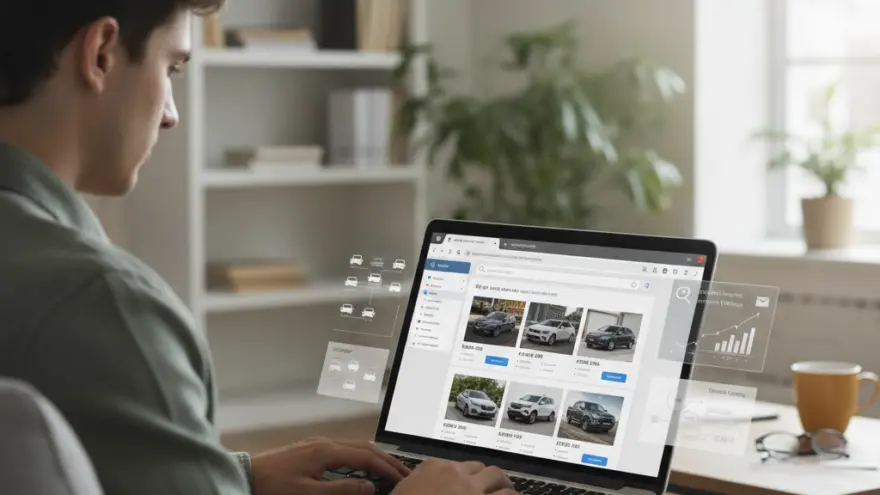
The journey to the next car almost always begins in a search box. People who search for cars online type a specific model into Google. They glance at the photos and skim the first results. Only when an offer truly fits do they pick up the phone.
For your dealership this is the decisive moment. The shortlist is built right here. A dealer who does not show up is quietly ruled out. Here is an everyday example. A family wants a used wagon. They type the model into Google with a price range. If a matching vehicle page lives on your own website, Google can show your offer. If it does not, the only path runs through an outside marketplace. There your car sits among many similar ones. What used to be a walk across the lot is now a scroll at the kitchen table.
They look for a specific car, not a dealer
Almost nobody searches for a dealership as such. When they search for cars online, buyers rarely type a company name. They describe the car they want. Model, year, mileage, equipment and a nearby price are the terms that count.
These specific queries are an opportunity. They reveal exactly what the person wants. Imagine someone after a BMW 3 Series Touring with automatic transmission under 22,000 dollars. That hands you the perfect template for a vehicle page. On a large marketplace this precision gets lost. Every listing follows the same template. On a page of your own you answer the query directly. You give it a title, a clear price, photos and an obvious way to make contact. An anonymous search turns into a concrete enquiry with you.
How your inventory becomes findable
The ADP Car Market Hub WordPress plugin turns your vehicle data into your own, searchable pages. They live on your website and answer exactly these searches. Every car gets its own address. Google indexes it as standalone content. Visitors filter by model, price and equipment on your site. They land on the right car, without the detour through an outside marketplace.

Most of the research happens on a phone
A large share of searching now happens on a phone. It often happens in the evening and in short bursts. Many people search for cars online on the go. They scroll fast and line up several offers. Within seconds they decide whether a page is worth a closer look.
That sets clear demands for your website. A slow page, tiny photos or a hidden phone number cost you the contact. Here is an example. Someone spots a suitable car during a lunch break. They want to check the equipment and send a message. If the form fails on the phone, they message the next dealer. A fast, mobile friendly vehicle page keeps that moment alive. For how strongly mobile prospects tip the balance, read why mobile car buyers often decide before they ever visit.
On a marketplace you stand next to everyone else
Many cars are visible online, but only on a large comparison marketplace. There, thousands of vehicles sit side by side. The searcher mainly compares price. The business behind the offer fades away. Every dealer looks the same.
That is not bad in itself. Such marketplaces create reach and people use them daily. It only gets critical when your vehicles can be found nowhere else. Then you pay for visibility and stand in direct comparison with everyone. A buyer who sees three similar models often picks on the lowest price alone. Only a page of your own pulls you out of that price comparison. It shows who you are and why the trip to you is worth it. For how to move closer to local demand, see how to win local search for your dealership.
Run your own search
Type into Google what a buyer would type. Use the model, your region and a price. See whether your own website shows up, or only outside marketplaces. This quick test shows in two minutes where your visibility really stands today.
Trust decides between two similar offers
Anyone spending several thousand dollars wants more than technical data. Buyers who search for cars online look at reviews and clear prices. They want to know who stands behind the offer. Between two almost identical cars, trust often makes the final difference.
On a marketplace this trust is hard to build. Every dealer appears the same. On a page of your own you show your business, your team, warranties and financing. Real reviews sit there too. Picture a prospect who finds the same car twice. Once it is a plain line in a comparison. Once it is a page with photos of the business, a named contact and clear terms. In most cases they get in touch where they feel safer. You can build that impression deliberately on your own website, long before any test drive.
From real use
A dealership put its inventory online as its own, findable vehicle pages. It used the ADP Car Market Hub WordPress plugin. Almost every enquiry used to arrive through outside marketplaces. Now buyers increasingly found the cars directly through Google and got in touch on the dealership’s own site. The plugin made the difference. Only the dealer’s own indexed pages made the vehicles visible to direct search. This is not a promise for every business, yet the lever is clearly visible.
What this means for your dealership’s visibility
If the search begins in a search box, your offer has to appear there. People who search for cars online find you through your own vehicle pages. Google needs to read them as a complete answer. An outside listing on your website is not enough. That content usually does not belong to your domain and builds little search value.
The path is manageable. Your inventory is connected once. From then on it keeps producing your own pages with price, photos, equipment and contact. Every page sits in the sitemap, is internally linked and can be measured on its own. So you see which car was searched for and which page led to an enquiry. Instead of paying for visibility forever, you build a channel of your own. It belongs to you and grows with every new vehicle page.
Conclusion
Buyers decide online today, long before they walk into a dealership. They look for a specific car. They research on a phone and compare several offers first. Only then do they reach out. A dealer who understands how people search for cars online can be visible at those moments. That dealer wins direct enquiries instead of being one line in a comparison. The ADP Car Market Hub WordPress plugin from AD Promotion brings your vehicles onto your website as your own, findable pages. It makes them visible to Google. The enquiry stays with you. The prospect sees not just a listing but your business, the car and a clear way to make contact.
Sources
- Think with Google, studies and data on search and buying behavior.
- AutoScout24, a large public vehicle marketplace plus products and pricing for dealers.
- Google Search Central, how Google Search works, including crawling and indexing.
- Pew Research Center, data on internet and smartphone use.
Frequently Asked Questions
How do buyers search for a car online today?
Most start on Google with a specific model, often together with the year, equipment and a price range. They look at photos, compare several offers and only reach out once a car genuinely fits. A large share of this happens on a phone.
Is it not enough to have my cars on a big marketplace?
A big marketplace creates reach, but it places you right next to everyone else. There price dominates and the business behind the offer stays invisible. A vehicle page of your own pulls you out of that pure comparison and makes you the direct hit on Google.
Why is my own vehicle page better than an outside listing?
An outside listing on your website usually does not belong to your domain and builds little search value. A real vehicle page, by contrast, is indexed by Google as standalone content, appears in your sitemap and can be measured on its own.
How important is the mobile view of my website?
Very important, because a large share of searching happens on a phone. If a page loads slowly or the form fails, the prospect quickly moves to the next dealer. Fast, mobile friendly vehicle pages keep that moment from slipping away.
Does the ADP Car Market Hub WordPress plugin require AutoScout24?
No. AutoScout24 is a convenient data source, not a condition. You can just as easily load your inventory from a table such as CSV or Excel, from XML or JSON, through an automatic feed via URL, FTP or SFTP, or by hand in the backend.
How quickly do new cars appear online?
As soon as the data is imported, it becomes its own vehicle page, usually within a few minutes. With an automatic feed, new cars flow onto your website without further effort and stand there as a findable page.
What does my own visibility give me over paid packages?
Paid packages rent visibility in someone else’s system, and it ends the moment you stop paying. Your own pages build a channel that belongs to you and gains value with every new vehicle page, because Google keeps that content indexed over time.
Can I measure which page led to an enquiry?
Yes. Because every vehicle page belongs to your own domain, you can evaluate it individually in Google Analytics and in Google Ads. So you can see which car was searched for and which page actually led to an enquiry.