
The cost of listing portals rarely shows up in full on the invoice. The monthly package price is the visible part. The real price sits in what a dealership never builds. Show your used cars only on someone else’s marketplace, and you rent reach. You also stay locked in a constant price comparison. The ADP Car Market Hub WordPress plugin from AD Promotion takes the other route. It turns your inventory into your own findable vehicle pages.
Most dealers know the monthly bill. The full account behind it is harder to see. This article sets out the real cost of listing portals. It explains why some charges only surface on a second look. And it shows the way from rented reach to lasting value.
What the cost of listing portals really includes
The invoice shows a clear amount per vehicle or package. Inside the business it counts as the whole effort. Yet the visible cost of listing portals is only the tip. Below it sit charges that no statement shows. They still recur every month.
There is the time spent preparing data. There is updating prices and booking featured placements. There is also the constant watch on your own ranking. Take an everyday example. A dealer books a top placement for a clean Volkswagen Passat. The listing should appear near the top. Two weeks later a rival does the same with an identical car. The visibility is gone again. The bill stayed the same. The effect did not. So the real effort hides in fees, hours, and lost attention.
Renting instead of owning
The largest block of cost appears on no line. It is made of something missing. Pay month after month for visibility, and you build no asset. When the package ends, the visibility ends. Nothing remains that belongs to the business. That is how the cost of listing portals stays pure rent.
Picture a rented shop in a prime location. Visitors arrive while the rent is paid. The address still belongs to someone else. A dealership shown only on third party marketplaces sits there too. It pays for reach. The customer relationship, the Google visibility, and the data stay with the marketplace. Publish the same cars as your own pages as well, and that changes. The same budget flows into an inventory on your own domain. For the step by step path, read here how to become less dependent on the big marketplaces.
How this works in practice
This is where renting and owning part ways. The ADP Car Market Hub WordPress plugin turns your inventory into your own pages. They are findable on Google and hosted on your domain. The same budget that rents pure visibility today builds a channel that is yours. Every new page adds to its value.
The comparison squeezes your margin
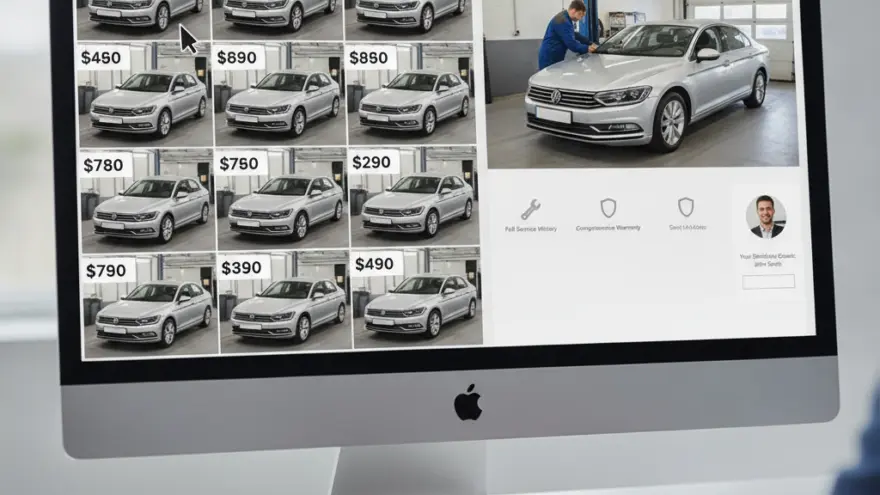
A marketplace lines up similar cars side by side. That alone changes buyer behavior. Search for a Volkswagen Passat of a certain year, and you get a long list. It sorts by price. In that view the lowest number wins almost every time.
For the dealership a quiet pressure on margin follows. A clean car with a full service history sits beside a weaker offer. The searcher reads the price first. The difference comes only later. To survive the comparison, many cut the price. They never show the added value. That gap is a real, if invisible, cost. On a dedicated vehicle page the car stands on its own. It shows reconditioning, warranty, and a named contact. Twenty alternatives are not one click away. So the offer decides again.
Lost data you need for the next campaign
Every enquiry through a marketplace brings a contact. The data behind it rarely follows. The marketplace knows which car was viewed. It knows when demand rises and which ad worked. The dealership keeps only the single enquiry.
This data loss costs twice. Without your own measurement, the working part of the budget stays unclear. The next campaign also becomes hard to plan. Take an example. A dealer wants to check the spring promotion for station wagons. Inside the marketplace there is no reliable trail. As your own pages, the cars tell more. Google Analytics shows which page was visited and how often. It also shows where the contact began. Guesswork turns into control. The advertising budget then works measurably for your own business.
When advertising sends buyers away
The account turns contradictory with your own ads. A dealership runs an ad. It points to a car inside the marketplace. The business pays the package for visibility. On top, it pays the ad to a third party domain.
On that landing page comparable offers appear at once. The hard won click spreads across the whole marketplace. One dealer paid for it. The whole system gained. Here is a case. A business promotes a specific Audi A4 through Google Ads. It links to the listing on the marketplace. Ten more A4s sit right beside it. Point the same ad at a dedicated vehicle page, and that changes. The prospect lands on that car and that dealership. The paid click then stays in your own house.
Work out your cost per sale first
Divide your last annual bill from the marketplaces by the cars actually sold through them. The result is your honest cost per sale. It shows what share of the budget flows to a third party domain. And it shows how much would build lasting value on your own site.
The alternative, a channel that is yours
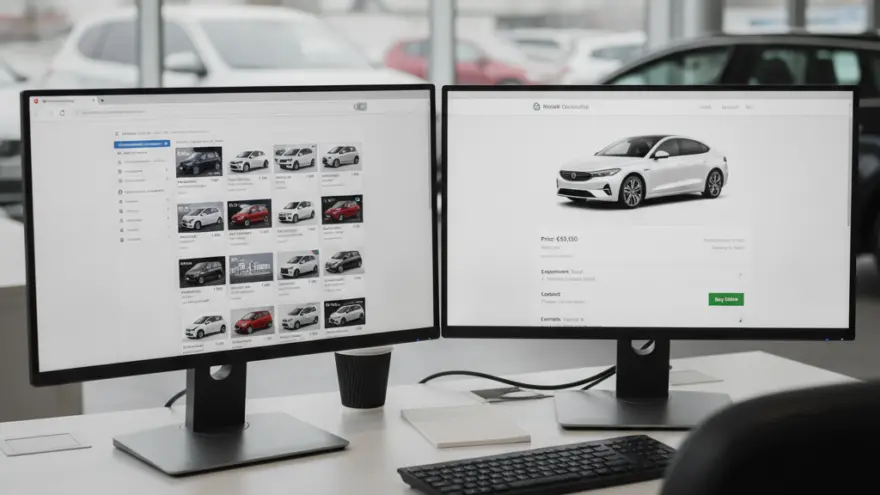
The point is not to avoid the big marketplaces. Their reach is real. Many buyers start there. To lower the cost of listing portals, place your own lasting visibility beside them.
This is where the ADP Car Market Hub WordPress plugin comes in. It reads your vehicle data. The source can be AutoScout24, a CSV or Excel sheet, or an automatic feed. From it grow complete pages on your WordPress website. Each page carries the price, photos, equipment, location, and contact. It appears in the sitemap. Google records it as content of your own. The budget no longer rents visibility alone. It builds an inventory that belongs to the dealership. To sell straight from those pages, read here how to sell cars online from your own website.
From real use
A dealership added its own vehicle pages beside the marketplace. The ADP Car Market Hub WordPress plugin built them. The usual packages kept running. Before, almost every enquiry came from the marketplace. After a few months, the pages indexed by Google brought a growing share straight through the website. The plugin made the difference. Only the dealer’s own findable pages set the cars apart from the comparison. It is not a promise. The leverage on the cost per enquiry was clear.
Conclusion
The cost of listing portals reaches far beyond the package price. A dealer visible only on third party marketplaces keeps paying rent for reach. They stand in a pure price comparison. They lose the data. In the end they advertise a foreign domain. None of these items has to be avoided. Each deserves to be known and weighed. Publish the inventory on your own domain as well, and the budget shifts from rent to a lasting channel. The ADP Car Market Hub WordPress plugin from AD Promotion reads the vehicle data. It builds standalone WordPress pages. And it makes the inventory visible on Google and in your own advertising. The enquiry then stays in your hands. The buyer sees your dealership, not a list of interchangeable offers.
Sources
- AutoTrader, large US vehicle marketplace with plans for dealers.
- Cars.com, US marketplace for new and used vehicles.
- Google Search Central, how Google Search crawls and indexes content.
Frequently Asked Questions
Are the costs of listing portals really higher than the package price?
The package price is only the visible part. On top of it come working hours for data upkeep, booked featured placements, the margin pressure from the comparison, and the missing build up of your own visibility. These items appear on no monthly bill yet recur all the time.
Should we leave the large vehicle marketplaces because of this?
No. Their reach is real and many buyers start their search there. The sensible course is to keep using the marketplaces and place your own findable vehicle page alongside them, so that not every enquiry is born inside a third party comparison.
Do we strictly need AutoScout24 for our own vehicle pages?
No. The ADP Car Market Hub WordPress plugin reads the data just as well from CSV, Excel, XML, or JSON, through an automatic feed over URL, FTP, or SFTP, or by hand in the backend. AutoScout24 is a convenient source, not a requirement.
How does an owned page lower the cost per enquiry?
An owned page is recorded by Google as content of your own and brings direct enquiries without paying again for each one. The budget builds a lasting inventory instead of merely renting visibility.
What does the data loss on a marketplace mean in practice?
The marketplace knows how prospects behave, while the business usually receives only the single enquiry. Without measurement of your own it is hard to steer which part of the budget works. Owned pages return this data through Google Analytics.
Is the effort worthwhile even with a small inventory?
Yes. Even at twenty to thirty vehicles, package costs and working hours add up noticeably. One page per car is generated automatically from the data you already have, so the extra effort stays small.
How quickly do the vehicles appear as their own pages?
After the first import the pages are created within minutes. New vehicles follow automatically as soon as the data is updated, each with price, photos, location, and contact.