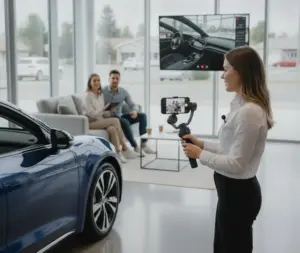
To sell cars online in 2026 means much more than placing an advert on a busy listing site. The sale begins on the page a buyer reaches after a search. That page decides whether the visit becomes an enquiry or just another price comparison. On your own website you control the price, the photos, the contact and the next step. On a marketplace the buyer is one click from twenty rivals. This article shows how a dealership closes more sales from its own site, step by step.
None of this means dropping the big listing sites overnight. They still bring reach, and many buyers start there. The point is to make your own website the place where you actually sell cars online, not only where stock is announced. The steps below are practical and build on each other. Most of them run with little daily effort once the inventory flows in by itself. You can read why that own website matters in why your own dealership website matters in 2026.
What it really means to sell cars online
Many dealers still read sell cars online as put the stock on a portal and wait. It covers visibility, but it stops at the click. The buyer who taps your listing lands on a page you do not own. Around it sit similar offers, and the easiest action is to compare prices. The sale then happens on someone else’s terms.
To sell cars online really means owning the moment of decision. A buyer looks for a specific Ford Focus with its year and mileage. He wants a clear page, a fair price and an easy way to ask a question. If that page is yours, the conversation starts with you. One dealer used to send every ad click to a marketplace. Once the same cars had their own pages, the enquiries arrived by email and phone instead. That is the whole idea, from renting attention to owning the decision.
The vehicle page where the decision is made
A page that sells does one job well. It shows a fair price, many honest photos and the full equipment list. It adds the service history and the mileage. It makes the next step impossible to miss. Thin pages with three pictures and a phone number lose every time. A serious buyer should almost be able to decide before calling.
Picture two pages for the same Opel Astra at a similar price. One has a short blurb and a single image. The other shows fifteen photos, the inspection date and a financing example. It also carries a button to book a viewing. The second page removes doubt, and removing doubt closes a used car sale. Building that page for every car by hand would be heavy work. That is exactly where automation earns its place.
How this works in practice
This is where the ADP Car Market Hub WordPress plugin comes in. It turns every vehicle in your inventory into its own page. On each page it places a clear enquiry path, from a contact form to a callback request. A visitor becomes a named enquiry in your inbox, with the exact car attached, so the sale never leaves your hands.
Turning a visitor into an enquiry
Traffic alone never sold a car. The page has to invite the next move. It must make that move easy on a phone, where most searches now happen. A short contact form, a callback request and a tap to call number cover most buyers. A clear ask about this car button beats a contact link buried in the menu.
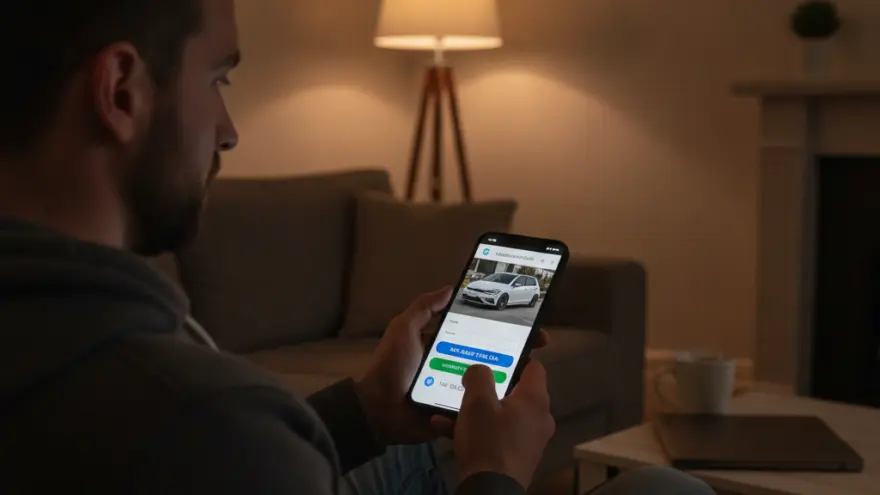
Speed then finishes what the form starts. A buyer views a Volkswagen Golf at half past nine in the evening. He will rarely phone, yet he will send a one line question if the form is right there. The enquiry lands in your own inbox with the car attached. You can reply with the right details at once. One dealer answered every website enquiry within two hours, and more of them turned into appointments. The buyer had simply not moved on yet.
Trust that carries the sale
A used car costs tens of thousands, and nobody hands that over on data alone. The buyer wants to know who stands behind the car. On your own pages you show the team, the workshop and named contacts. You add real reviews. A single vehicle then connects to a face and a place. On a marketplace every seller hides behind the same template.
The effect is concrete. Two dealers list a comparable BMW 1 Series. One page shows opening hours, a short note on the warranty and three genuine reviews. The other shows none of it. The first dealer feels safer to a stranger, and safety turns a click into a visit. Trust is not a slogan here. It is a set of small, honest details that let a buyer commit.
Financing and a test drive, booked online
Two questions decide most used car sales. Can I afford it, and can I see it. Answer both on the page and the last reasons to hesitate fall away. A simple financing example shows a monthly figure, with a clear note that it is an estimate. A booking button for a test drive turns interest into a fixed appointment. Clear financing answers are part of how you sell cars online without losing the buyer to a bank comparison.
Think of a buyer eyeing a Skoda Octavia who is unsure about the monthly cost. A financing slider shows a rough rate and keeps that buyer on your page. Without it, he leaves to compare loans elsewhere. Add a calendar to book a Saturday test drive, and the enquiry becomes a real visit. These are not gimmicks. They are the online versions of the questions every salesperson hears on the lot.
Making the sale measurable
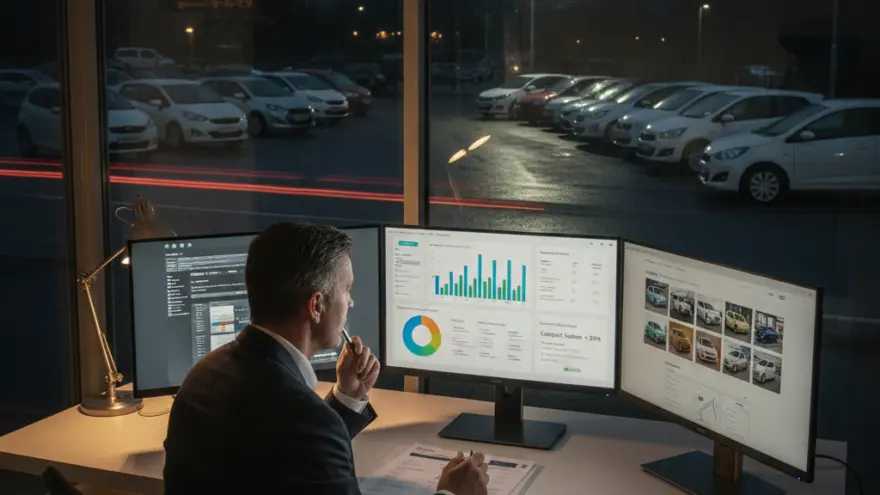
When the sale happens on your own site, you finally see what works. Google Analytics shows which cars draw the most views. It shows which pages turn views into enquiries. It even shows which source brought the buyer, a search, an ad or a social post. This picture stays invisible when the click ends on a marketplace.
Used over a few weeks, this turns guesswork into decisions. A dealer might learn that compact cars under a certain price sell fastest from the site. He can then shift both stock and ad budget toward them. Even one clean report shows where the next sale will come from. That insight is the heart of any plan to sell cars online. You can keep that storefront open at all hours, as shown in how to build an online car showroom open 24 hours.
Add one clear question button to every car
Look at any vehicle page on your site as a buyer would, on a phone. If asking a quick question takes more than one tap, add a short enquiry form and a tap to call number directly under the price. Most sales lost online are not lost on price. They are lost because asking was too much effort.
From real use
A dealership moved its stock onto its own vehicle pages with the ADP Car Market Hub WordPress plugin, each page carrying a direct enquiry form. Before, almost every lead came through a marketplace. Afterwards, the pages indexed by Google brought noticeably more direct enquiries through the website, and those enquiries arrived with the exact car attached. The plugin made the difference, because it turned the inventory into findable pages that buyers could reach and message directly. It is not a fixed promise, yet the lever is clear.
Conclusion
To sell cars online from your own website is less a single switch than a chain of small, controllable steps. A clear vehicle page makes the decision easy, a visible enquiry path captures the buyer, honest detail builds trust, financing and a test drive remove the last doubts, a fast reply closes the deal, and measurement tells you where the next sale will come from. The big listing sites still help you get found, but the sale belongs on ground you own. The ADP Car Market Hub WordPress plugin from AD Promotion reads your vehicle data, builds standalone WordPress pages and puts an enquiry path on each one, so the buyer reaches you directly instead of disappearing into the comparison of everyone else.
Sources
- AutoScout24, pan European vehicle marketplace with products and pricing for dealers.
- Cars.com, large used and new car marketplace in the United States.
- Think with Google, research on how buyers search and decide online.
- Google Search Central, how Google Search works, including crawling and indexing.
Frequently Asked Questions
Does selling cars online mean I should leave AutoScout24 or Cars.com?
No. The big listing sites still bring reach and many buyers start there. The goal is to make your own website the place where the sale is finished, with your own pages, your own enquiry forms and your own data, while the marketplaces keep feeding visibility.
What does a vehicle page need in order to actually sell?
A fair price, many honest photos, the full equipment list, the service history and the mileage, plus an obvious way to ask a question. The page should answer the buyer’s doubts before they call and make the next step impossible to miss.
How do I turn website visitors into real enquiries?
Put a short contact form, a callback request and a tap to call number directly under each car, designed for a phone. A clear question button next to the price collects messages even late at night, long before the buyer reaches a competitor.
Can I show financing on my own vehicle pages?
Yes. A simple financing example with a monthly figure and a clear note that it is an estimate helps a buyer picture the purchase, and it keeps that buyer on your page instead of sending them off to compare loans elsewhere.
How fast should I answer an online enquiry?
As fast as you can, ideally within a couple of hours. The dealer who answers first usually wins the car, because the buyer has not yet moved on to the next offer. A quick, personal reply with the right details makes the difference.
How do I know which cars and channels actually sell?
When the sale runs on your own site, Google Analytics shows which cars draw views, which pages turn views into enquiries and which source brought the buyer. That lets you move stock and ad budget toward what works, which is invisible on a marketplace.
Do I have to build a page for every car by hand?
No. The inventory flows in from AutoScout24, a CSV or Excel sheet, an XML or JSON file or an automatic feed, and each car becomes its own page automatically. New cars go online within minutes and sold ones drop out on their own.