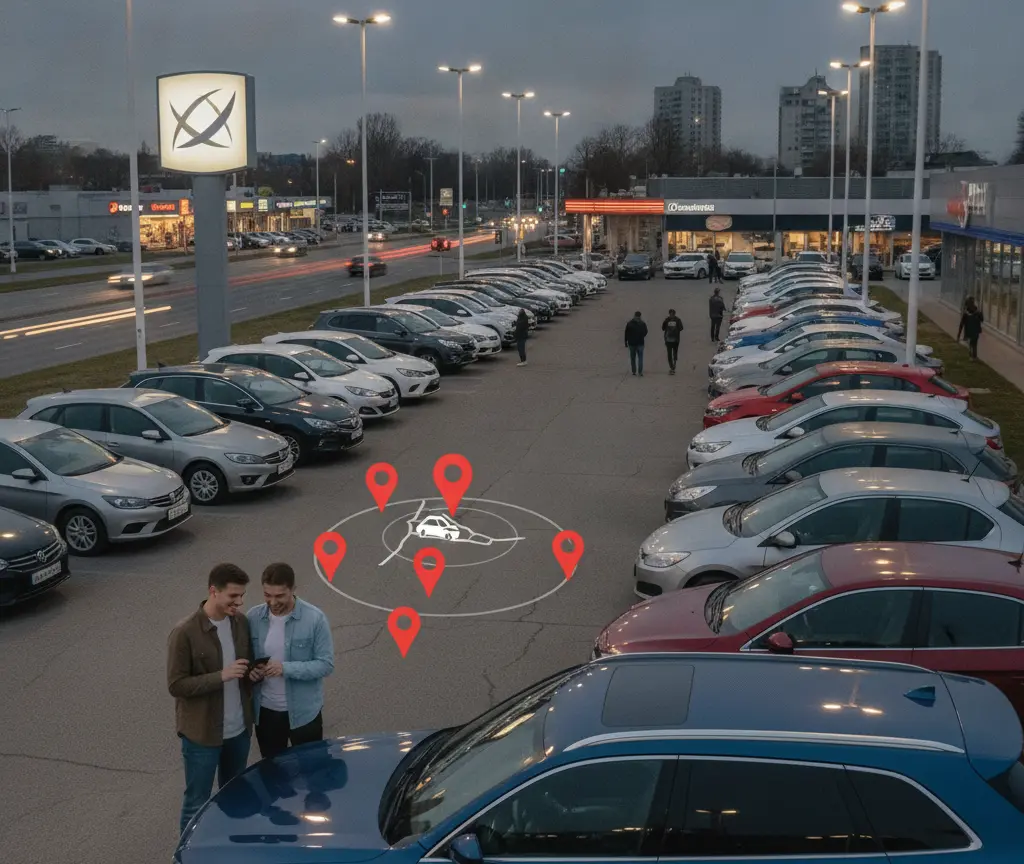
Most buyers are not looking for any car. They want one nearby. They type a model with a town. Some add a phrase like near me. Often Google already knows where they are. So local search is no side topic for a dealership. This is where most serious enquiries begin. A dealer who misses local search loses the buyers from the region.
The ADP Car Market Hub WordPress plugin from AD Promotion is built for this. It turns your inventory into your own findable vehicle pages with a clear location. This guide shows how regional buyers search. It explains what Google weighs. And it shows how you win local search.
Why buyers look close to home first
A used car is rarely bought blind across long distances. Someone after a family car wants to see it. A test drive is part of it. And the trip should be short if a service issue comes up. So the buyer’s location almost always feeds the search, often without being typed on purpose.
Google reads this intent. For many car searches it shows results with a place reference. It also shows the map pack of nearby businesses. A buyer in Manchester seeking a used VW Passat wagon sees different results from someone in Bristol. So the widest reach does not win the enquiry. The best answer for that area does.
Here is an everyday example. A family on the edge of town types dealership used cars Manchester. They check which nearby businesses show suitable vehicles. A dealer with a real vehicle page and a clear address makes the shortlist. A dealer who lives only on a marketplace appears at best on the margin.
What local search expects from your website
Google needs clear signals to place a dealership in a region. A consistent address with a phone number is one. A clear place reference in the text is another. Above all, it needs your own pages that Google can read and locate. Without these signals, the business stays blurry for local search.
The core is one page per vehicle on your domain. It names the model, the price, the specification and the location. Google can treat it as a regional result. The plugin builds exactly these pages from your vehicle data, with address and contact.
How your inventory becomes findable locally
The ADP Car Market Hub WordPress plugin turns your inventory into your own vehicle pages on your domain. Each carries a location, a price and a direct contact. Because they belong to your address and sit in the sitemap, Google can tie them to a region. Visibility then grows where your buyers really look.
A practical picture helps. If your BMW 3 Series Touring is its own page with the Manchester address, Google can show it to a searcher from the area. If the same car lives only on the marketplace, the findable page belongs to the marketplace. Your dealership stays in the background.
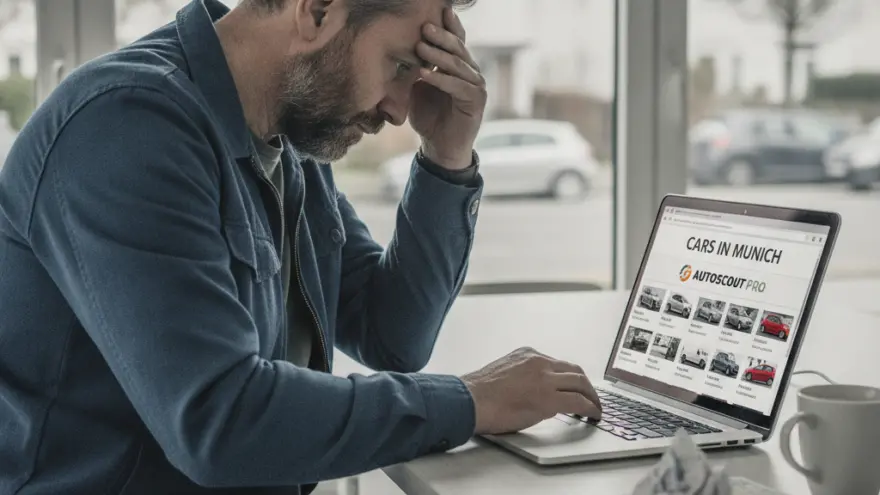
Why the big marketplaces own the region
When people search for a car, AutoScout24 and similar sites usually sit at the top. This is rarely about the best regional answer. It is about the sheer number of their pages with a place reference. They keep an overview for almost every town. So they hold the front positions.
For the single dealership this is awkward. Your inventory appears there with a location, but under the marketplace brand. When the regional buyer clicks, they land in a list full of alternatives from the same town. Your real closeness then feeds the marketplace, not your domain.
An example. A buyer near town finds your well kept Opel Astra through the marketplace. Right beside it they see five similar models from other dealers nearby. With your own, locally findable vehicle page, that click would reach you directly.
Dependency adds to this. A dealer visible only on the marketplace pays for reach and stands beside everyone else. When competition rises, often only a pricier package helps. Your own vehicle page, by contrast, keeps working for your region.
Your own vehicle pages as the regional lever
The best answer is not to avoid the marketplaces. It is a second, owned visibility in the region. Every vehicle page on your domain is a separate result. Google can tie it to a town and a radius. So each vehicle strengthens local search for your business.
It matters that these pages carry a real place reference. Address, directions and opening hours belong on them. So does a clear mention of the area and internal links to your inventory overview. For how to set up these foundations cleanly, read how SEO for dealerships works.
From real use
A dealership on the edge of a mid sized town put its inventory online as its own vehicle pages with the ADP Car Market Hub WordPress plugin. Each carried a clear address. Before, the area reached the business almost only through the marketplace. After, the now indexed pages brought noticeably more direct enquiries from nearby. The plugin made the difference, because only the dealer’s own, locally findable pages made the vehicles visible. This is not a promise, yet the lever is clearly visible.
The Google Business Profile as a regional anchor
Alongside your own pages, the Google Business Profile counts. It decides how your dealership appears in the map. It carries address, opening hours, photos and reviews. A well kept profile improves the chance of a spot in the local three pack above the organic results.
Profile and website work together. When the profile points to your domain, and that domain holds vehicle pages with the same location, both signals confirm each other. For how to set up and maintain the profile, read how to optimize your Google Business Profile.
An example. A buyer sees your dealership in the map pack. They click through to the website. They land not on a generic home page, but straight on the matching vehicle nearby. That short path convinces regional buyers.
Keep the details current. Wrong opening hours or an old number cost trust and enquiries. A photo of the location and a short note about the area round off the listing.
Reviews and closeness that convince
In local search the buyer compares more than vehicles. They also compare the businesses. Reviews, a reachable number and a trustworthy presence often decide who gets contacted. When two offers look alike, closeness tips the decision.
Genuine reviews from the region weigh more than any advertising. They show the searcher that other buyers had a good experience. For how to gather and surface honest reviews, read how genuine reviews build trust.
Ask satisfied buyers for a short review. A friendly question after the sale is often enough. Reply calmly to critical voices too, because future buyers read along.
Name your area in plain words
On your vehicle and contact pages, spell out the town and radius you serve. A bare postcode is not enough. A line such as used cars in Manchester and the surrounding area gives Google and the buyer the same clear place reference. That strengthens local search for your business.
Conclusion
A dealer who sells in a region does not win on the widest reach. They win on the best answer nearby. If your inventory lives only on marketplaces, your closeness mainly feeds their visibility. Put your vehicles online as your own pages with a clear location. Keep your Google Business Profile in shape as well. Then you build regional visibility that belongs to your dealership. The ADP Car Market Hub WordPress plugin from AD Promotion creates these vehicle pages from your data. So you win local search exactly where your buyers live.
Sources
- AutoScout24, pan European vehicle marketplace with regional search and dealer products.
- Google Business Profile Help, setting up and maintaining your local listing.
- Google Search Central, how local results appear in Google Search.
- Google Search Central, how Google Search works, crawling and indexing.
Frequently Asked Questions
What does local search mean for a dealership in practice?
It covers every query where location plays a role, such as a model name together with a town or a phrase like near me. Google then shows results and a map pack of nearby businesses. A dealer who appears there with their own vehicle pages and a clear address reaches exactly the buyers most likely to drop by.
Can a small dealership rank above the big marketplaces regionally?
Yes, it is possible. In local search what counts is relevance for that specific area, not company size. A dealer’s own vehicle page with a clear place reference can beat a generic marketplace overview, especially in the map pack and for specific model searches from nearby.
Do I really need a Google Business Profile?
It is strongly recommended. The profile controls how your business appears in the map and in local search. Together with your own vehicle pages at the same address, both signals reinforce each other because the profile and the website confirm the same location.
How does the plugin help with regional visibility?
The ADP Car Market Hub WordPress plugin turns your vehicle data into your own pages on your domain, each with location, price and contact. These pages sit in the sitemap and Google can tie them to a region. Visibility then belongs to your address rather than to the marketplace.
Is it enough if my inventory shows through an iFrame?
For local search, rarely. A third party embed often does not technically belong to your domain and builds little of its own search value with a place reference. Real vehicle pages at your address are the better foundation, because Google reads them as your own, locatable content.
What part do reviews play in regional visibility?
A large one. In local search the buyer also weighs the business behind the offer. Genuine reviews from the region build trust and often tip the decision when two offers look similar. They complement your own vehicle pages well.
Do I have to cancel my marketplaces because of this?
No. The marketplaces remain a reach channel while your own regional visibility grows. A transition makes sense, in which your own website gradually takes over more direct enquiries from nearby.
How quickly does this affect local search?
It depends on inventory, competition and upkeep. Your own vehicle pages are often indexed within days, while a noticeable regional effect builds over weeks. A steady inventory and a well kept business profile with the same location matter most.