
Your dealership website matters more in 2026 than ever before. It decides whether a buyer finds your business directly. The alternative is one more entry on someone else’s marketplace. A dealer who shows used cars only on the big listing sites rents reach. At the same time, the dealer competes on price with the rest. The real enquiry happens elsewhere. It happens where the buyer reaches you directly, on your own domain.
Search behavior has shifted clearly over the past few years. Google now answers many questions straight in the results. An AI overview now sums up what is public and easy to find. This article shows why that shift makes your own site matter more. It also shows how a dealership grows more independent because of it.
How buyers search for cars in 2026
The road to a used car almost always starts with a search. Few buyers open a particular seller on purpose; instead they type a specific model with its year and trim. A target price and a wish for a nearby hit come on top. For a long time this road led almost automatically to a large marketplace. That is simply where most of the cars sat.
In 2026 the results page looks different. Google often shows a short overview with images, prices and local hits. An AI summary tends to draw on clearly structured, publicly findable pages. Say your Audi A4 sits on your own domain with location and price. That answer can then name your business. Without the page, only the marketplace remains as a source. Whether an AI picks you up cannot be guaranteed. Without your own page, though, you have no chance of it at all.
Why depending only on car portals gets expensive
AutoScout24 and Cars.com are part of the market. Buyers use these portals every day. Nobody needs to avoid them, since they create genuine reach. The problem starts with full dependence. It appears when a business shows its cars only there.
The dealership then pays month after month for packages. At the same time it stands next to twenty similar offers. For many searchers, price becomes almost the only thing that counts. An everyday example makes this clear. A dealer lists a well kept VW Passat with a complete history. Among many comparable models the listing still disappears. The enquiries fall short of the investment. The reach belongs to the marketplace, not to the business. Cancel the package, and the visibility vanishes too. That missing control makes pure portal dependence expensive over time. You can read how to break out of it here, how to become independent from car portals as a dealer.
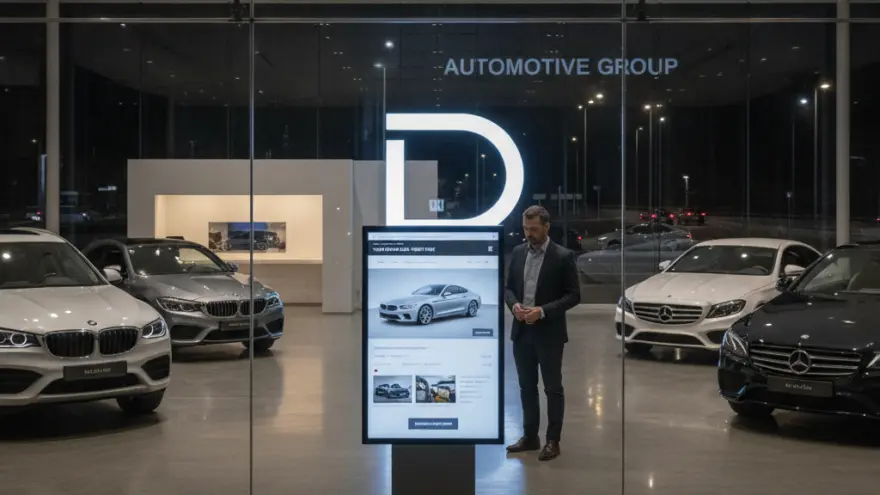
A dealership website that truly belongs to you
A real dealership website is more than a digital business card. It is the only sales channel a business controls completely. That control runs from the content and design to the details of its prospects. On a third party marketplace you share the stage with rivals. On your own domain only your cars appear.
For that channel to carry weight, every vehicle needs its own findable page. A foreign list inside an embedded window is not enough. Only your own page is recorded by Google as part of your domain. Google adds it to the sitemap and shows it as a direct hit. A prospect then sees your business at once, not a row of competing ads. You can read how to keep that inventory open around the clock here, how to build an online car showroom open 24 hours.
How this works in practice
This is where the ADP Car Market Hub WordPress plugin comes in. It turns your inventory into your own vehicle pages. Each page carries price, images, equipment, location and a direct way to make contact. Your dealership website then grows with every car, without double maintenance.
Trust is built on your own pages
A used car quickly costs tens of thousands. Anyone spending that much rarely decides on technical data alone. The buyer wants to know who stands behind the offer. Warranty, service and a fitting finance plan all matter. On a marketplace every dealer looks the same. The individual business disappears behind a uniform template.
On your own dealership website you show your team and your workshop. You add reviews and named contacts. The single vehicle then connects with a face and a place. An example makes the difference clear. Two dealers offer the same BMW 3 Series at a similar price. Only one shows opening hours, financing examples and real customer voices. That personal impression often tips the decision, long before a test drive.
Why advertising and measurement only work on your own pages
Many dealerships run Google Ads or social campaigns. Often they link these to a vehicle on the marketplace. The business then pays twice. It pays for the portal package and for the ad on top. That ad leads to a foreign domain. There, alternatives appear straight away.
Point the same ad at your own vehicle page instead. The prospect then lands directly with you. Google Analytics and Google Ads can show which ad led to which enquiry. The budget then works for your own channel. Without your own pages, that measurement stays in the dark. The decisive step happens on someone else’s domain. Only on your own domain can you follow the path from click to enquiry and improve it.
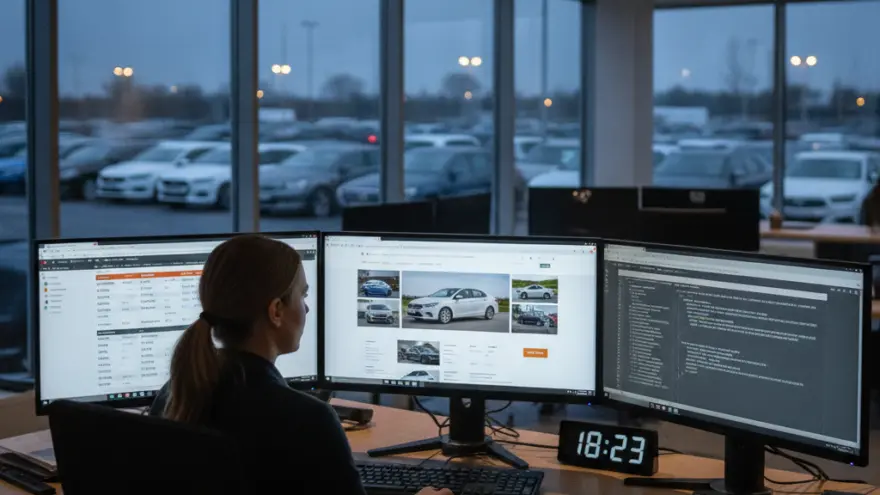
How your inventory becomes your own vehicle pages
Building a complete dealership website sounds like heavy upkeep. Most of it, though, can be automated. If you already work with AutoScout24, the inventory comes from there. Double entry is not needed, and AutoScout24 is not required either. A CSV or Excel sheet, an XML or JSON file or an automatic feed by URL work just as well.
From that data come complete vehicle pages. They appear in the sitemap and link to each other. Google records them as your own content. New cars go online within minutes. Sold ones drop out automatically. The inventory stays current without anyone maintaining each page by hand.
Check your own Google visibility first
Type a specific car from your inventory into Google. Search the way a buyer would, with the model, the year and your town. If only the marketplace appears and not your own domain, the matching page is missing. This short test shows faster than any statistic where your website loses ground today.
From real use
One dealership put its inventory online as its own vehicle pages with the ADP Car Market Hub WordPress plugin. Before, almost every enquiry came through the marketplace. Afterwards, the pages indexed by Google brought noticeably more direct enquiries through the website, depending on the period. The plugin made the difference. Only the own findable pages made the cars visible to Google. That is not a fixed promise, yet the lever is clearly visible.
Conclusion
The big listing sites stay a sensible part of sales in 2026. They should not be the only place a dealership website exists, though. A business that shows its used cars only on third party marketplaces keeps paying just to be seen. It hands its reach, its data and trust to someone else. A dealership website of your own turns that around. It makes every vehicle a findable hit on your own domain. It ties advertising and measurement to your own channel. It also connects the offer with the business behind it. The ADP Car Market Hub WordPress plugin from AD Promotion reads your vehicle data and builds standalone WordPress pages. The enquiry then stays with you, instead of disappearing into the comparison of everyone else.
Sources
- AutoScout24, pan European vehicle marketplace with products and pricing for dealers.
- Cars.com, large used and new car marketplace in the United States.
- Google Search Central, how Google Search works, including crawling and indexing.
- Google Search Central, AI features in Google Search.
Frequently Asked Questions
Why does a dealership website matter more in 2026?
Because Google increasingly answers directly and AI overviews favor pages that are publicly findable. If a car sits only on a third party marketplace, your business is missing the very page that could answer those searches.
Do I have to cancel my car portals for this?
No. AutoScout24 and similar sites create reach and can stay. Your own website is added as a second channel that you control, instead of renting all of your visibility.
Is an embedded vehicle list on my site enough?
It looks like your own inventory, yet technically it usually stays a foreign embed. Google barely records it as content on your domain, so it builds little search value of its own.
Can a small dealership really show up on Google?
Yes, especially locally. When someone searches a specific model near you, your own vehicle page with location and price can be a direct hit, even next to large marketplaces.
What does AI search have to do with my website?
AI overviews tend to draw on clearly structured, publicly findable pages. Whether you are picked up cannot be promised, but without your own page you have no chance of it at all.
How much upkeep do my own vehicle pages need?
Little, when the inventory flows in automatically. New cars appear within minutes and sold ones drop out on their own, so nobody maintains each page by hand.
How does my own page help with advertising and measurement?
When an ad points to your own vehicle page, Google Analytics and Google Ads can show which ad led to an enquiry. With a link to a marketplace that step stays in the dark.
Do I need AutoScout24 to bring in the inventory?
No. The inventory can just as well come from a CSV or Excel sheet, from XML or JSON, or through an automatic feed by URL. AutoScout24 is possible but not required.