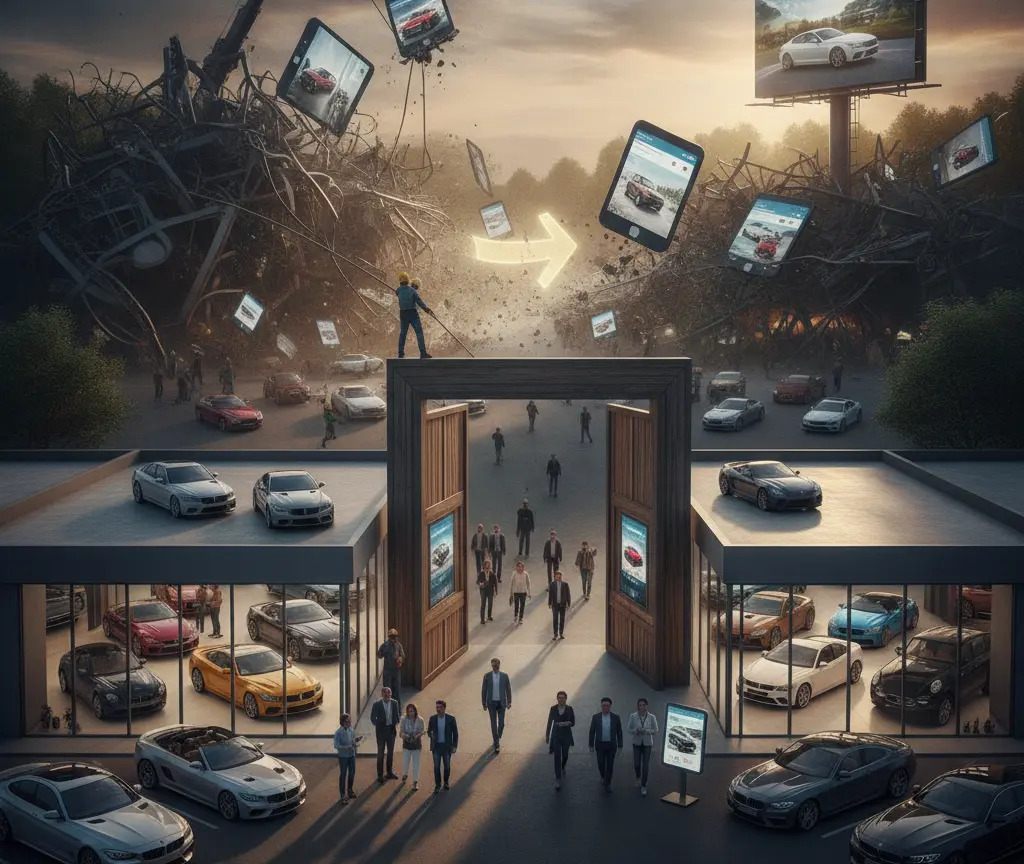
Every month a dealership pays its fees to the big marketplaces, and every month the same question lingers. What is left if one of those listings ever pauses? A dealer who wants to become independent from car portals does not have to cancel anything. The point is simply that your visibility should no longer hang on those sites alone. Independence here means a second pillar of your own, one that the business actually owns.
This article walks through how that pillar is built, step by step. It explains why full dependence grows expensive over time. It shows how your existing stock turns into findable pages of your own. And it shows how every enquiry finally lands on your own domain. The aim is not a break with the marketplaces but a healthy balance between rented reach and reach you control.
Why full dependence grows expensive over time
Cars.com, AutoTrader and CarGurus shape the used-car trade, and buyers open them daily. That is exactly where their value lies, so no one needs to avoid them. The trouble starts only with full dependence, the state in which a dealer shows the whole stock on those sites and nowhere else.
Three things then slip out of your hands. Price pressure rises, because your listing sits beside twenty near-identical ones. The reach belongs to the marketplace rather than the business, and the moment the package ends, the visibility ends with it. And the buyer’s contact details pass first through someone else’s form. A dealer in Ohio felt this plainly. He paid reliably for years, yet the month he paused, the phone went quiet. That silence showed him how little of what he had built was truly his own. For how much a site of your own shifts that balance, read why your dealership website matters more in 2026.
What being independent from car portals really means
Being independent from car portals does not mean avoiding them. It means no longer needing them. As long as every enquiry is owed to an outside marketplace, that marketplace sets the terms. Once a noticeable share of demand arrives through your own channel, the relationship turns around.
This balance is easier to picture in numbers. If nine of ten enquiries come from a marketplace today, even a third through your own website is a large step. The business can then negotiate calmly instead of renewing every package out of fear of going quiet. A dealer in the Midwest spread the shift across a full year on purpose. He kept the listings, built his own pages alongside them, and checked each month where the enquiries came from. In the end the question of cancelling was no longer a worry but a plain calculation.
Your own vehicle pages as the foundation
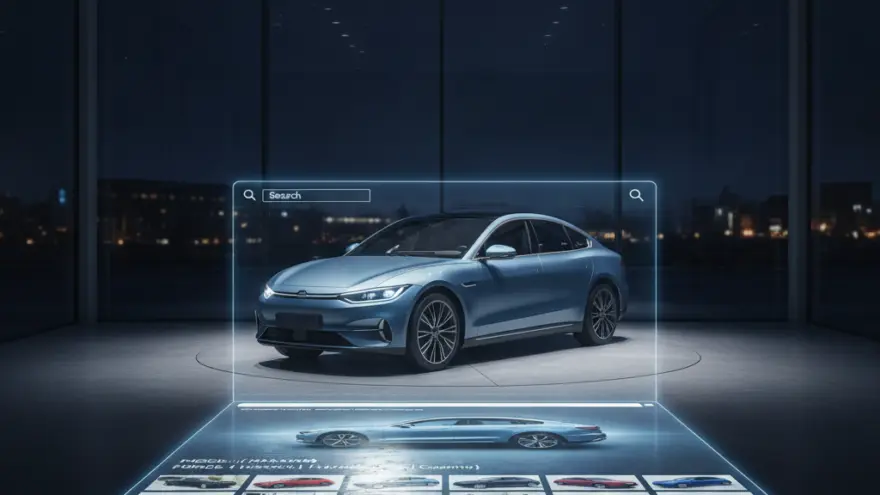
The first practical step toward becoming independent from car portals is a website where every vehicle has its own findable page. An embedded list inside a borrowed frame is not enough, because Google barely treats it as content of your domain. Only a real page of your own shows up as a direct result. It carries the model, the price and the location, for the exact car a buyer searches.
The effort is smaller than many fear, because most of it can be automated. Once a car is online as a page of its own, it works around the clock. It keeps selling long after the showroom has closed. For how to keep that stock open at any hour, read how to build an online car showroom open 24 hours.
How this works in practice
This is where the ADP Car Market Hub WordPress plugin comes in. It reads your stock from a feed, a CSV table or a marketplace export. From that data, it builds vehicle pages on your own website. Each page carries the price, photos, features and a direct way to make contact. Your own channel then grows with every car, without anyone keeping two records by hand.
Bringing enquiries and data back to your own domain
Independence shows not in the number of pages but in where the enquiry lands. On an outside marketplace the contact begins in its form, and the business often learns only the bare minimum. On your own page the enquiry arrives straight in your inbox, with full details and no detour.
Measurement matters just as much. A Google Ads campaign should lead to your own vehicle page, not to a third-party listing. Only then does Google Analytics show which ad produced the enquiry. A dealer in Texas compared both routes over a month. The ad pointing to his own page cost noticeably less per enquiry. The visitor did not see twenty alternatives lined up beside it. Only on your own domain does the path from click to enquiry become visible, and only then can you improve it.
Trust that only your own presence can build
A used car quickly costs tens of thousands of dollars, and few people decide on the technical data alone. The buyer wants to know who stands behind the offer, how warranty, service and financing are handled. On a marketplace, though, every dealer looks the same, because the uniform layout makes the individual business disappear.
On your own website you show your team, your workshop and real customer voices. The single car then gains a face and a place. Two dealers offer the same Honda Accord at almost the same price. Yet only one shows opening hours, a financing example and familiar contacts. That personal impression often tips the decision, long before the test drive. Leaving it to the marketplace alone gives away an edge that cannot be rented.

Four steps to become independent from car portals
The path falls into four calm steps. First, set up a website where every vehicle gets its own page. Second, feed in the stock once, automatically, so new cars appear without extra work and sold ones drop off. Third, point your advertising and your links consistently at those pages of your own. Fourth, measure each month what share of enquiries already arrives through your own channel.
The order is what counts. No one cancels the package on day one, because the marketplaces carry the business while your own channel is still growing. Only once your own pages deliver enquiries reliably does dependence turn into a free choice. That is the moment you are independent from car portals, not because you left them, but because you no longer need them.
Start with an honest stocktake
Search for three of your vehicles on Google the way a buyer would, with model, year and your town. If only an outside marketplace appears, the page of your own is missing. Then count how many of last month’s enquiries came through a third-party channel. Those two numbers tell you, more honestly than any theory, how dependent your business really is today.
From real use
One dealership put its entire stock online as vehicle pages of its own with the ADP Car Market Hub WordPress plugin. Before that, almost every enquiry came through a marketplace. Once Google had indexed the new pages, buyers increasingly got in touch directly through the website. The plugin was the cause, because only its own findable pages made the cars visible to search. This is not a firm promise, yet the lever is clearly there.
Conclusion
The big marketplaces stay a sensible part of selling, yet they should not be the only channel. A dealer who shows the cars only there pays continuously for plain visibility and hands reach, data and trust to someone else. A website of your own turns that relationship around, step by step. It makes every vehicle a findable result, ties advertising and measurement to your own channel, and links the offer to the business behind it. That is how you become independent from car portals without ever having to cancel them. The ADP Car Market Hub WordPress plugin by AD Promotion reads your vehicle data and builds standalone WordPress pages from it.
Sources
- Cars.com, large online marketplace for new and used cars with dealer services.
- AutoTrader, used-car marketplace and listing products for dealers.
- Google Search Central, how Google Search works, including crawling and indexing.
- NADA, National Automobile Dealers Association with data on the dealer trade.
Frequently Asked Questions
Do I have to cancel my marketplace packages to become more independent?
No. The big sites create reach and can stay. Independence grows once a rising share of enquiries comes through your own website, so you decide freely which packages are still worth it.
How long before my own website brings enquiries?
It depends on stock and region. First pages are often indexed within a few weeks, while a noticeable share of own enquiries usually takes several months. The key is not to cancel the packages too soon during that time.
Is an embedded vehicle list on my site enough?
It looks like your own stock but technically stays an outside embed in most cases. Google barely counts it as content of your domain, so it builds little search value of its own.
Do I need a specific marketplace to import the stock?
No. The stock can come from a CSV or Excel table, from XML or JSON, or through an automatic feed. A marketplace export is possible but never required.
Is the effort worth it for a small dealership?
Especially then. Locally, a buyer searches for a specific model nearby, and your own page with location and price can appear there as a direct result, even beside large marketplaces.
How do I measure whether I am becoming more independent?
Count each month what share of enquiries arrives through your own website rather than a third-party channel. As that share rises, your dependence falls, regardless of raw visitor numbers.
Will I lose reach by sending ads to my own page?
You may reach fewer eyes at first, but every click lands with you instead of beside twenty alternatives. The analysis often shows the own page costs less per enquiry.
What happens to sold cars on my own website?
With automatic stock they drop off by themselves once the source marks them sold. No one has to maintain each page by hand, and stale offers are spared you.