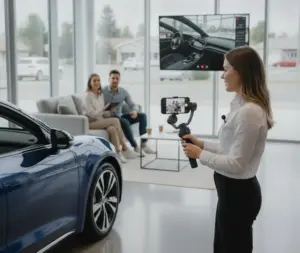
A buyer who opens one of your vehicle pages has already done the hard part. They searched, compared and clicked on a specific car, which means the interest is real. What the page does in the next few seconds decides whether that interest becomes an enquiry or fades. Too many listings show a sharp photo, a price and a spec list, and then stop. Without a clear next step, the visitor reads, nods and quietly leaves. The car was right, but the page never said what to do.
This article is about that missing moment. It explains why a strong listing still loses people when it ends in silence. It also shows how one clear next step keeps the buyer with you, not back in the search results. The examples are small and everyday, the kind you can check on your own site this afternoon.
Why a great listing still loses the buyer
Most vehicle pages are built to inform rather than to move. They list mileage, year, fuel type and a gallery, which is exactly what a curious visitor wants at first glance. The trouble begins once the reading is done. The page has answered every question except the one that matters most, which is what to do now. A genuinely interested buyer is left to invent their own next move, which is friction. Some hunt for a number, a few give up, most open another tab. Picture a couple looking at a seven seat wagon for their growing family. They like the car, the price fits, they are ready today. If the page offers only a generic form in the footer, that readiness cools on the long way down. A listing that informs but never invites is a conversation that stops mid sentence. The fix is not louder colors or more buttons. It is a single obvious action that matches the interest the page has just created.
What a clear next step actually looks like
A clear next step is one visible action that tells the buyer exactly what to do and what will happen when they do it. It is concrete rather than vague. ‘Ask about this Audi A4’ beats ‘Contact us’, because it names the car and sets an expectation. The wording carries a small promise, so the visitor knows whether a reply, a call back or a booking confirmation is coming. One action should dominate the page. When a listing shows five equal buttons, none feels like the obvious choice, and hesitation wins. Imagine a page with a single button that reads ‘Check availability and reserve a viewing’. The visitor understands the outcome before clicking, which is what makes the click happen. Quieter options can stay nearby, a number or a finance question, but in the background. A clear next step is not about adding more. It is about making one thing unmistakable, so interest has somewhere to go the moment it peaks.
How this works in practice
This is where the ADP Car Market Hub WordPress plugin helps. Every vehicle page it builds carries its own contact and booking action, tied to that exact car. The enquiry arrives with the model, price and stock number attached, so your team replies in context.
Match the next step to where the buyer is
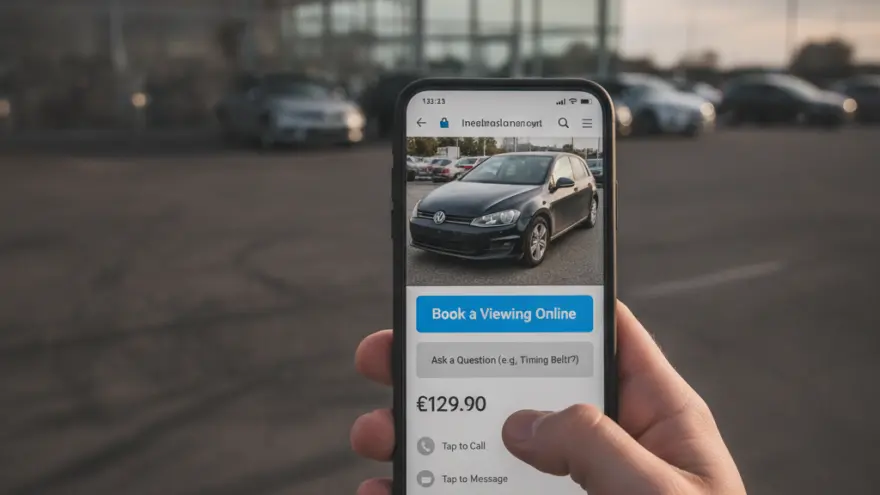
Buyers reach a vehicle page in different frames of mind, and the action works best when it meets them there. Someone comparing three cars wants a quick question answered. Someone who has decided wants to lock in a viewing. A page that only ever offers ‘Send a message’ serves the first and frustrates the second. The strongest pages let the main action carry the ready buyer. Nearby, a lighter option waits for the one still weighing things up. Take a used VW Golf priced to sell. The decided buyer wants to book a viewing online without a phone call. The cautious one wants to ask whether the timing belt has been changed. Offering both, with the booking up front, respects both journeys. The reply still matters once the question is in. A fast, human answer is what turns it into a visit. That is why quick replies to online enquiries belong in the same plan as the button.
Put the action where the eye already is
A clear next step only works if the buyer finds it without hunting, and that is mostly a question of place. On most listings the eye lands on the main photo, drifts to the price, then scans the equipment. The action belongs in that path, near the price and high on the page. It should not be stranded in the footer below a wall of specifications. On a long listing it helps to repeat the action once at the end. The reader who has just finished the description need not scroll back. Most buyers now open these pages on a phone, so the action has to survive a small screen. A tap to call and a tap to message do more work than any twelve field form on mobile. Someone looking at a van for work next week will gladly tap a button that calls you, not fill in a long form on one hand. Put the action where attention already collects and keep it light on a phone. That removes the quiet friction that costs enquiries.
Measure which next step gets used
A clear next step is also the thing you can finally measure. When the action sits on your own vehicle page, you can see how many visitors took it. You also see which cars draw the most enquiries and where buyers drop off. That feedback is impossible when the only path runs through someone else’s marketplace, because the data stays there. With your own pages, tools like Google Analytics show the route from a search to a click to a sent enquiry. Say two similar listings get the same traffic, yet one turns far more visitors into questions. The difference is usually the action, its wording or its position. Now you can test it. Change the button text on a slow page, watch the numbers for a fortnight, and keep what works, all on a page you control. Over a season those small, measured tweaks turn the same inventory into noticeably more online leads for your dealership.
Test your own car pages on a phone first
Open three of your own listings on your phone, as a buyer would. Time how long it takes to do the obvious next thing, whether that is a call, a message or a booking. If you have to scroll, pinch or hunt for a number, so does every visitor. Fixing that one path often beats a new set of photos.
How the plugin builds the action into every page
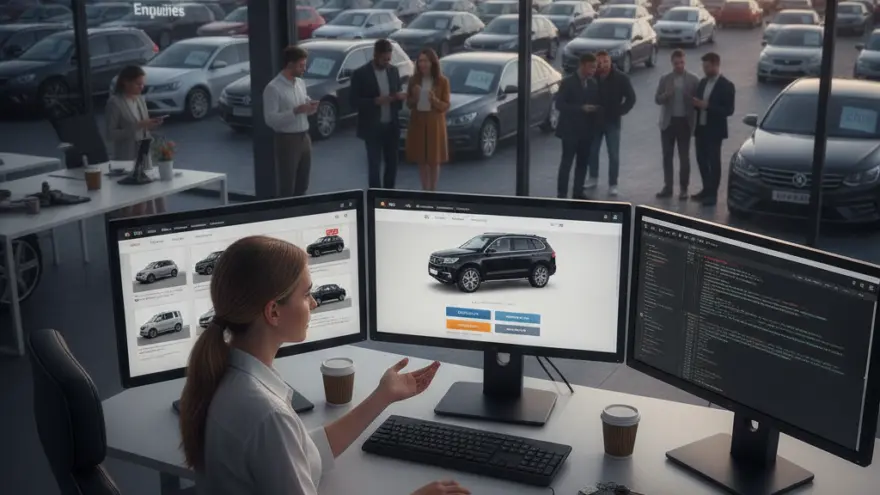
Adding a clear next step to one car is easy. Doing it on two hundred, and keeping it there as stock changes, is the real task. Editing every listing by hand does not scale, and pages fall out of step the moment a car sells. The sensible route is a system that gives each vehicle page the same well placed action automatically, drawn from your inventory. The ADP Car Market Hub WordPress plugin builds standalone pages from your vehicle data, and each one arrives with its contact and booking action already in place. When a new car comes in, its page appears with the next step built in. Once it sells, the page retires on its own. The data might come from AutoScout24. A CSV or Excel sheet, an XML or JSON file, or an automatic feed by URL works just as well. A dealer with two hundred cars then has two hundred pages that each lead the buyer somewhere, without hand work.
From real use
One dealership replaced the lone footer form with a single, named action on every vehicle page, built with the ADP Car Market Hub WordPress plugin. Before, most enquiries arrived through a marketplace. Afterwards, the pages that Google had indexed sent noticeably more direct questions, because each one now told the buyer exactly what to do. The plugin was the cause. Its own findable pages reached Google, and the clear next step on them turned visits into enquiries. That is not a guarantee, yet the lever is easy to see.
Conclusion
A vehicle page that informs but never invites leaves enquiries on the table every day. The photos, the price and the history all do their work, then the buyer reaches the end and finds no door to walk through. A clear next step closes that gap. It names one action, places it where the eye already is, stays effortless on a phone, and leaves a trace you can measure and improve. Match it to where the buyer stands, and let the main action carry the people who are ready. The ADP Car Market Hub WordPress plugin from AD Promotion builds these pages for your whole inventory. Each carries its own action, so no enquiry depends on the visitor guessing. Give every car a clear next step, and the interest you already earn finally has somewhere to go.
Sources
- Nielsen Norman Group, usability research on clear, actionable calls to action.
- Baymard Institute, e-commerce research on forms and checkout friction.
- Google Search Central, how Google crawls and indexes individual pages.
- AutoScout24, pan European vehicle marketplace used by dealers.
Frequently Asked Questions
What is a clear next step on a vehicle page?
It is one visible action that tells the buyer exactly what to do, such as asking about that car or reserving a viewing, and what will happen after they click.
Isn't a contact form in the footer enough?
Rarely. By the time a reader reaches the footer the momentum has often cooled. The action works best near the price and high on the page, where the interest peaks.
Should a page show one action or several?
One action should clearly lead. Quieter options like a phone number can stay nearby, but five equal buttons leave the visitor unsure which one to choose.
Where should the main action sit?
In the path the eye already takes, near the price and the photos, with a repeat at the end of a long listing so nobody has to scroll back up.
How do I make the action work on a phone?
Keep it to a tap to call or a short message, since the car is already known from the page. Long forms on a small screen are the fastest way to lose a buyer.
Do I need my own website, or is a marketplace enough?
A marketplace creates reach, but the data and the next step stay with it. Your own vehicle pages let you place the action, measure it and keep the enquiry.
How do I know which action works best?
Put it on a page you control and watch the numbers. Change the button wording on a slow page, compare two weeks of results, and keep what brings more enquiries.
Do I have to add this to every car by hand?
No. The ADP Car Market Hub WordPress plugin builds every vehicle page with the same action already in place, so new cars arrive ready and sold ones drop out on their own.