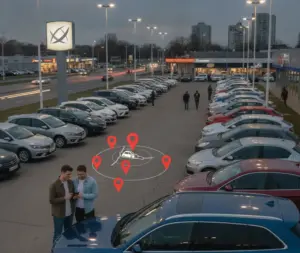
Most people who look at a used car do not enquire on their first visit. They browse, they compare and they leave. Often that happens weeks before they are ready to buy. So the honest question for a dealership is simple. How do you win back visitors once they are gone, without chasing them. The ADP Car Market Hub WordPress plugin from AD Promotion answers it. It turns your stock into owned pages. A buyer can save them, return to them and be gently reminded.
This guide looks at why the first visit rarely ends in a message. It shows what makes a quiet visitor impossible to reach again. And it explains how a few permission based reminders win back visitors at the moment they are finally ready.
Why the first visit rarely ends in an enquiry
A used car is a considered purchase. A buyer spends days or weeks weighing models, prices and finance. Only then do they reach out. On the first visit they are still in research mode. They compare your offer against three or four others. They are rarely in the mood to fill in a form. That is normal behavior. It is not a fault in your website.
Picture a buyer on a Tuesday evening. They find a tidy Volkswagen Passat station wagon on your site. They like it. But first they want to check their budget and talk to their partner. By the weekend the moment has passed. The tab is closed and your dealership has slipped from memory. Nothing was wrong with the car or the price. The visit simply ended before the decision did. Without a way back, you never hear from them again.
Why a quiet visitor on a portal is gone for good
Where your inventory lives decides whether a quiet visitor can ever return. Say a buyer first met your car inside a vehicle marketplace. Or inside an integrated third party list. Then there is no stable page of yours to come back to. The marketplace owns the address. It mixes your car in with rivals. And it offers you no way to reach that person later.
The same is true for an iframe stuck on your site. It looks like your inventory. The visitor does see cars. Yet the vehicle has no real URL on your domain. So the visitor cannot bookmark it. And you cannot place a reminder pixel or a saved search behind it. When they close the tab, the thread is cut. You paid for the visit. You kept nothing that helps you win back visitors who were genuinely interested.
How search alerts win back visitors when the right car arrives
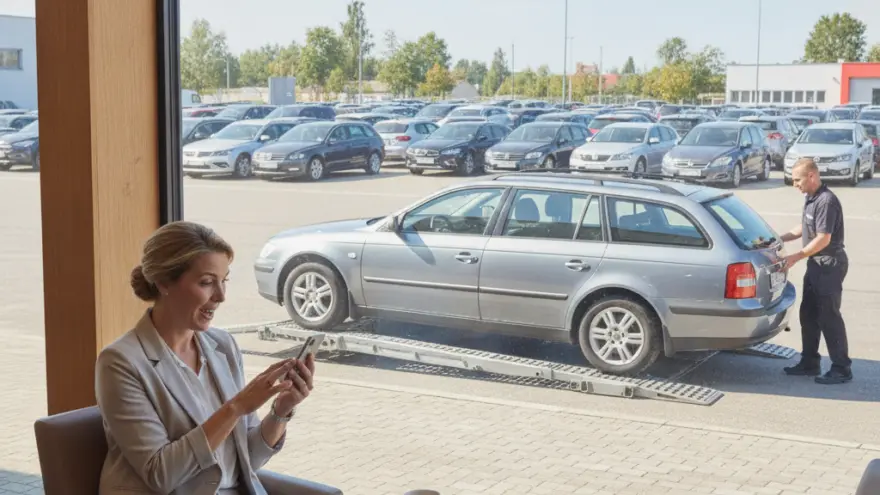
The cleanest way to return a visitor is to let them ask for it. A buyer who finds no perfect match today will gladly leave an email. They want to hear when one appears. The only condition is that the request is theirs to make and easy to cancel. That turns a dead end into a standing invitation. It also means you win back visitors on their terms, not yours.
The ADP Car Market Hub WordPress plugin builds this in as a search alert. A visitor filters the inventory. They save the search with the criteria they care about. They confirm by email. From then on they are notified the moment a matching car is listed. Imagine someone looking for a diesel station wagon under fifteen thousand. None is in stock on Tuesday. Three weeks later one arrives. The alert fires. A buyer you had lost is back on your page the same day.
How a saved search brings the buyer back
Search alerts live on your own WordPress site, not on a marketplace. A visitor saves the search they care about. They confirm it once by email. Then they hear from you when a matching vehicle is listed. The reminder points straight back to your vehicle page. So the plugin helps win back visitors to your dealership rather than to a market full of alternatives. Every alert is consent based and can be canceled in one click.
Saved cars and pages a buyer can find again
Not every returning visitor needs an email. Some just want to find the same car tomorrow. That only works when each vehicle has a real, permanent page. They need to bookmark it, share it with a partner or reopen it from their history. A car that lives only in a list cannot be saved that way.
The plugin gives every car its own page on your domain. A buyer can therefore save a favorite and come back to it directly. Days later the page still shows the same price, the same images and the same contact route. A visitor saved that Passat on Tuesday. They reopen it on Sunday and find it exactly where they left it. There is one clear way to make contact. Read here how to turn quiet online interest into a real enquiry.
Reminders only work on pages you own
Gentle advertising can return a visitor too. But only if the page they first saw belongs to you. Retargeting on Google or Meta needs a tag on your domain. It also needs a real URL to send people to. Neither exists when the car lived in a marketplace or an iframe. The budget then leaks to a foreign site.
With owned vehicle pages you can show a quiet reminder. It points to the exact car a person viewed. You send them straight back to it, not to a marketplace. You also see it work. In Google Analytics you can tell which returning visit led to a message. So the budget follows what actually helps win back visitors, not guesswork. Keeping that thread open is part of how you stay in touch after the first visit without being pushy.
Gentle reminders, never pressure
Winning a buyer back is a matter of tone. A used car decision takes time. A person who feels chased simply blocks the sender. The aim is to be useful at the right moment. It is not to be loud at the wrong one. Get the tone right and you win back visitors with welcome news.
So keep every reminder permission based and rare. One confirmed search alert is welcome when a matching car arrives. A daily mail is not. The plugin asks for consent up front. It lets the buyer cancel in a click. That keeps your dealership a trusted name rather than a nuisance. A reminder that respects the buyer is the one that gets opened.
Add a saved search to your most viewed pages
Look in your analytics for the two or three vehicle types people view most. Note which ones they most often leave without a message. Offer a clearly worded saved search on exactly those pages. You capture interest precisely where it currently slips away. The buyer then hears from you only when a car that fits actually arrives.
What the plugin handles for you
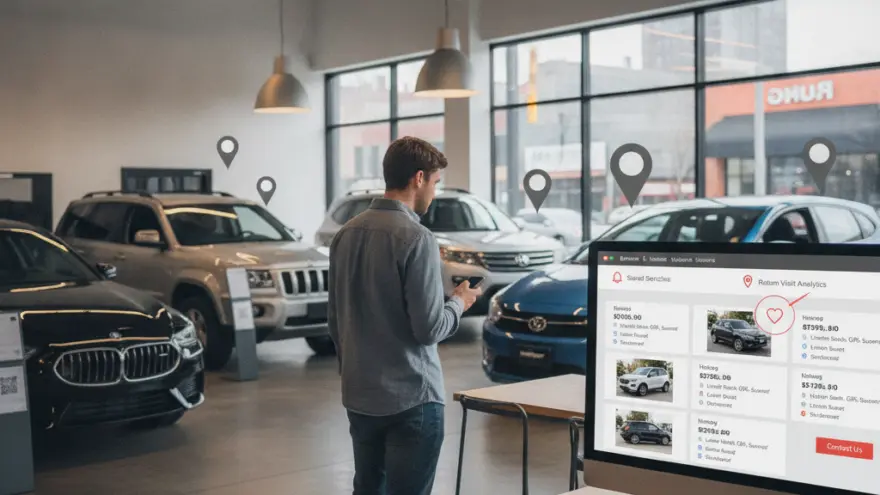
All of this rests on one thing. Your stock has to live as real pages on your own WordPress site. The ADP Car Market Hub WordPress plugin reads your vehicle data. The source can be AutoScout24, a CSV or Excel table, an XML or JSON file or an automatic feed. From it the plugin builds a complete page for every car. Each one carries price, images, equipment, location and a contact route.
On top of those pages it adds the tools that bring people back. There is a saved search with email alerts. There are savable favorites. Add to that clean measurement of every return visit. Nothing runs on a foreign domain, so the buyer always comes back to you. Google indexes the pages, so new visitors keep arriving as well. The ones who are not ready yet still have a way to return.
From real use
A dealership added saved searches to its vehicle pages with the ADP Car Market Hub WordPress plugin. Buyers who found no match could leave an email instead of leaving for good. Over the following months a clear share of enquiries came from alert emails. Each was sent when a fitting car arrived. These were visitors the business would otherwise never have heard from again. The plugin was the cause. Only owned, indexed pages with a saved search could catch that interest and win back visitors who had drifted away. It is no guaranteed outcome, but the mechanism is plain.
Conclusion
Most visitors will always leave the first time, and that is fine. What matters is whether you can win back visitors when they are finally ready. A dealership whose cars live only on a marketplace or in an iframe has no way back to a quiet buyer. One that publishes its stock as owned pages keeps the door open. The ADP Car Market Hub WordPress plugin from AD Promotion turns your vehicle data into real pages. It adds consent based search alerts and savable cars, and it measures every return. The reminder then points back to your dealership, not to a market full of rivals. The buyer who once left without a word comes back ready to talk.
Sources
- Think with Google, research on the car buyer’s journey.
- Google Ads Help, about remarketing and audiences.
- AutoScout24, public vehicle marketplace.
- Google Search Central, how Google Search works.
Frequently Asked Questions
Why do most visitors not enquire on the first visit?
Buying a used car is a considered decision that takes days or weeks. On the first visit a buyer is usually still researching and comparing several offers, so a quiet visit is normal rather than a sign that anything is wrong with your car or your page.
How does a search alert win a visitor back?
A visitor who finds no match today can save their search and confirm it by email. When a matching vehicle is later listed, the plugin notifies them and the link points straight back to your own vehicle page, so they return to your dealership at the moment they are ready.
Do I need AutoScout24 for this to work?
No. AutoScout24 is one convenient data source, not a requirement. The ADP Car Market Hub WordPress plugin also reads CSV, Excel, XML or JSON files, an automatic feed via URL, FTP or SFTP, or stock entered by hand in the WordPress backend.
Is an email reminder not annoying for buyers?
Only if it is frequent or unwanted. A search alert is consent based, the visitor asks for it and can cancel in one click, and it fires only when a fitting car actually arrives. A rare, relevant reminder is welcome rather than a nuisance.
Why can I not do this with an iframe or a portal?
An iframe or a marketplace listing has no real page on your domain. The visitor cannot bookmark it, and you cannot attach a saved search or a retargeting tag to it, so once they leave you have no way to reach them again.
Can I retarget visitors who already left?
Yes, but only when the page they saw is your own. Owned vehicle pages let you place a Google or Meta tag and send a quiet reminder back to the exact car a person viewed, and you can measure which return visit led to an enquiry.
How quickly is a new matching car sent to a subscriber?
As soon as the vehicle is imported and published, the plugin matches it against saved searches and notifies the subscribers whose criteria it fits, so the buyer hears about the right car while it is still available.