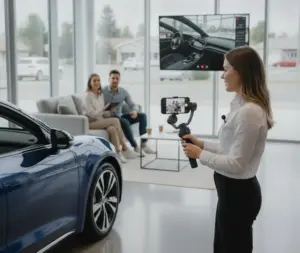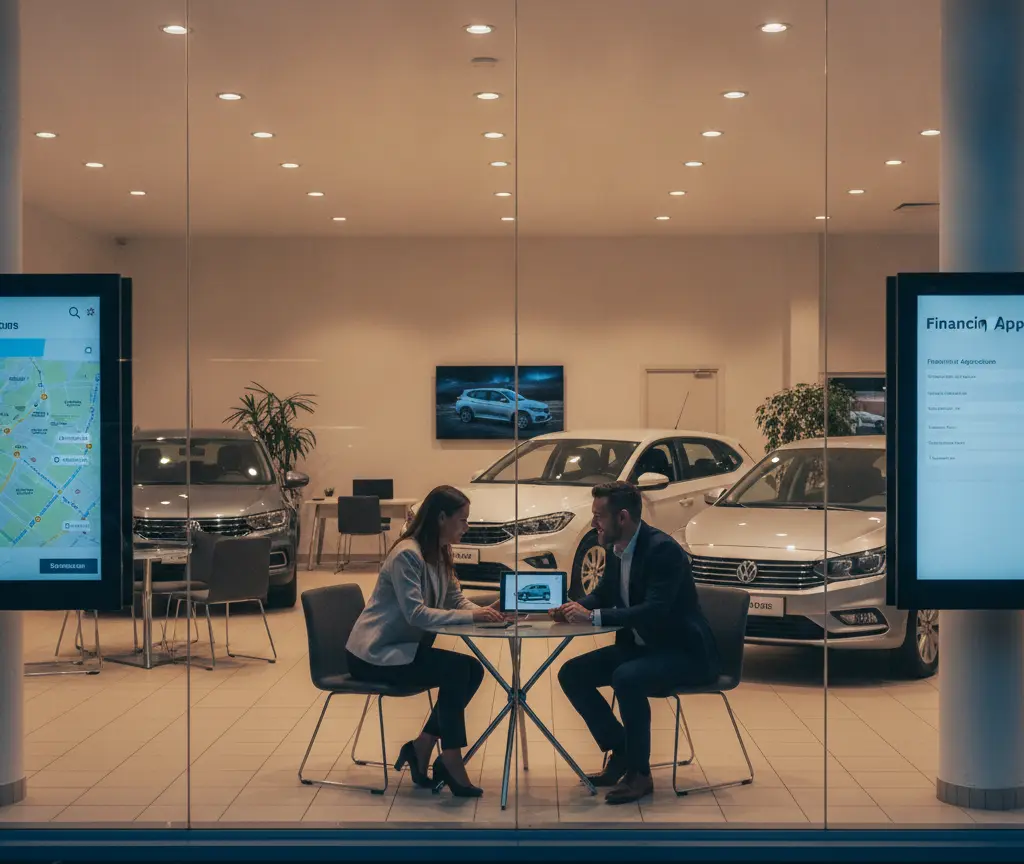
No car purchase starts on your lot anymore. It starts weeks earlier on a screen. The online buying journey runs through several stages, from the first search through comparison to the enquiry, and the visit comes only at the very end. A dealer who does not understand this journey loses buyers at points they never even see. Understand each stage instead, and you win exactly where the competition loses the thread.
This guide walks through the online buying journey step by step, from the first search to the sale. You will learn what the buyer expects at each stage, where most dealers lose them and how to guide them safely to an enquiry on your own pages. By the end you will know where the largest untapped potential sits in your own journey.
The online buying journey begins with the first search
Long before a buyer sets foot on your lot, they have searched, compared and built a shortlist. The online buying journey starts on Google or on a listing portal. The buyer arrives with a fairly precise idea of model, price and region. A dealer who does not appear at this early stage is out of the race before it began for them. The problem is that many dealers only think about the buyer once the phone rings, and they overlook the long stretch before it. Yet that is where the real pre-decision happens. Picture a buyer who types Audi A4 station wagon diesel and a city into Google one evening. They see a handful of results and click only the ones that show the car clearly. If your vehicle is missing here, it simply does not exist for them. So anyone who wants to understand the journey starts with the search, not with the call.
Comparing and filtering on your vehicle pages
Once the buyer has found a few suitable cars, the comparison stage begins. Now every single vehicle page counts, because this is where it is decided who stays on the list and who drops off. If images, price or specification are missing, the car is out at once, no matter how good it really is. The buyer has no time to interpret gaps and jumps to the next result. A page that convinces at this stage answers the open questions before they are asked. Take two equally good station wagons at the same price. One shows ten sharp photos, a complete specification list and a clear price, the other three dark images and the note price on request. The buyer almost always picks the first, because it does the work for them. The vehicle page therefore decides whether you make the shortlist. how buyers search for cars online today shows what matters at this early stage.
How you guide every step
This is where the ADP Car Market Hub WordPress plugin comes in. It turns your vehicle data into pages of your own that guide the buyer from search to enquiry, with clear images, a visible price and a direct way to make contact. So every step of the online journey stays on your own site instead of getting lost on someone else’s listing portals.
From interest to the first enquiry
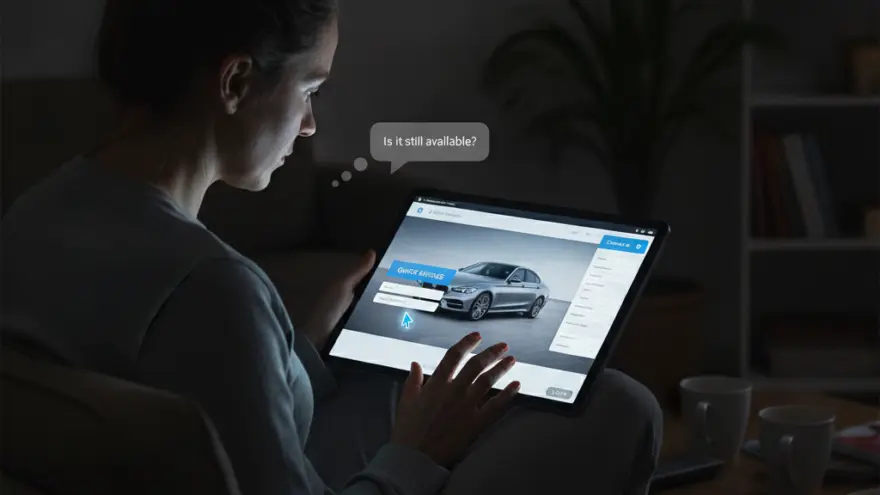
Between honest interest and the first enquiry there is often just a small hurdle, and that is exactly where many contacts fail. The buyer has found the car, checked the data and is ready to reach out, but then the clear next step is missing. A hidden form, an awkward field or a phone number with no alternative cost you the contact in that moment. So make the path to an enquiry as short as possible, visible and without detours. A buyer looking at a car late at night on the couch does not want to call, they want to send a quick message. If they find a simple contact field right on the car, they ask their question at once. If they first have to hunt for a general info address, the moment has passed. In the online buying journey, this small hurdle decides the contact surprisingly often. why a clear next step brings more enquiries goes deeper on exactly this point.
Trust decides the sale
At the end of the journey comes a decision that rarely turns on price alone. Once the buyer has enquired, they are no longer comparing cars but dealers. A fast, personal reply, honest details and visible reviews give them the confidence they need for the final step. If the reply takes two days, they are long gone to the next dealer. Trust matters more at this stage than any special offer. A dealer who replies within an hour with a friendly, specific email looks reliable before the buyer has even seen the lot. That very impression brings them in for a test drive. Hesitate here and you waste the effort of the whole journey before it.
From the field
A dealer outside town kept losing buyers in the middle of the journey, because their cars sat on a listing portal but had no page of their own. With the ADP Car Market Hub WordPress plugin they took over their inventory and gave every vehicle a findable page with a clear way to make contact. In the months that followed, noticeably more direct enquiries came in. The plugin was the cause, because their own pages reached the Google index and buyers now found them already at the search stage. That is not a firm promise, but the lever is clear.
Why your own site shows the whole journey
A dealer who sells only on someone else’s listing portals sees almost nothing of the buyer’s journey. You hear from them only when they call right at the end, and everything before stays in the dark. On your own site, by contrast, the whole stretch becomes visible, from the first search to the enquiry. You can see which cars are in demand, where buyers drop off and which page leads best through the online buying journey. That overview belongs to you, not to the marketplace. One business showed its vehicles on its own site. It noticed that many buyers searched in the evening on a phone and enquired right then. With that knowledge it aligned its reply times accordingly and won contacts it had not even noticed before. The buyer’s journey then becomes knowledge you can actually work with.
Walk one enquiry backward
Take a real enquiry from last week and trace the buyer’s path backward. Which search brought them in, which page did they see first, at what point did they reach out. A single journey like that shows more clearly than any statistic where your site carries and where it snags. Repeat it once a month.

Walk the journey yourself once
The best way to understand the online buying journey is to walk it yourself. Search like a buyer for one of your cars, click through and watch for every point where you would hesitate. That is exactly where you lose real buyers too. Often it is a small thing, a missing photo, a hidden price or a contact field you have to search for. These weak spots cost enquiries, but they only show up when you deliberately retrace the journey. A dealer did exactly this and found that their contact form was almost impossible to hit on a phone. One change later, the enquiries that had quietly slipped away started coming in. Anyone who walks the journey themselves once a quarter finds the leaks before they cost money.
Conclusion
The online buying journey is not a single moment but a path with several stages, from the first search through comparison to the enquiry and the sale. At every stage you can win or lose buyers, depending on how well you guide them. The ADP Car Market Hub WordPress plugin from AD Promotion turns your inventory into pages of your own that map this whole journey on your domain. You then see what the buyer sees and can improve every stage. Understand the journey, and you win where others lose the thread.
Sources
- Cox Automotive, Car Buyer Journey study on how buyers research and shop online.
- Think with Google, research on the digital path to a vehicle purchase.
- Google Search Central, how structured vehicle pages are found and indexed.
Frequently Asked Questions
What does the online buying journey mean?
It means the whole path a buyer travels from the first search to the enquiry and the sale. They search, compare, check and reach out only late in the process. The showroom visit comes at the end, not at the start.
Where does the online buying journey really begin?
It begins with the search, usually on Google or a listing portal, often weeks before any contact. A dealer who is missing there is never even considered by many buyers. The pre-decision happens long before the call.
Why do I lose buyers even though my cars are online?
It often fails at single stages of the journey. An unclear vehicle page, a hidden price or an awkward contact path cost enquiries that nobody sees. Only by reviewing the whole journey do you find these quiet losses.
Which stage of the journey matters most?
No stage stands alone, but the move from interest to enquiry decides things especially often. Here the buyer is ready and needs only a clear, visible next step. Without it, the effort of the earlier stages is lost.
How do I see where buyers drop off?
On someone else’s portal you can barely see it, on your own site you can. You can tell which cars are in demand and where the contact fails to happen. That lets you improve the weak stage on purpose.
Do I need my own website for the journey?
Your own site helps a great deal, because the whole journey stays visible there and the contact lands with you. The ADP Car Market Hub WordPress plugin turns your inventory into such pages. So you guide the buyer from search to enquiry.
How do I walk my own site's journey?
Search like a buyer for one of your cars and click through to the enquiry yourself. Watch for every point where you would hesitate, because that is where you lose real buyers. Once a quarter is enough for a clear view.