The busiest and most loyal people your dealership deals with are often nowhere near the showroom. They are in the service department. They drop off a car for its yearly MOT, a set of winter tires or a small repair. These service customers already trust you with their vehicle. Yet when the moment comes to replace it, many of them quietly buy from someone else.
This guide shows how to stop that happening. A routine workshop visit can become the start of the next sale. You do it with your own website and the customer details you already hold. There is no need to wait and hope the person walks back through the door by chance.
Why service customers are your warmest prospects
A service customer is a buyer you already know. You have their name and the exact car they drive. You also have its age, its mileage and a record of every visit. A stranger who clicks an advert is a cold lead by comparison. You know nothing about them, and you have to earn their trust from zero.
Many service customers are closer to a purchase than they realise. Think of a family that brings a six-year-old wagon in for its service each spring. The car is now at the age when owners start looking. The repair bills are creeping up. The family already feels at home with your staff. That is a far easier sale than a cold enquiry. It only happens, though, if someone notices the moment and acts.
Capture the relationship, not just the repair
Most workshops record the job and nothing more. The invoice is raised, the car is collected, and the chance to stay in touch slips away. The fix is small. At the service desk, ask whether the customer is happy to hear from you. Note a working email address. Record what they might be looking for next time.
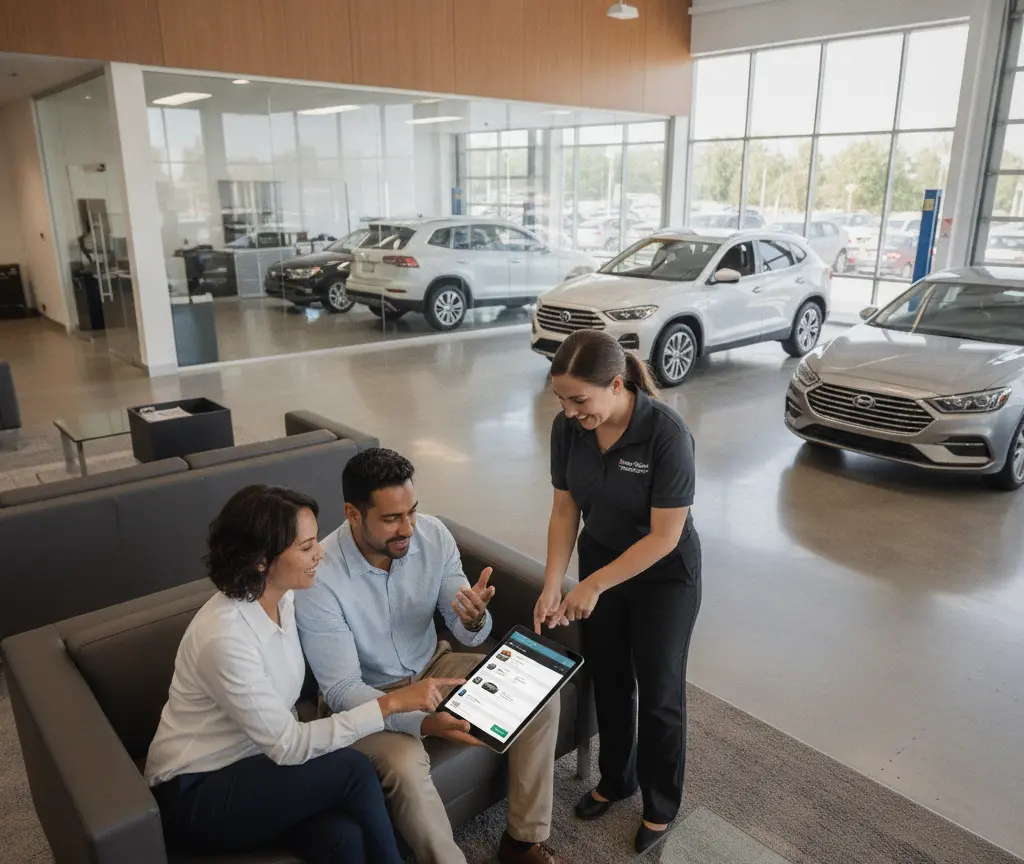
Picture a service advisor handing back the keys. He mentions that a newer model with lower running costs has just arrived. There is no pressure, just a friendly word and a card. The card points to the car on your website. That one sentence, captured with consent, bridges the workshop and the sales floor. To do it well you need a tidy place for those details, which is the subject of owning your customer data.
From service visit to the next car
The ADP Car Market Hub WordPress plugin from AD Promotion connects each enquiry and customer to your own vehicle pages. A service contact no longer vanishes once the invoice is paid. You can see which cars a returning customer looked at. Then you follow up at the right moment, turning a quiet workshop relationship into a path to the next sale.
Let your own website do the introducing
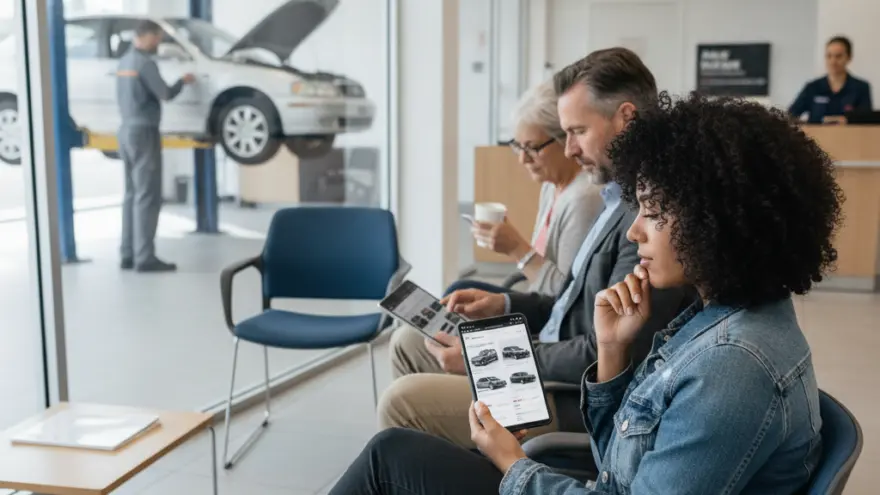
A service customer often wonders what you have in stock. They rarely walk over to ask. Instead they search your name on a phone, often in the waiting room while the car is on the ramp. What they find at that moment decides a great deal. If your name leads only to a third-party listing site, your own cars compete with every rival on the same page.
It works far better when your name leads to your own pages. There they see your own stock, your photos and your prices. Someone waiting for an oil change can browse the three sedans within their budget. They save the one they like and ask about it before they leave the building. Keeping that stock easy to find on your own domain is the subject of presenting your inventory online. It turns idle waiting-room time into a real first step.
From real use
A dealer near a busy ring road kept service and sales completely apart. Most service customers never saw the cars in the yard. Then the full stock moved onto its own vehicle pages with the ADP Car Market Hub WordPress plugin. The service team could now hand customers a direct link to a matching car while they waited. Over a few months several long-standing service customers bought their next vehicle on the spot. The car they wanted was suddenly one tap away, not a separate errand. The plugin was the cause, because the stock only became visible to those customers once it lived on the dealer’s own site.
Spotting the right moment to suggest the next car
Timing is everything here, and the workshop quietly tells you when it is right. Watch for a car whose repair bills are climbing. Watch for one that has passed the end of its warranty. Watch for one nearing the mileage where owners typically move on. Each is a signal worth acting on. The service history you already keep is the clearest forecast of who is about to change car.
Take an owner whose ageing hatchback needs a clutch and two tires in one visit. The bill nudges past what the car is worth. That is the natural moment for a calm, honest suggestion. A newer model might cost less to run overall. Link it to a real car on your website. The conversation then feels helpful rather than pushy, because it answers a problem the owner already faces.
Let the service history flag the moment
You do not need a complex system to spot the timing. Each month, pull the list of cars that came through the workshop with rising bills or high mileage. Match them against your current stock. Send a short, genuine note about a suitable replacement, only to customers who agreed to hear from you. It lands far better than any broadcast advert, because it arrives just as the question of changing car becomes real.
Following up online without becoming a nuisance
Staying in touch only works while it stays useful. A monthly email blast to everyone is the fastest way to be ignored. Worse, it gets you marked as spam. The better path is fewer, more relevant messages. Tie each one to the customer and their car, and make it easy to opt out. Years of trust earned in the workshop are lost quickly by careless mailing. So treat your service customers as people, not as a list.
A good follow-up reads like a note from someone who knows you. It mentions the owner’s own car. It points to one or two genuinely suitable vehicles on your site. It then leaves the next step to them. Handled this way, the contact strengthens the relationship instead of straining it. It sits naturally alongside the wider job of managing your leads, so no warm contact is forgotten.
A simple routine that keeps service customers close
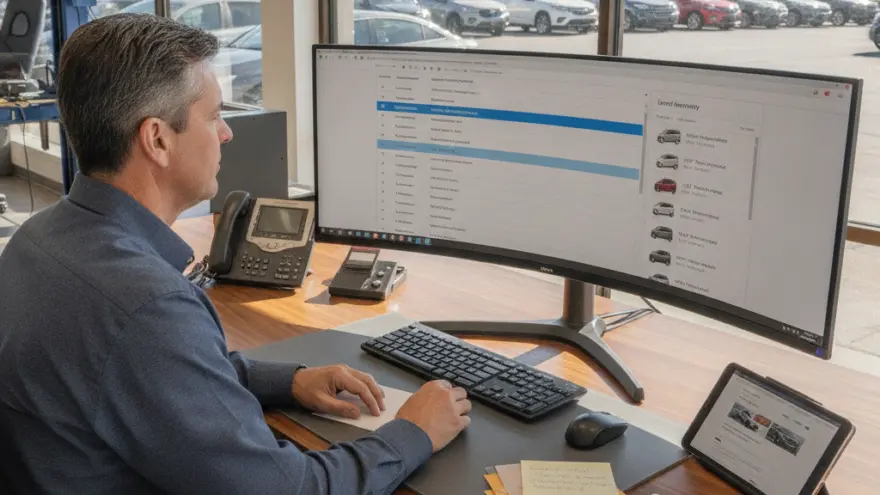
None of this needs a marketing department. A short monthly habit is enough to hold the relationship together. Once a month, look back at the cars that passed through your workshop. Flag the ones near the end of their useful life for that owner. Check what in your current stock would suit them.
From that quick review, a few actions follow. Send a handful of honest, personal notes to the service customers who opted in. Make sure every visitor leaves with an easy way back to your website. Keep a simple record of who showed interest. The next service visit then picks up where the last one left off. In 2026 buyers research online long before they speak to anyone. The dealer whose pages already sit in front of a trusted customer holds a real head start. Twenty minutes a month turns loyal service custom into repeat sales.
Conclusion
Your service department is full of the warmest prospects you will ever meet. They already trust you, and their cars are ageing in plain sight. The way to keep your service customers is to join service and sales through your own website. Capture each relationship with consent. Reach out at the moment the workshop shows is right. The ADP Car Market Hub WordPress plugin from AD Promotion ties those service contacts to your own vehicle pages. A routine visit can then lead, calmly and honestly, to the next car. Start small, with one monthly review, and let loyalty do the rest.
Sources
- Think with Google, research on how car buyers research online before contacting a dealer.
- Cox Automotive, the Car Buyer Journey study on retention and repeat purchase.
- Statista, market data on customer loyalty and aftersales in the car trade.
Frequently Asked Questions
Why focus on service customers instead of new buyers?
Because they already trust you and you already hold their details. Winning a stranger means starting from zero, while a service customer has a relationship with your team and a car you can see ageing in your own records. The effort to reach them is far smaller, and the close rate is usually higher.
Do I need expensive software to do this?
No. Most of what you need is the service history you already keep plus your own website. A simple monthly habit of matching ageing cars to your current stock, and a tidy place to store consent and contact details, is enough to start without any large investment.
Is it legal to contact service customers about new cars?
Only with their permission. Ask at the service desk whether they are happy to hear from you, record that consent, and always make it easy to opt out. Handled honestly, a relevant note about their own car is welcome rather than intrusive.
How often should I follow up?
Less often than you think. A few relevant messages a year, tied to the right moment in the car’s life, work far better than a monthly blast. Frequency matters less than timing and relevance.
What should the follow-up actually say?
Mention the customer’s own car, point to one or two genuinely suitable vehicles on your site, and leave the decision to them. A note that reads like advice from someone who knows them lands far better than a generic offer.
How does my website fit into this?
It is where the relationship continues between visits. A service customer who searches your name should find your own stock, not a third-party listing, so they can browse, save a car and enquire straight from your pages.
How do I know when a customer is ready to change car?
The workshop tells you. Rising repair bills, the end of the warranty and high mileage are the clearest signals, and they all sit in the service history you already keep.
Will this annoy loyal customers?
Not if you keep it relevant and easy to opt out of. Trust is lost by careless mass mailing, not by a timely, honest note about a car that genuinely suits them.