Most used car enquiries now start on a phone. Mobile buyers browse from the couch, on the train, or during a lunch break. They want to act in that moment, not the next day. Land them on a vehicle page with no clear way to call. The urge fades before you ever hear from them.
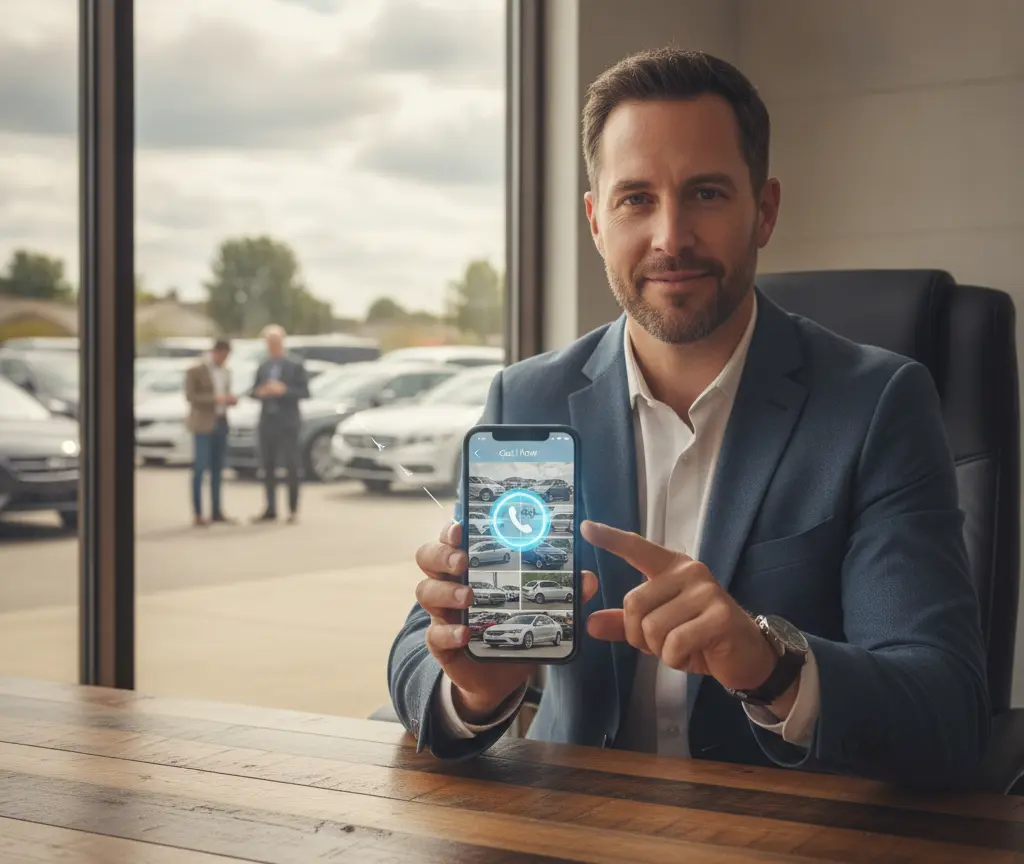
A visible tap to call button solves this. With one tap, quiet interest becomes a real conversation. This article shows why mobile buyers prefer a direct call. It explains why a plain text number fails on a phone. And it shows how your vehicle pages make calling a single tap.
Why mobile buyers decide in the moment
Someone on a phone is rarely calm at a desk. Mobile buyers compare on the move. They look between two appointments, or right before sleep. In that state every second counts. Attention is short, so the next listing is always just one swipe away. A shopper with a question wants to ask it now. A form that answers on Monday will not do. The window to win them is open for seconds, not hours.
Picture a commuter on the evening train. He spots a clean Honda Accord on your page. He has one question about the service history. With a clear button, he calls you before his stop. Without it, he sees only a small number in the text. So he postpones the question. By evening he is with three other dealers. The difference between a call and a goodbye is one tap.
Why a plain text number is wasted on mobile
Many dealers just put the number in the footer. They assume the shopper will find it. At a desk that might be fine, but on a phone it becomes an obstacle. A number in plain text cannot be tapped. The buyer must memorize it, open the phone app, and type the digits. Each step costs you prospects. On a small screen, every extra tap is a reason to give up.
The fix is simple, because on a modern vehicle page the number sits in a tap to call link. That button opens the phone app with the number ready. One example shows the gap. A family wants a station wagon on a Sunday. They find your Volkswagen Passat Wagon. With a tappable button the call starts in two seconds. With a plain text number a small hurdle stays. On a phone, small hurdles decide between a call and a bounce.
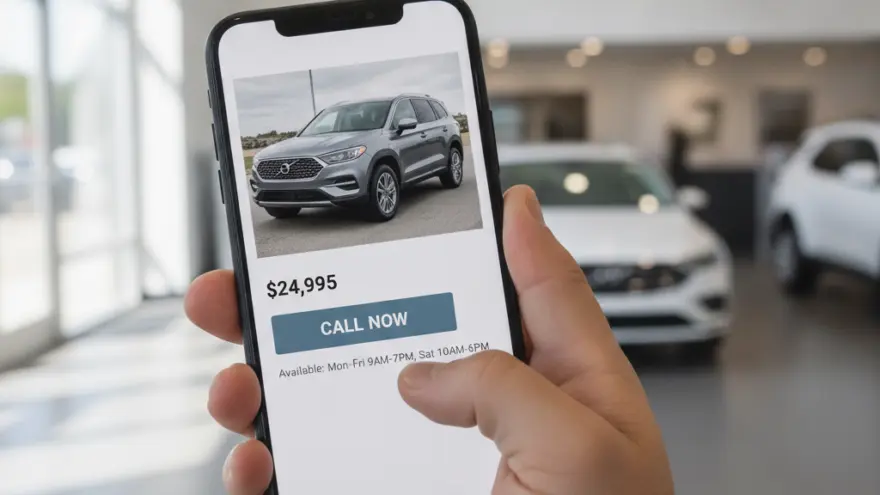
What mobile buyers expect from a call button
A call button must be easy to find. It works only when mobile buyers see it without searching. It belongs in plain sight on every vehicle page. Put it near the price and the photos, where the decision is made. A button that stays visible while the shopper scrolls helps even more. Then the call is always one tap away. Hidden in a menu, it does little. Make it obvious, and you remove the last excuse to leave.
Put the call right on the car
The ADP Car Market Hub WordPress Plugin turns your vehicle data into real pages on your own website. It adds a clear contact path to each one. Call, message, and test drive request sit right on the car. On a phone they appear as a tappable button. Interest in a single vehicle becomes a conversation at once, with no detour through someone else’s marketplace.
The label matters too. A button that reads Call now beats a faint handset icon. Show your availability as well, such as opening hours. That way no one dials into the void. For more on making the next step obvious, read how a clear next step turns interest into contact.
Test the call yourself on a phone
Pick up your own phone. Open one of your vehicle pages. Try to place a call in under five seconds. If you cannot do it without searching, your buyer cannot either. This quick self test exposes most hurdles right away.
Tie each call to the right vehicle
A call is a measurable enquiry, not just a chat. Yet many dealers do not know which listing made the phone ring. On your own website that can change. Record the call button as an event. Your reports then show which vehicle page the call came from. They also show the time of day. Suddenly a guess becomes a number you can act on.
That knowledge is worth real money. Say one Ford Explorer drives an unusual number of calls. The dealer can restock similar vehicles on purpose. If most calls arrive after six, he plans his availability around it. On someone else’s marketplace this trail stays hidden. The call disappears into the provider’s system. On your own domain the data is yours. It shows which car truly creates demand. For more on phone shoppers, see what matters most to mobile car buyers.
What happens when no one picks up
Sometimes the line is busy or the lot is closed. Even the best call button meets that moment. The shopper must not hit a dead end. A vehicle page that thinks ahead offers a second path. Beside the call sits a short form or a callback request. So the enquiry survives until you call back in the morning. No serious lead should fall through a closed door.
An example shows the value. A prospect calls about a Jeep Grand Cherokee on a Saturday night. The lot is long closed. He can still leave his name and number in two fields. The contact is saved. Without that bridge he dials the next listing and is gone. This way your website catches enquiries after hours too. For a systematic approach, read how to stop losing enquiries after closing time.
Why a voice closes faster than a form
A form is quiet, but it delays the decision. The buyer writes, waits, and keeps comparing. A call settles open questions in a few minutes. You hear the voice and sense the interest. You can offer a test drive right away. With a used car, trust decides the deal. That direct conversation is often the turning point. A few honest minutes on the phone outweigh a week of silent waiting.
For mobile buyers the call is the natural step. The phone is already in their hand. Anyone who spots a car on a phone is one tap from the salesperson. That closeness is worth keeping.
From practice
A dealership put its inventory online as its own vehicle pages with the ADP Car Market Hub Plugin. Each one carried a clearly visible call button. Because Google indexed those pages, mobile buyers found the cars directly. They tapped to call instead of hunting for a form. Noticeably more conversations started by phone. The plugin made the difference, because only the dealer’s own findable pages with a direct call turned quiet visitors into real callers. It is not a promise, but the lever is easy to see.
Conclusion
Mobile buyers decide in the moment, and that moment is short. Give them a clear, tappable call button on every vehicle page. Fleeting interest then becomes a real conversation. A plain text number is not enough on a phone. What works is a visible button that makes calling one tap. The ADP Car Market Hub WordPress Plugin brings your inventory online as your own pages. It puts the direct contact path where the decision happens. The enquiry stays with you, measurable and personal. It no longer vanishes into a comparison on someone else’s marketplace.
Sources
- web.dev by Google, technical guidance on tappable telephone links for mobile pages.
- Think with Google, research on mobile shopping behavior and micro moments.
- Cox Automotive Market Insights, data on how car shoppers research and contact dealers.
Frequently Asked Questions
What is a tap to call button on a vehicle page?
It is a tappable button that opens the phone app with your number already filled in. The shopper taps once and the call starts, with nothing to type.
Why is a phone number as plain text not enough?
A number in running text cannot be tapped on a phone. The buyer would have to memorize it, open the app, and type it in. Each step costs you enquiries, especially with impatient mobile buyers.
Where should the call button sit?
In plain sight on every vehicle page, near the price and the photos. A button that stays visible at the bottom of the screen while the visitor scrolls keeps the call one tap away at all times.
Do I need AutoScout24 for this?
No. The ADP Car Market Hub WordPress Plugin reads your inventory from AutoScout24, but also from CSV, Excel, XML, or JSON, or by hand in the backend. It places the call button on every page regardless of the source.
What happens when no one picks up?
A good vehicle page offers a second path beside the call, such as a short form or a callback request. The enquiry is kept until you call back the next morning.
Can I see which vehicle triggered the call?
Yes. When the call button is recorded as an event, your reports show which vehicle page and what time the call came from. That tells you which cars really create demand.
Does the call replace the contact form?
No, the two work together. The call suits quick, personal contact, while the form catches enquiries outside opening hours. Together they cover every situation.