A modern dealership website in 2026 is far more than an online business card with an address and opening hours. It is the first place where a buyer decides whether to trust your dealership at all. Someone looking for a good used car rarely starts at the dealer and almost always starts with a search. Only your own pages turn that anonymous click into a real enquiry. So it is worth asking what such a site genuinely has to do today.
Much of what made a modern dealership website ten years ago no longer cuts it. A handsome design with no findable vehicles stays invisible. This article walks through the building blocks in order, from the first impression on a phone to the finished enquiry in your inbox. It shows which features make the difference and how to spot a site that has fallen behind.
What buyers look for first on a dealership website
The journey to the next used car almost always begins on a phone. The buyer types in a specific model, adds the year, the mileage and a location, then scans the results in seconds. Anything that fails to convince in that short window is gone again at once. A page that loads slowly or breaks on the screen loses the visitor before the first vehicle even appears.
For a dealership that means the site has to deliver in exactly that moment. The buyer wants to see the right car, read the price and sense that the business sits within reach. A simple example makes it clear. If someone searches one evening for a Honda Civic with an automatic transmission within thirty miles, the first screen decides. Show a clear photo with a price and a location, and they stay. Show a homepage with no vehicles, and they keep scrolling.
Every vehicle as its own findable page
The heart of a modern dealership website is not the logo and the slogan but the individual vehicles. Every car in stock needs its own page with photos, price, specification, location and a direct route to an enquiry. A gallery that merely loads from an outside provider into a frame does not achieve this. Google barely treats it as content on your domain, so it builds no search value.
Only a genuine single page makes a vehicle findable. Google adds it to the index and can show it as a direct result when someone searches for that exact model. A dealer with forty cars then has forty doors into the site instead of one. When a car sells, its page disappears and a new listing appears on its own. That automation keeps the stock current without anyone editing each page by hand.
How each vehicle page is built
The ADP Car Market Hub WordPress Plugin builds a dedicated page for every vehicle straight from your stock data. Each page carries photos, the price, technical details, the location and a contact form, and it sits firmly on your own domain. So the site grows with every car, with no double entry.
Search and filters that lead to the right car fast
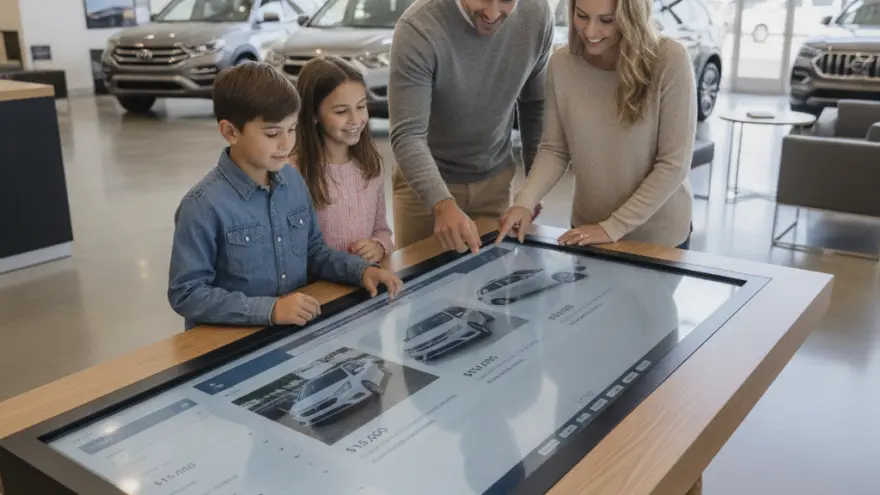
A modern dealership website with more than a dozen cars needs a search that guides the visitor. Filters for make, price, mileage, fuel and transmission take the work off their hands. Without them the visitor scrolls through a long list and often gives up first. With them they reach the two or three cars that actually suit them in a few clicks.
What matters is that the search runs on your own site and does not hand the visitor off to an outside marketplace. Otherwise you lose them at the very point where they show interest. An example makes it tangible. A family looks for a wagon car under fifteen thousand with no more than a hundred thousand miles. Set those filters and show three matching cars from your stock at once, and they have arrived. To see why your own site makes a dealership more independent, read why a dealership website makes you more independent.
Fast to load and built for the phone
Most visitors now arrive on a phone. A modern dealership website is therefore built for the small screen first and the large one second. Buttons have to sit within thumb reach, images must not hold up the load, and the enquiry should succeed with a handful of taps. Every extra second of loading time costs measurable visitors.
Vehicle photos are the usual trap here. Uncompressed images at full size make a page stall noticeably on a mobile connection. A good solution shrinks the images automatically and loads them only when the visitor actually reaches them. A dealer whose gallery stutters on a phone loses precisely the buyers they want to reach in the evening. Speed is no technical footnote here but the difference between an enquiry and a bounce.
Trust you can see on the page
A used car quickly runs to tens of thousands. Nobody spends that on technical data alone. The buyer wants to know who stands behind the offer, whether there is a warranty and what service looks like after the sale. On a large marketplace every dealer looks the same, because a uniform layout hides each business.
A modern dealership website turns that around. You show your team, your workshop, honest reviews and a named contact. The single vehicle then gains a face and a fixed place. Two dealers offer the same BMW 3 Series at a similar price, yet only one shows opening hours, a finance example and satisfied customers. That personal impression often tips the decision long before the test drive. To make your whole stock available around the clock, read how to open an online showroom around the clock.
Turning every visit into an enquiry
A handsome page with no clear next step wastes its effect. Every vehicle page needs a visible route to contact that suits the buyer. Some prefer a short message, others call, others again want to book a test drive straight away. The fewer hurdles in between, the more likely the visitor actually gets in touch.
What matters is that the enquiry reaches you and not the inbox of an outside marketplace. Only then is the contact yours, and only then can you answer quickly. An example shows the leverage. A buyer fills in a short form about an Audi A4 at ten in the evening. If that enquiry sits in your inbox the next morning, you call back before a competitor has even reacted. That speed often decides the sale.

Why a modern dealership website gets found on Google
The best site is little use if nobody finds it. A modern dealership website is therefore built for findability from the ground up. Clean addresses per vehicle, clear headings, structured vehicle data and short loading times form the basis on which Google can place a page at all. Local visibility comes on top, because most buyers search within their region.
In 2026 the search also often no longer ends at the classic list of results. Google increasingly sums up answers itself and draws on clearly structured, publicly findable pages to do so. If your vehicle sits on your own domain with its location and price, that answer can name your dealership. It is no promise, yet without your own page there is no chance of it at all.
Test your site on your own phone
Open your website the way a buyer would, on a phone and over a mobile connection rather than the shop wifi. Search for a specific car, watch the loading time and fill in the contact form to the end. Wherever you stall yourself, the visitor drops off too. This short test shows more than any statistic.
From real use
One dealership moved its stock onto its own mobile friendly vehicle pages with the ADP Car Market Hub WordPress Plugin. Before that the stock sat only as an embedded list on the old site and barely showed up on Google. Afterwards Google indexed the individual vehicle pages, and noticeably more direct enquiries came in through the dealer’s own domain. The plugin made the difference, because only the dealer’s own findable pages made the vehicles visible to search. It is no firm promise, yet the leverage is clearly there.
Conclusion
You recognize a modern dealership website not by its design alone but by what it does for the buyer. It loads fast on a phone, shows every vehicle as its own findable page and guides the visitor to the right car with search and filters. It makes the business behind the offer visible and turns each visit into a real enquiry through short, clear routes. Above all it is built so that Google and the new AI answers can find it in the first place. The ADP Car Market Hub WordPress Plugin from AD Promotion reads your vehicle data and builds exactly these standalone pages from it. So the enquiry stays with you instead of vanishing in a comparison with everyone else.
Sources
- Google Search Central, how Google Search crawls and indexes pages.
- web.dev by Google, Core Web Vitals and their role in loading time and user experience.
- Google Search Central, AI features in Google Search.
- Think with Google, research on how buyers research and shop online.
Frequently Asked Questions
What makes a dealership website modern today?
It loads fast on a phone, shows every vehicle as its own findable page and guides the visitor to the right car with search and filters. Above all it is built so that Google can find it.
Is an embedded vehicle list on my site enough?
It looks like your own stock, but technically it usually stays an outside embed. Google barely treats it as content on your domain, so little search value builds up.
Why does the mobile view matter so much?
Most buyers now search on a phone. If the site loads slowly or breaks there, the visitor leaves before your first vehicle even appears.
How many vehicle photos make sense?
A few good ones beat many poor ones. What matters is that the images shrink automatically so they do not slow the load on a phone.
Do I have to drop my listing portals for a modern site?
No. AutoTrader and the large marketplaces create reach and can stay. Your own website joins as a channel you control yourself.
How does the site make sure enquiries reach me?
Every vehicle page carries its own contact form whose messages go straight to your inbox. That way the contact is yours and not an outside marketplace’s.
How much upkeep does such a website need?
Little, when the stock flows in automatically. New vehicles appear within minutes and sold ones disappear on their own, so nobody edits each page by hand.