A dealership website sounds, to many dealers, like a big project with a big price tag. That very assumption keeps smaller businesses offline for years. Yet you can build a site that sells on a small budget, as long as you start in the right place. What matters is not how much you spend, but what you spend it on.
This article shows how a tight budget can still produce a site that brings enquiries. It explains where the money should go first and which expensive extras can safely wait. You need neither a large agency nor a six-figure investment, only a clear plan and tools that reuse the vehicle data you already have.
What a website on a small budget really needs
A website does not sell through expensive technology. It sells through clear vehicle pages and an easy way to get in touch. Many dealers think they must first pay for a polished brand, animations and a grand design. The opposite is true, because the buyer wants a specific car and a fast way to reach you. On a small budget you focus on exactly that and leave the rest for later. Picture two dealers with the same starting budget. One pours it all into a slick logo and a moving banner on the home page. The other builds clean vehicle pages with good photos, a price and a contact field. After three months the second dealer gets the enquiries, because the pages answer the buyer’s question. The first dealer’s pretty home page, meanwhile, hardly anyone saw, because buyers landed straight on the cars. A website on a small budget is not a stripped-down compromise. It is a site that spends its money where it works.
Start with the pages that bring enquiries
When money is tight, order matters. Begin with the vehicle pages, because that is where contact is decided. A buyer almost never lands on your home page first. They arrive through search, straight onto one particular car. That page has to be right first, with clear photos, full details and a visible contact field. The pretty about page and the blog can wait until the foundation stands. Take a dealer with thirty used cars and little money. He spends his budget on clean, consistent vehicle pages and delays everything else. Within weeks enquiries about single cars reach him, even though the rest of the site is still plain. Nobody missed the about page that was not there yet. That way every dollar spent works first where the sale actually begins.
How your site grows from your stock
This is where the ADP Car Market Hub WordPress plugin helps. It turns the vehicle data you already have into ready-made vehicle pages, each with photos, a price and a contact field. So the most expensive part of a dealership website builds almost on its own, even on a small budget.

Which expensive extras can wait at the start
A small budget forces clear choices, and that is an advantage. Many costly extras look good but bring no enquiry at all in the beginning. An elaborate 360-degree animation, a chatbot or a customer portal can come later. First, the buyer has to find the car, see the details and reach you. So cut deliberately everything that does not lead to an enquiry. One dealer insisted on a test drive booking system and video tours for every car at launch. Both swallowed half the budget before the first page was even live. It would have been wiser to start on a small budget with a simple contact form and pay for the extras out of the first sales. Every extra can be added later, once it has earned its place. why the cost of listing portals is often underestimated shows where money quietly leaks elsewhere.
Reuse the vehicle data you already have
The most expensive part of a dealership website is rarely the technology. It is keeping the vehicle data by hand. Entering, photographing and describing every car one by one costs hours that you have to pay for. This is where a small budget saves the most, if you reuse data you already hold. Your inventory already sits on a listing site or in your dealer software, with images and specs. That data can be carried over instead of typed a second time. A business with fifty cars saved weeks of double entry and had its pages live in a few days. The time saved went into better photos rather than dull retyping. A tight budget then means no loss of quality, only the end of needless manual work.
From the field
A small used car dealer carried his listing-site inventory over with the ADP Car Market Hub WordPress plugin instead of entering every car again. Within a few days he had his own vehicle pages, with no big budget. In the months that followed, more direct enquiries arrived through his own site. The plugin was the cause. Its findable vehicle pages let Google index the inventory, and more buyers found the business directly. It is not a fixed promise, but the leverage is clear.
Keep the running costs low from day one
A website costs money not only to build but also to run, and many dealers overlook that. Hosting, maintenance, updates and small changes add up across the year. On a small budget you therefore pick, from the start, a setup with low running costs. One simple, stable setup is cheaper than a patchwork of ten paid add-ons. Make sure you can edit content yourself, without a bill for every little change. One dealer paid monthly for three tools that almost nobody used and canceled them after six months. His site ran cheaper afterwards and worked just as well. A yearly look at the recurring costs keeps them low for good. why a faster website keeps more buyers fits here, because a lean setup is usually a fast one too.
Photograph every car in the same spot
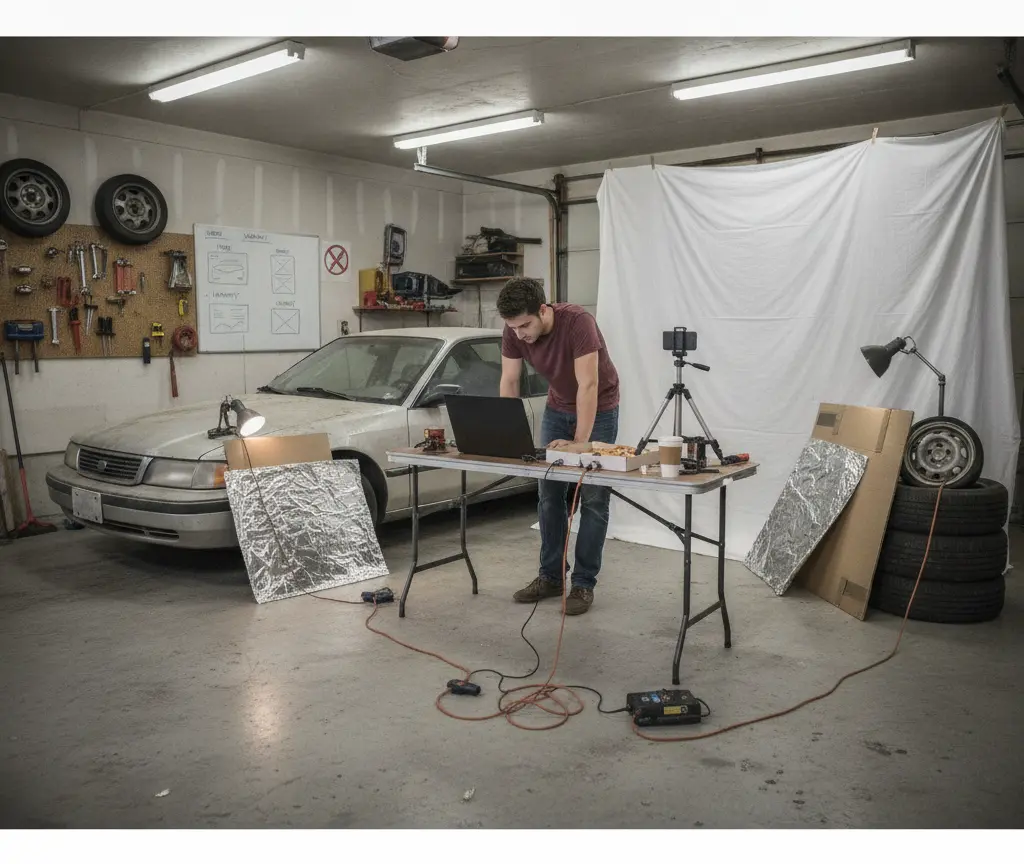
Find a clean, quiet corner of the lot and photograph every car there. The same light, the same background and the same angle cost nothing and look more professional at once. A tripod and daylight are enough to start. Your pages then look consistent, long before you invest in expensive technology.
Where even a small budget pays off most
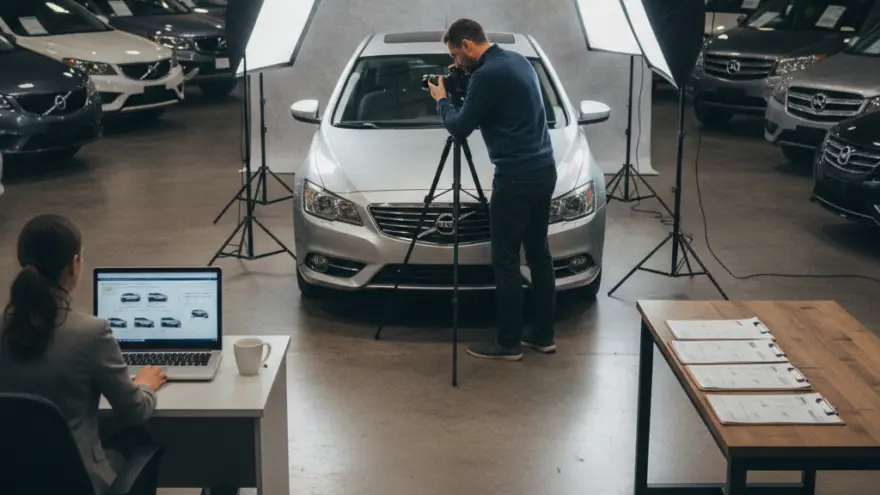
Saving does not mean cutting everywhere equally. It means investing in the right place. Two things deserve your attention even when money is tight, good photos and clean vehicle data. Both decide whether a buyer trusts you and writes. A sharp, well-lit photo costs little and lifts your car above the gray crowd. Complete, structured details also help Google find your page at all. One small dealer bought only a tripod and good light instead of expensive technology, and shot every car in the same tidy spot. Those calm, consistent images looked more professional than a rival’s costly animation. One good photo per car beats ten effects nobody notices. So a small budget brings the greatest return when it flows into what the buyer actually looks at.
Conclusion
A dealership website on a small budget is not a compromise but a question of order. You start with the vehicle pages, skip the expensive extras at first and reuse the data you already have. The money you save flows into good photos and clean details that genuinely bring enquiries. The ADP Car Market Hub WordPress plugin from AD Promotion builds exactly those pages from your inventory, with no double work. Step by step a site grows that can expand and pay for itself from the first sales. A small budget is then no barrier, only a reason to spend the money wisely.
Sources
- Cox Automotive, Car Buyer Journey research on how shoppers research vehicles online.
- Think with Google, consumer research on online car shopping.
- Google Search Central, how structured pages are found and indexed.
Frequently Asked Questions
How much does a dealership website cost at a minimum?
It depends on the scope, but the start is cheaper than you think. If you begin with the vehicle pages and reuse data you already have, a small budget is enough. Expensive extras can be paid for later out of the first sales.
Is a website worth it for a small dealership?
Yes. A small dealer wins enquiries when the cars sit on their own, findable pages. The site does not need to be big. It needs to show the vehicles clearly and offer a way to get in touch.
What should I spend the tight budget on first?
On the vehicle pages, on good photos and on clean, complete details. That is what the buyer sees and what Google finds. Design and extra features come afterwards.
Which features can I leave out at the start?
Elaborate animations, chatbots, customer portals and video tours rarely bring enquiries early on. A simple contact form is plenty at first. The extras follow once the site earns money.
How do I keep the running costs low?
Choose a simple, stable setup and edit content yourself where you can. A few useful tools cost less than ten add-ons nobody uses. Review recurring subscriptions once a year.
Do I have to enter every car by hand?
No. Your inventory usually already sits on a listing site or in your dealer software. That data can be carried over instead of typed a second time, which saves the most expensive work.
Can a cheap website grow later?
Yes, if the foundation is clean. Start lean with the vehicle pages and add features step by step, once the first sales can support them.