A car sale rarely turns on price alone. It turns on the answers a buyer collects along the way. Ask the right questions and answer them honestly, and you move a buyer toward yes one step at a time. Pitch the vehicle without asking anything, and you leave the most important work to chance.
This guide shows which questions actually move an interested buyer forward, the order in which they work, and how your own website answers some of them before the conversation even starts. The ADP Car Market Hub WordPress Plugin from AD Promotion plays a part in that, and we will come to it shortly.
Why the right question beats the hard pitch
Many sales conversations fail not because of the car but because of the pace. The salesperson opens with arguments while the buyer still does not know what he is really looking for. Pressure turns into resistance, and the buyer walks away without naming the real reason.
A question reverses that dynamic. It hands the buyer the floor and signals that his situation matters, not the salesperson’s monthly target. Ask instead of push, and you learn what is holding the buyer back, so you can address exactly that. The conversation then moves toward yes because the buyer feels understood.
Here is an everyday example. A family walks onto the lot and looks at a station wagon. Before listing engine options, the salesperson asks how far they drive each day and whether a trailer matters. The answer points to the right car almost on its own, and the suggestion feels reasoned rather than forced.
The questions that uncover what a buyer really needs
Before a buyer agrees, it has to be clear what he truly needs. Four areas bring that to light. What the car is for day to day, the budget that is ready, the timing of the switch, and whether there is a vehicle to trade in. These four questions give the conversation a shape and spare both sides detours.
The attitude behind them matters. The question serves the buyer, not the form. Anyone who only ticks boxes comes across as a clerk. Anyone who listens and follows up hears the real motive, such as a growing family or steep repair bills. That motive is what later moves the buyer toward yes, not a bare list of data.
Take a real case. A buyer first names only a budget of around 25000 dollars. Asked about the reason, it turns out his current car is always in the shop. Suddenly reliability counts for more than any extra feature, and the offer can be built around it. For how to run these questions cleanly, read how to qualify car buyers fairly.
How your website catches the first question
The ADP Car Market Hub WordPress Plugin turns your inventory into your own vehicle pages with clear contact paths. When a buyer asks the first question there, it reaches you in a structured form, with the car, the budget and the preferred date. The conversation then starts not from zero but where the buyer already stands.
How your own pages answer questions before the call begins
A buyer asks most of his questions long before he picks up the phone. What does the car cost, is it still available, what is fitted, and how many miles has it covered. If those answers stay hidden, the buyer drops off, often to a competitor whose page is clearer.
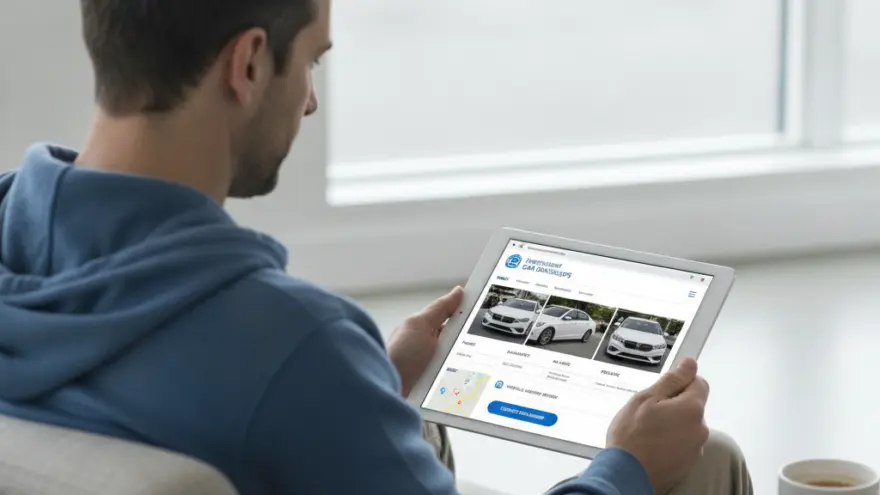
Your own vehicle page answers exactly those questions calmly and in full. Price in dollars, photos, history, location and a direct contact path sit in one place. The buyer arrives already informed and has moved a good way toward yes without anyone making a call.
This is where an owned page beats an outside listing. If the inventory only sits as an integrated third party list, the content does not belong to your domain and answers the buyer’s question only halfway. A real page on your site, by contrast, is findable, measurable and in your hands. Trust grows before the first word.
Handle money questions openly and move the buyer toward yes
No question decides a sale as often as the one about money. Many buyers do not dare to ask outright for the best price or the monthly payment, and a dealer who dodges it loses trust. Deal openly with price and financing, and you take the tension out of the conversation.
It helps to break the money question into parts. What is the fair price, what would a monthly payment be, and what does the trade-in bring. Once the buyer knows those three numbers, a vague worry becomes a clear plan. That plan moves him toward yes because the risk turns concrete and manageable.
Here is one from the showroom floor. A buyer hesitates at 28000 dollars. Instead of only offering a discount, the salesperson lays out a monthly payment and names the trade-in value of the old car. Suddenly the talk is no longer about a large sum but about a workable monthly figure. For how to handle price questions with confidence, read how to answer price questions without a discount war.
The question that triggers the next step
At some point enough has been said, and it takes a question that leads to action. It has to be small and concrete and must not force the big yes. A test drive on Saturday, a short reservation, a firm handover date. Such small steps are easy to agree to and still move the buyer noticeably toward yes.
The reason lies in the power of small commitments. Once someone has said yes to an appointment, he feels closer to the purchase and backs out less often. The key is to offer only the next step, never the contract right away. Push for the signature too early, and the conversation slides back into resistance.
Picture this. A buyer is keen but unsure. The question is not whether he buys today but whether he would like to test the car with his family on Saturday. If he agrees, the next appointment is set and the sale moves closer. For how to turn enquiries into firm test drives, read how to book reliable test drives.
Prepare one question per contact
Before every call, write down the one question that should move the conversation forward and the small next step that goes with it. A contact with a clear question feels prepared and moves the buyer toward yes more reliably than a call that only asks where things stand.

Listen to the answer, not just ask
A question only works if the answer truly lands. Many salespeople ask well and listen poorly, because they are already lining up the next argument in their heads. The buyer notices at once and closes up. Real listening shows when the next question builds on the last answer.
In practice that means briefly reflecting the answer in your own words before moving on. The buyer feels understood, and misunderstandings surface early. Skip a stated concern, and you lose the trust that every good question first built.
One more case. A buyer mentions in passing that the purchase coincides with the start of the school year. An attentive salesperson picks that up and suggests a handover before the holidays. That small touch often moves the buyer toward yes more than any technical detail.
From practice
A dealership put its inventory online as its own vehicle pages with the ADP Car Market Hub WordPress Plugin, each with price, features and a clear contact form. Because the pages were findable on Google, buyers arrived with their questions already answered and decided faster. The plugin made the difference, because only the owned, indexed pages answered the questions in advance and brought in more prepared enquiries. It is not a promise for every business, but the lever is clear.
Conclusion
A buyer says yes when his questions are answered, not when he is argued at the loudest. The right question at the right time shows interest, uncovers the real need, and makes every next step small and doable. That is how an interested buyer moves calmly and without pressure toward yes. The ADP Car Market Hub WordPress Plugin from AD Promotion takes part of that work off your hands, because it turns your inventory into your own findable pages that answer many questions before the conversation starts. Ask well, listen, and let your website help, and the yes tends to follow on its own.
Sources
- Cox Automotive, car buyer journey studies and US automotive retail data.
- Google Search Central, how Google Search crawls and indexes pages.
Frequently Asked Questions
Which question should I ask a buyer first?
Start with the purpose, not the model. Ask what the car is for in daily life. The answer points to size, drivetrain and budget almost on its own, and it saves you from listing cars that do not fit.
How many questions make sense without seeming pushy?
Three or four real questions are usually enough. The number is not the point. What matters is that each question helps the buyer and that you truly act on the answer.
Is it not intrusive to ask about budget directly?
Not if you explain why. Say that you want to suggest cars that fit. Framed that way, the question feels helpful rather than nosy.
How do I answer the question about the lowest price?
Openly and in parts. Name a fair price, a possible monthly payment and the trade-in value. Three clear numbers build more trust than a vague hint at a discount.
What role does my website play in these questions?
A large one. Your own vehicle pages answer price, availability and features in advance, so the buyer comes to the conversation already informed.
How does the ADP Car Market Hub WordPress Plugin help here?
The ADP Car Market Hub WordPress Plugin turns your inventory into your own findable pages with a clear contact path. So you receive enquiries in which many questions are already answered.
What if the buyer still does not commit after good answers?
Then the timing is often not ripe yet. Offer one small next step, such as a test drive, and stay present with helpful contact.