The moment a buyer makes contact, the price questions start. What is your best price, is there room to move, why does it cost this much. Many salespeople in a dealership feel that moment as a threat. In truth it is usually a good sign. Anyone who asks about price has already engaged with the car.
What matters is how you react. A bare number with no context invites a comparison at once. An answer built around value keeps the conversation open. This guide shows how to handle price questions so the buyer stays with you and the close moves nearer.
Why price questions come early and what they mean
Online, the price is the first thing in view, because it is the easiest figure to compare. Condition, equipment and service are hard to line up side by side, a number is easy. So the buyer asks about it first, often in the opening message.
This is not distrust, it is a search for orientation. Picture a buyer who simply asks for the best price on a wagon, because five similar offers are open right now. Answer with just a lower number, and you join that comparison. Show the value of this specific car, and you stand apart. Price questions open a conversation, they do not end it.
Asking about price is rarely only about a discount. At heart it is about security. The buyer wants to know the offer is fair, that nothing is being missed, that the business can be trusted. The number is just the visible tip of that doubt.
Read it that way and you answer differently. If someone asks why this car costs more than a similar one, the honest reply is not a cut but a reason. A full service history, new brakes, a fresh inspection and a warranty explain the gap. So price questions become a chance to show the added value, not to defend yourself.
Answer with value, not just a number
The strongest answer puts the price in context. State the number calmly, but never on its own. Tie it to what the buyer gets, namely condition, history, warranty and service after the sale.
Compare two replies. The line 14,900 with a fixed tag reads very differently from 14,900 with a twelve month warranty, a fresh inspection and new tires, although the number is the same. Now the buyer sees what the money buys. This framing works on the phone, in a message and above all on the vehicle page, where the price sits in the right light from the start.
How this works in practice
This is exactly where the ADP Car Market Hub WordPress plugin from AD Promotion helps. On every vehicle page it shows the price together with a monthly rate from the financing calculator. A large figure turns into a tangible monthly amount, and the price question shifts from a plain comparison to what fits the buyer’s budget.
Show the price clearly on the vehicle page
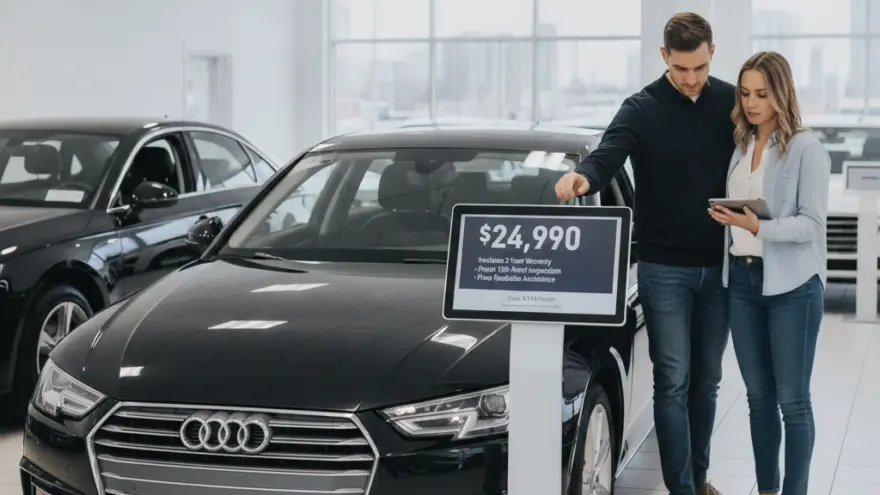
Many price questions only arise because the page leaves them open. When the price is missing, hidden or shown as best offer with no reason, the buyer has to ask. Every follow up costs time and patience on both sides.
So show the price openly, with the main reasons for it and a monthly rate for orientation. When the price reads includes warranty and a fresh inspection, from 199 a month, many questions are answered before they are asked. How clear financing options make the step to yes easier is covered in its own article.
React fast, concretely and well prepared
Speed decides. A price question left for a day is often already answered by a rival. React within a few minutes and you signal reliability, which is exactly what the buyer is looking for behind the question.
Stay concrete while you do it. When asked whether the price can move, a quick ask to call back lands weaker than a short reason why the price is fairly set, paired with an offer to show the car on Saturday. The second answer carries the conversation forward. Learning to qualify car buyers without scaring them off helps you ask the right next questions.
Most price questions look alike, yet every salesperson answers them differently, sometimes sure, sometimes hesitant. That costs deals, because the quality of the reply depends on the day rather than on a plan. Prepare the common questions and you answer faster and calmer.
Set up three or four fixed building blocks, each with value before the figure. For the request for a best price, keep a line ready that names warranty and condition first, then confirms the fair price. For a question about room to move, keep one that steers toward financing. Every answer then sounds considered, and no buyer waits because the right words are missing. These blocks are no rigid script, but a reliable base you adjust freely in the conversation.

When price is genuinely the sticking point
Sometimes price really is the obstacle, not just the opening. Then talking it up helps nobody, an honest look at the budget does. Instead of cutting blindly, weigh the total value and the way of paying.
If the wanted budget sits 1,000 below the price, a suitable financing plan often beats a discount that eats the margin. A rate that fits the monthly budget solves it for both sides. When the gap stays too wide, a friendly, clear no beats a deal that pays off for no one. That keeps you credible, and the buyer comes back.
Give the reason before the number
Before you answer a price question with a figure, send one sentence about value first. The buyer then hears what they get, and only after that what it costs. That order changes the whole effect of the answer.
From real use
A dealership added a visible price with a monthly rate to its vehicle pages using the ADP Car Market Hub WordPress plugin. Where many enquiries had been just a request for the best price, more of them now asked specific questions about financing and a test drive. The plugin made the difference, because the open display on the owned page answered the plain price question before it became a comparison. It is no promise, but the direction is clear.
Conclusion
Price questions are no attack on your margin, they are an invitation to talk. Answer with only a number and you land in the comparison. Show the value behind it and you stay in the running. State the price openly, explain the reasons calmly, and react fast and concretely. On the vehicle page, the ADP Car Market Hub WordPress plugin from AD Promotion helps show price and rate clearly from the start, so many price questions never turn into a plain comparison. And when price really is the issue in the end, you win more with honest financing and a clear word than with a discount that serves no one.
Sources
- AutoScout24 price index, analysis of price trends in the vehicle market.
- DAT Deutsche Automobil Treuhand, used car valuation and market reports.
- Cox Automotive, dealer and used vehicle market research.
Frequently Asked Questions
Is a price question a bad sign?
No. It is usually a good sign, because the buyer has already engaged with the car. What counts is that you do not give only a number, but show the value behind it.
Should I name the price on the phone right away?
Yes, do not hide it. But put a short sentence about value before the figure, such as condition, warranty or inspection. The buyer then hears what they pay for first.
What do I answer to any room on the price?
Stay calm and concrete. Explain why the price is fairly set, and offer a next step, such as a test drive. A blanket discount only weakens your position.
Does a monthly rate help with price questions?
Often yes. A monthly rate turns a large figure into a tangible amount. The question then shifts from a plain comparison to what fits the buyer’s budget.
Why should the price be open on the vehicle page?
Because a missing or hidden price creates needless follow ups. A clearly shown price with a reason and a rate answers many questions before they are asked.
How fast should I answer a price question?
As fast as possible. A question left for a day is often already answered by a rival. A few minutes signal reliability.
When does a discount make sense?
Only when price is truly the obstacle and financing does not fit. Even then, weigh the total value and the margin. Sometimes a clear no is the better choice.
How do I avoid talking about price alone?
By raising value early. Show condition, history and service before the number takes center stage. The conversation then stays on the car, not on price alone.