A buyer fills in the form on your website. You send a quick answer. Then nothing. No call back, no second visit, just silence. The first reply went out on time. Yet the lead drifts away over the next few days. This is the quiet way most car deals are lost. Not at the first contact, but in the gap that follows.
This guide is about that gap. It shows why a lead cools after the first reply. It shows what a good first reply should set up. And it shows how a simple follow up rhythm keeps the buyer engaged. The ADP Car Market Hub WordPress Plugin from AD Promotion plays its part too. It keeps every enquiry, with its vehicle, in front of the right salesperson. The examples are the everyday kind any showroom will know.
Why a lead cools after the first reply
The first reply lands while the buyer is keen. So it usually gets read. The danger comes after. A buyer rarely decides on a car in one message. They wait for finance to clear, talk it over at home, or simply get busy. Each silent day makes the enquiry feel less real. Meanwhile a rival who keeps in touch looks like the safer choice.
Take a buyer who asked about a used Volkswagen Golf on a Tuesday. You confirmed the price and mileage the same hour. That was the right move. Then the week passed with no second message. By Friday the buyer had visited two other dealers. Both had called to check in. The Golf was no longer the only option. The first reply did its job. The lead just needed a reason to come back. Nobody gave one.
What the first reply should set up
A first reply that only answers the question quietly closes the door. You confirm the car, then stop. The buyer has no clear next step. So the thread ends. A stronger first reply does two jobs at once. It answers what was asked. And it opens the next contact with a concrete offer. That can be a viewing slot, a short video, or a call at a time that suits them.
That small difference changes the whole follow up. Say the first reply already proposes a Saturday test drive. Now your next message has a natural reason to exist. You are not chasing. You are confirming. A buyer who asked about a Toyota Yaris and got two viewing times is easy to follow up. The conversation already has a direction.
From first reply to booked viewing
With the ADP Car Market Hub WordPress Plugin, every enquiry arrives tied to the exact vehicle. It stays linked to that car through each follow up. The salesperson sees the model, the question and the history in one place. So the second and third message build on the first instead of starting over.
This is where speed and substance meet. A reply that is fast and useful earns the right to a second message. That balance is covered in why fast follow up wins more car sales. Get the first reply right and the rest almost writes itself.
Build a steady follow up rhythm
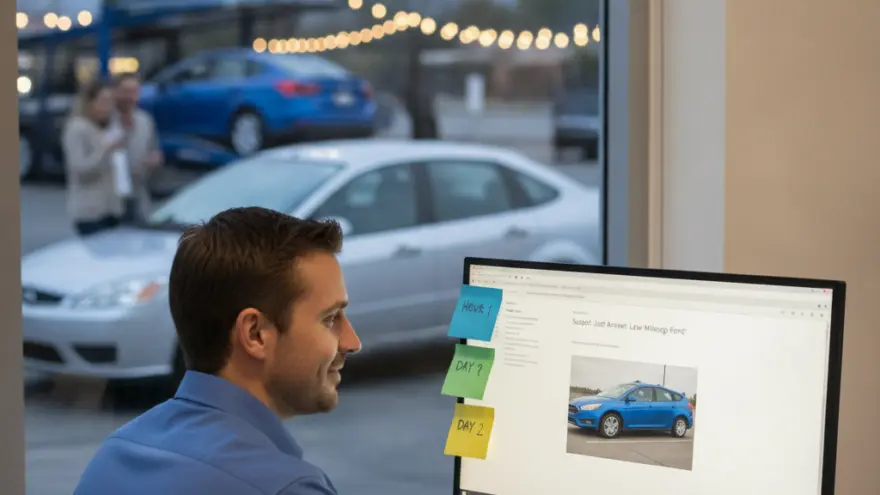
One follow up is not a rhythm. Many dealers send a single reminder. They hear nothing. Then they quietly write the lead off. Yet plenty of buyers answer on the second or third touch. The timing simply suited them better. A rhythm means a few planned contacts, spaced over days. Each one carries a fresh reason to reply.
A workable pattern stays light. A helpful first reply within the hour. A friendly check the next day. Then a final message a few days later with something new. Perhaps a similar car that just arrived. A buyer who went quiet about a Ford Focus might return for a lower mileage one in the same budget. The rhythm gives several easy moments to re-engage, without ever feeling pushed.
Plan three touches, not ten
Decide in advance how many times you will follow up and when. For example, a reply within the hour, a check the next day, and a final note after three or four days. A short planned sequence beats both a forgotten message and a daily barrage. Every contact keeps a clear purpose.
Give every lead a clear owner
Follow up fails most often when no one owns the lead. An enquiry in a shared inbox belongs to everybody. So it belongs to nobody. The second message that was due on Wednesday never goes out. The fix is simple. Name an owner for each lead the moment it arrives. That person sees it through until the buyer answers.
Ownership matters even more across a weekend. A lead from Friday evening needs someone responsible on Monday. Not a vague hope that a colleague saw it. Route each enquiry to a named salesperson with the car attached. Then there is no quiet handover gap. The person who sent the first reply carries the thread to the end. For the steps before this, the best way to handle a new car enquiry sets up clean ownership from the start.
Make each follow up worth opening
A follow up that repeats the first message gets ignored. If every contact says the same still available, the buyer learns to skip it. Each touch should carry something new. It might be a price held for them, a fresh photo, a finance figure, or a new arrival that fits their search. Then the follow up feels like service, not pressure.
Relevance keeps a lead warm. A buyer who asked about a seven seat car will open a message about a new Skoda Kodiaq. The same buyer ignores a generic reminder. Tie each follow up to what the person actually wanted. The second or third message can then do more than the first.
From real use
A dealer ran their used cars on their own website through the ADP Car Market Hub WordPress Plugin. Each model had its own page that Google could index. The enquiries those pages brought in arrived tied to the exact car. They went to one salesperson. Nothing landed in an unwatched inbox. So the second and third follow up actually happened, and more quiet leads turned into viewings. The plugin did not write the messages. The salesperson did. But it made that steady follow up possible by keeping every lead owned and in view. It is no guarantee, yet the pattern is consistent.
Keep track of leads that are still open
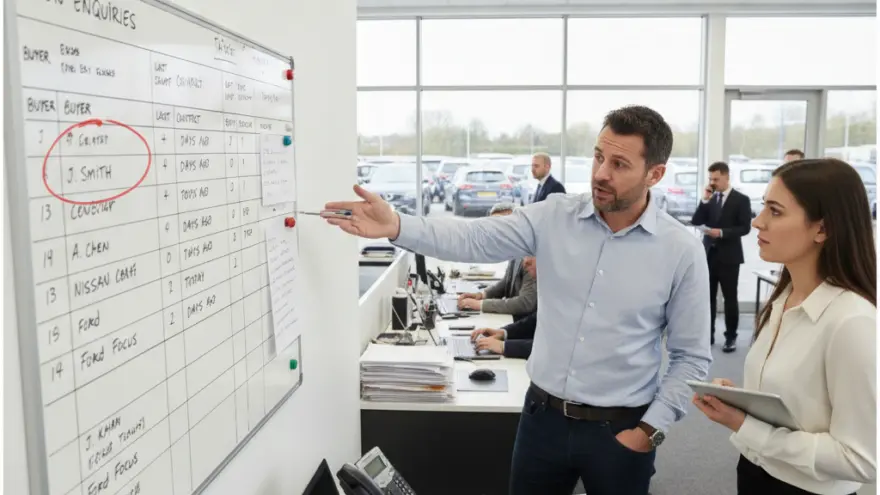
A lead you forget is a lead gone cold. The more enquiries you handle, the harder it is to remember who is still waiting. Some still want a second message, while others already said no. On busy days, good prospects slip through. Attention goes to whoever shouted last.
A short, visible list of open enquiries fixes most of this. You see at a glance that a buyer asked about a Renault Captur four days ago. They have had only one reply. The missing follow up becomes obvious. The goal is not a heavy system. It is a reliable view of who still needs a next step. Then no warm lead sits untouched.
Conclusion
A strong first reply opens the conversation. It does not close the sale. What keeps a lead from going cold is everything that comes after. It is a planned rhythm of useful contacts, a clear owner for every enquiry, and a simple way to see who is still open. None of that needs a bigger budget. It needs the discipline to keep in touch while the buyer still cares. The ADP Car Market Hub WordPress Plugin from AD Promotion supports this. It ties each enquiry to its vehicle and keeps it with one named salesperson. So the second and third message are easy to send. Answer well the first time, then keep the thread alive. Far fewer deals will quietly slip away.
Sources
- Harvard Business Review, on how fast the odds of reaching a lead fall after first contact.
- Think with Google, on how buyers compare several dealers before they decide.
- National Automobile Dealers Association, guidance for US dealers on handling enquiries.
Frequently Asked Questions
How soon does a lead go cold after the first reply?
It varies, but interest fades within days if nothing follows. The first reply is read while the buyer is keen. Yet without a planned second and third contact, the enquiry slips down their list. A follow up within a day keeps it alive.
What should the first reply include?
Confirm the car, answer the exact question, and offer a concrete next step. A viewing slot or a short video works well. A first reply that opens the door to the next contact is far easier to follow up than a bare confirmation.
How many times should I follow up?
A reply within the hour, a friendly check the next day, and a final note after three or four days is a sensible rhythm. Each contact should add something new, so it feels like service rather than a repeated nudge.
Why do follow ups get forgotten?
Usually because no one owns the lead. An enquiry in a shared inbox belongs to nobody, so the second message never goes out. Naming a single owner for each lead is the simplest fix.
Do I need a CRM to stop leads going cold?
It helps, but the first requirement is that each enquiry reaches a named person and stays visible until it is closed. The plugin routes every web enquiry with its vehicle to one salesperson, so even a small team can keep up.
Is following up several times annoying?
Not if each message is relevant. A barrage of identical reminders annoys. But a short rhythm of useful contacts, each tied to what the buyer asked about, reads as good service.
How does the plugin help after the first reply?
Each enquiry stays linked to its vehicle and to one owner, so the second and third message build on the first. Because nothing is lost in a shared inbox, the follow up that recovers many deals actually happens.